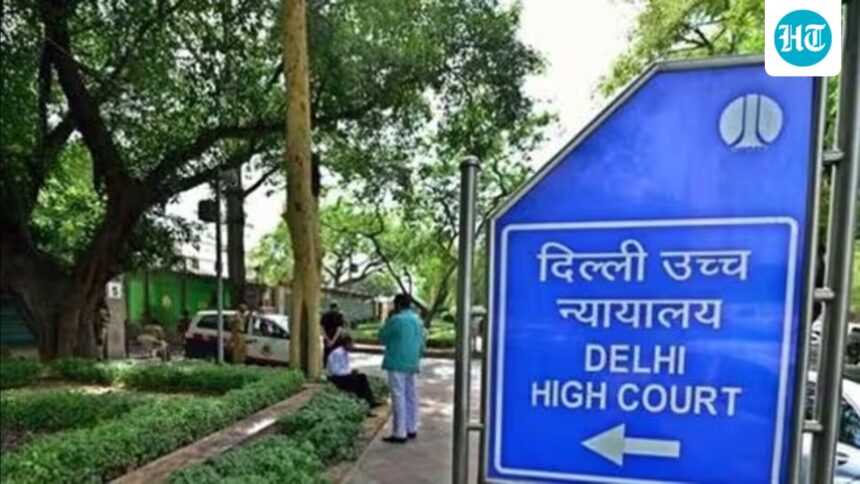
The Delhi High Court on Friday upheld the government’s decision to ban instant messaging service Telegram for six days before the resumption of the National Eligibility and University Entrance Test (NEET-UG) on Sunday. The court said that there were sufficient reasons to reach the decision to protect the interests of millions of students taking the exam.

A single-judge bench, Justice Tejas Karia, sitting as a leave judge, framed the case around two questions: whether the government’s order was set aside for want of application of mind, and whether blocking the platform met the test of proportionality – a question that itself turned into a more fundamental issue of statutory interpretation: does Section 69A of the Information Technology Act enable the government to block an entire platform, or only specific parts of content? The court ruled against Telegram on both counts.
NEET-UG 2026, held on May 3, was canceled on May 12 after overlaps emerged between the leaked guess sheet and the actual paper, leading to a CBI investigation and the arrest of 13 people.
As the re-examination date approached, Telegram channels – some called “Private Mafia” and “Leaky Paper Workers” – sold fake question papers for up to $$10,000, while officials exploited the platform’s message editing feature, which changes content without updating the timestamp, to fabricate “proof” of the leaks after testing, officials claimed earlier in the week. Takedowns on every channel continued to fail with removed channels appearing through mirrors – the government’s stated reason for banning the platform completely ahead of re-examination on Sunday.
The government’s interim order was issued on June 16 under Section 69A directing to block Telegram and its associated URLs across India till June 22, and ordered the platform to disable the message editing feature till June 30. After a hearing before a committee constituted under Rule 7 of the IT Blocking Rules on June 17, the Secretary, Ministry of Electronics and IT issued a final order on June 18 confirming the interim directions – the order is under appeal.
Read also:“Reducing rights of 150 million Telegram users as one group subject to NEET re-examination?”: Delhi High Court
Senior counsel Dhruv Mehta of Telegram said Section 69A allows blocking of only specific “information”, not the entire intermediary platform; that the order failed to record sufficient reasons or independently assess proportionality; Telegram has largely complied with content takedowns, disabling 900 out of 1,300 URLs reported by the ministry.
Relying on the Supreme Court’s judgment in Anuradha Bhasin v. Union of India, it held that only the least restrictive measure is permissible, and that the platform-wide ban ignores the rights of over 15 crore Indian users without any connection to exam fraud.
Solicitor General Tushar Mehta and Additional Solicitor General Chetan Sharma, for the government, argued that Telegram’s architecture — cloud infrastructure, large public broadcast channels, automated ecosystem of bots, anonymous user names, and a message editing function that preserves the original timestamp — made enforcement of specific content structurally ineffective. They cited the Indian Cybercrime Coordination Centre’s record of seeking remedial measures from Telegram on at least 35 occasions since October 2024, and pointed to a channel called “NEET Mafia”, with about 18,000 subscribers, as an example of how deleted channels can resurface through mirror channels that redirect existing subscribers.
“A profit-driven commercial platform cannot selectively rely on proportionality to resist legitimate preventive measures adopted by the state in the public interest,” Attorney General R Venkatramani, representing the government, said.
The court rejected Telegram’s claim that Section 69A allows blocking of specific content only, and accepted the government’s reading that the law’s definition of “information” — which explicitly includes “code, computer programs, software, and databases” — is broad enough to cover an entire platform, because the app itself is a collection of code and software. “There is no reason to exclude an application or platform from the scope of the said expression,” the court found, finding that the government “is empowered under Section 69A of the Information Technology Act to issue directions to block public access to Telegram” as a whole.
With regard to proportionality, the court applied the four-part test set out in Anuradha Bhasin – legitimate purpose, rational nexus, necessity and least restrictive measure – and found all four to be satisfied. “The structure of the Telegram platform helps to amplify and disseminate content on a large scale, allowing information to reach a large number of users within a short period of time,” the court said. “Therefore, any illegal content, if circulated on Telegram, could quickly be amplified and would likely lead to a public order situation.”
Entity takedowns “repeatedly” failed because the removed channels reconfigured themselves through backup channels, rotary handles and copy accounts, the court found, making the platform ban time-bound – limited to the period up to June 22, with editing restricted until June 30 – the least restrictive option available given the proximity of the re-examination.
In relation to the challenge of failure to apply reason, the court held that the reasoning of the interim order, read with the detailed findings recorded in the final order after hearing a telegram, established a “direct and substantial relationship” between the directions issued and the reasons allocated.
The reasoning for the final order was based, among other materials, on a June 16 post by Telegram CEO Pavel Durov on The committee treated this as confirmation of the scale of abuse the government claimed and was an admission that the existing “liberalized” mark – which the company is now reviewing – was inadequate. The court rejected Telegram’s argument that a final order, made after a hearing, could not provide reasoning absent from the original interim order, holding that the two-stage process – an emergency interim direction followed by a post-decision hearing and a reasoned final order – is exactly what Section 69A and the 2009 Ban Rules contemplate.