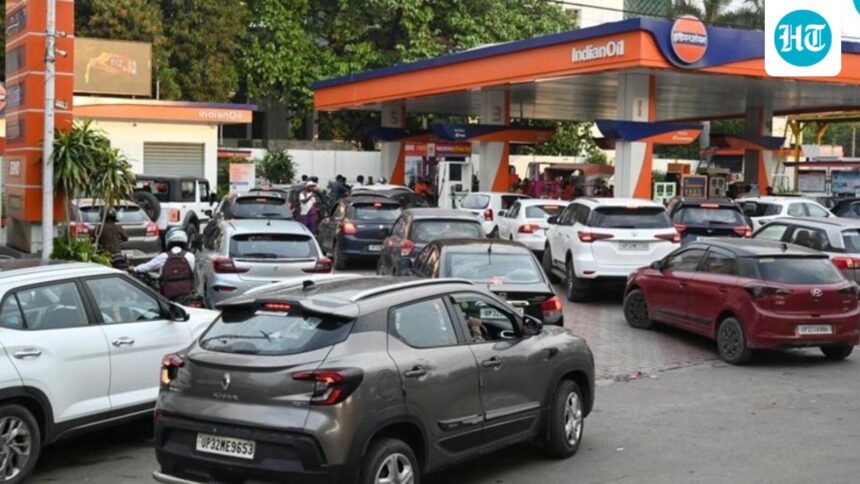
The Delhi government on Friday notified a proactive winter air quality management framework, which outlines a series of pollution control measures, including mandatory PUCC checks for fuel purchases, restrictions on non-BS-VI commercial vehicles from outside Delhi, and higher parking charges during winter, in a bid to curb seasonal air pollution before air quality deteriorates.

Prime Minister Rekha Gupta said the framework marked a shift from the previous practice of imposing restrictions only after air quality deteriorated.
Notified under the Environment (Protection) Act, 1986, the framework will run alongside the revised Graded Response Action Plan (GRAP) of the Commission for Air Quality Management (CAQM).
The Prime Minister said that fuel will be supplied at all petrol pumps in Delhi only to vehicles having a valid Pollution Control Certificate (PUCC) under this framework. “In addition, non-BS-VI commercial vehicles registered outside Delhi will not be allowed to enter the city between November 1 and January 31. However, CNG vehicles, electric vehicles, emergency services vehicles and those working on government work will be exempted from this restriction,” it added.
To improve air quality during the winter and discourage excessive use of private vehicles, parking fees at authorized parking facilities will be doubled from November 1 to February 28, she said.
A staggered office work timing system will also be implemented to reduce traffic pressure, simplify transportation and enhance pollution control efforts. Under this arrangement, government and private offices will operate with a maximum physical attendance of 50%, while remaining employees may work from home. Essential and emergency services will be exempt.
This framework aims to ensure advance preparation for the annual winter pollution season, when Delhi’s air quality often slips into the “very poor” and “severe” categories, officials said.
The framework will serve as a complementary mechanism to the revised CAQM Global Action Plan, enabling departments and agencies to implement pollution control measures before air quality deteriorates significantly.
Project operators, contractors and citizens have also been encouraged to plan their activities in advance so that additional pollution loads are not generated during periods of high pollution, CM Gupta said.
All construction and demolition activities between November 1 and January 31 will be required to adhere to established environmental standards and dust control procedures. It added that additional restrictions may be imposed on such activities between December 10 and January 20, a period when pollution levels are expected to remain particularly high, in the interest of public health and environmental protection.
The framework also stipulates more stringent dust control measures at major construction sites and large commercial buildings and calls for intensified monitoring of open burning.
Gupta said improving air quality cannot be achieved through government efforts alone. It requires the active participation of citizens, regional authorities, institutions, businesses and industries. She added that advance notification of these measures aims to ensure that all stakeholders have sufficient time to prepare and contribute meaningfully to pollution control efforts.