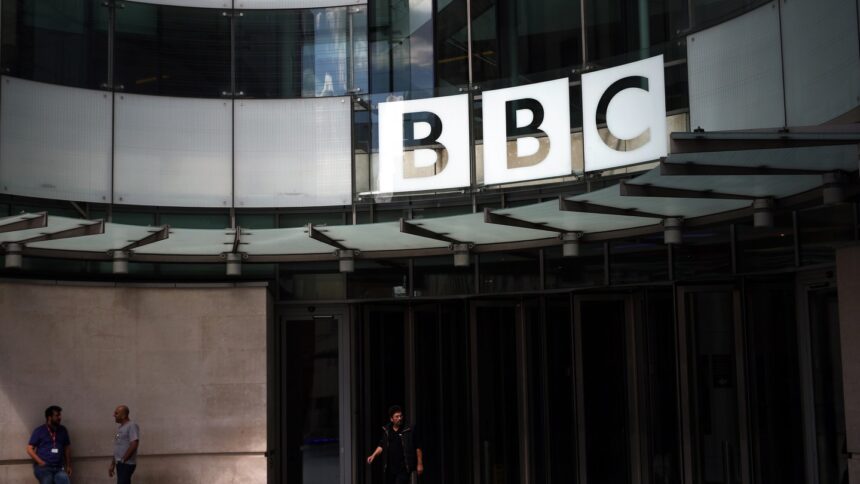
The BBC, the UK’s public broadcaster, plans to cut about 550 jobs, cut content spending by 80 million pounds ($107 million) over two years, and “review” its broadcast TV channels as part of a major cost-cutting drive.
These moves come as part of efforts by the team of the BBC’s new director general, Matt Brittain, a former senior Google executive, to cut costs across operations and functions.
The staff cuts will impact the BBC’s Content, Nations and News teams, with the BBC also eyeing further job cuts in businesses and other areas of up to around 700 jobs, Brittain said in a memo to staff on Wednesday, in which he highlighted that “we are living in very uncertain times”.
Content spending across the BBC’s TV, radio and news divisions will reach £80m over the next two years, the leader announced on Wednesday. Brittain also said the broadcaster would “review” the viability of linear channels, meaning some may disappear, as well as content, meaning “some programs” would be axed.
Significant cost savings have been achieved for some time. In an internal email in April, which was leaked, the BBC’s deputy director-general, Rhodri Talvan-Davies, said the corporation would have to save £500 million ($670 million) from an annual operating costs budget of around £5.0 billion ($6.7 billion) over the next two years. He suggested that the total number of jobs at the BBC could fall by up to 2,000.
British media have in recent days labeled it one of the biggest cuts at the public broadcaster in 15 years. The cuts come as the BBC’s executive leadership reaches the final stages of negotiations with the UK government, led by Labor leader Keir Starmer, over its future funding.
Brittain began his job at the BBC on 18 May, succeeding Tim Davie, who resigned after critical editorial errors, including a particularly explosive Trump row, caused headlines and debate. Brittain, a Cambridge graduate, joined McKinsey as a consultant outside the university before becoming commercial director at Trinity Mirror, owner of Trinity Mirror. Daily Mirror. In January 2007, Brittain joined the executive ranks at Google.
In December, the UK government launched a ten-year review of the BBC’s Royal Charter, which governs its operations and priorities, with the aim of “strengthening confidence in the broadcaster and putting it on a sustainable financial footing”.
Read the full Brittain team memo below.
Hello everyone,
It’s been about a month since I started here, and I’m starting to get to know you and the BBC. I’ve heard your belief in the mission, and your ambition to reinvent the BBC for the future – both of which I’m working on and will be back with more in September. Of course, you also want to know what the stated savings mean for you. It is important to me that you have clarification on this matter as soon as possible.
The scale of savings requires difficult choices and careful work, and not all of them will be ready at once. We are committed to letting you know as soon as we have plans in your area. All departments will realize significant savings. Today, some departments are ready to develop the first phase of these plans, with more to follow.
Our first updates of news, nations and content. Together, by the end of this financial year, they will achieve cost savings of £160 million, including staff and non-staff costs, and a net reduction of around 550 jobs. This is part of the 1,800-2,000 jobs announced over the next three years.
Further savings will be made available in the coming months, across all departments. This includes areas of the company where work is underway – we expect to close around 700 jobs in these areas.
Cuts of this magnitude will inevitably mean some forced redundancies, although we will work hard to avoid this wherever we can. Many departments have already opened voluntary redundancy windows; More will be opening today.
We will also have to close some programs. These are difficult choices and we will apply three guiding principles:
• Maintaining outputs that have the highest value and impact on the audience
• Meeting audiences where they are, reducing spending elsewhere. For example, we will reduce commissioning spend across content, news and nations by around £80m in 27-28 and review our broadcast TV channel and radio network portfolio as audiences move online.
• Make the BBC simpler and faster – we must work to reduce duplication, clarify accountability and increase the speed of decision-making. This includes reducing senior leaders by at least 10%.
The News, Nations and Content departments will outline more details in calls and updates over the coming days. For other departments, leaders will update you on how much savings are needed, voluntary redundancy windows are open, and when you’ll hear more.
Aside from phone calls with your teams, I will be hosting an all-staff session on Tuesday, June 23 at 2pm GMT, to answer your questions, along with Kate Phillips, Rowaned Richards and Jonathan Munro. Please join if you can.
We live in very uncertain times. Our audiences depend on us every day to keep them informed, entertained, and equipped to understand the world. Saving while achieving our mission means a twice as difficult time for everyone. Talk to your leaders and use the support available. In the meantime, thank you for everything you do.
He died