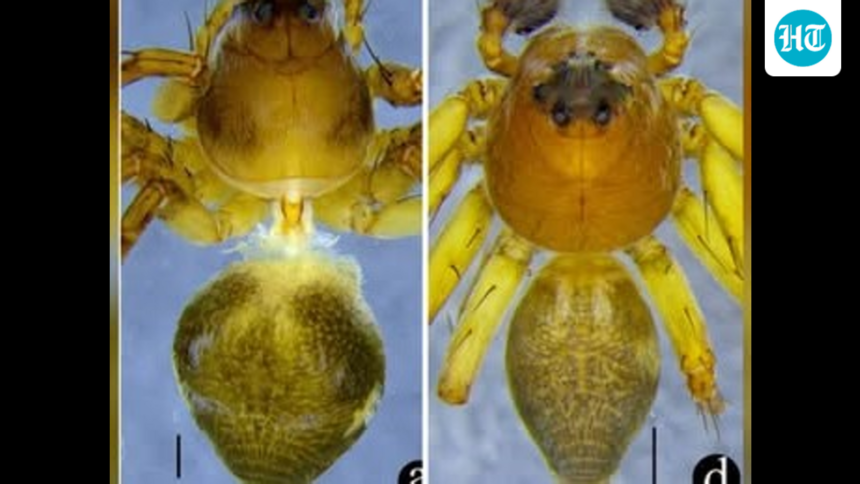
Scientists from the Zoological Survey of India and the University of Calcutta have discovered a new species of lynx spider in Meghalaya, marking the first recorded presence of the genus Hamataliwa in the state and helping to fill a major gap in the group’s known distribution across Asia.

The newly identified species, ‘Hamataliwa mawlyngot’, has been named after the Mawlyngot village in Meghalaya, where it was discovered during a biodiversity survey. The results were recently published in the journal National Academy Science Letters. The study was authored by scientists Souvik Sen, Upasana Bhattacharya, and Puthur Pattamal Sudhin.
The discovery expands the known range of the lynx spider genus Hamataliwa, which has previously been documented in parts of southern India, China and Southeast Asia. The researchers said the discovery is important for scientists studying the species’ distribution across Asia, because it helps connect an important geographic gap between populations recorded in the Indian subcontinent and those in the east.
The new species was collected from the village of Mawlingot, known for its tea plantations, dense vegetation and stunning views of the Khasi Hills. The survey revealed male and female specimens inhabiting the Moluccan shrubs that grow naturally along the slopes of the area.
The spiders likely remained unnoticed for years despite living in a relatively accessible habitat, the researchers said. This species is no larger than a fingernail and is found hiding among dense foliage.
Unlike many spider species that rely on webs to catch prey, lynx spiders are active hunters. They move through vegetation using keen eyesight, speed, and agility to track and ambush insects.
Their hunting behavior has earned them comparisons to the cats of the same name. Instead of waiting for prey to become tangled in silk, lynx spiders stalk insects through foliage and shrubs before launching quick, precise attacks.
Spiders also play an important ecological role, scientists said. By feeding on a range of insects, they help regulate potential pest populations. In agricultural landscapes, bobcat spiders are natural biological control agents that can reduce reliance on chemical interventions and contribute to healthier ecosystems.
“The discovery of a new species of ‘hamataliwa’ from the East Khasi Hills of Meghalaya highlights the vast and undocumented biodiversity of this region,” the authors wrote in the study.