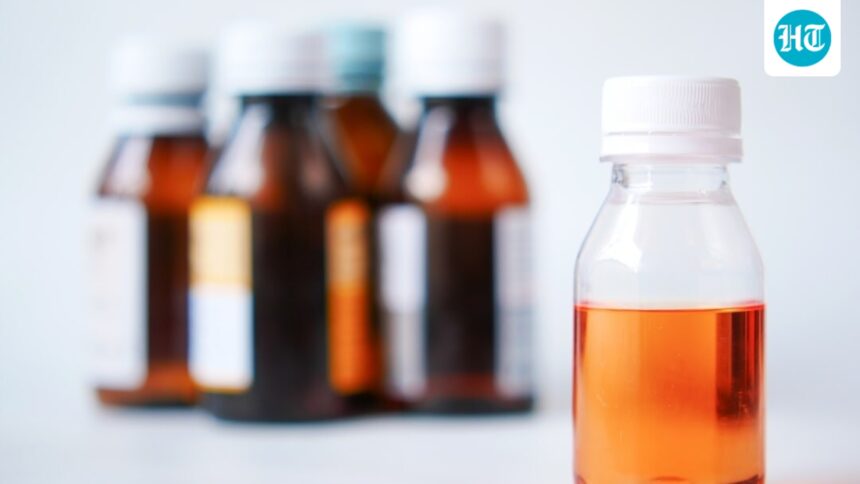
The Union Ministry of Health and Family Welfare has removed cough syrup from the so-called Schedule K, which exempts medicines from the manufacturing, distribution and retail licensing regulations that are mandatory for medicines – a move widely seen as an attempt to clamp down on substandard cough syrup manufacturing, and their sales, in villages and small towns, by establishments that do not process drug retail licence.

There have been reports of rampant misuse of cough syrup across urban and rural India, as people consider them a cheaper and more accessible option than alcohol and drugs. There have also been reports of people, especially children, dying due to the use of substandard cough syrup.
The Department of Health was notified by the Gazette to remove cough syrup from its list of Schedule K drugs (those that can be sold without a prescription and also through retail establishments other than pharmacies); This means that only pharmacies can now sell cough syrup.
The Ministry of Health announced this change in a statement.
Also Read: India’s Tomahawk missile has a textbook launch from Odisha
Surveillance is certainly lax, and even Schedule H drugs, which can only be sold by prescription, are freely available without a prescription, albeit only in pharmacies. In many towns, villages and even some cities, cough syrup is also available for free in many stores.
Schedule K of the Drugs Rules, 1945 provides exemptions from certain provisions of the Drugs and Cosmetics Act, 1940 for specified classes of drugs. Before this amendment, Schedule K drugs could be sold in villages with a population of less than 1,000 people without the requirement to comply with certain retail license provisions.
This exemption will not be available for cough syrups. “Accordingly, the sale and distribution of cough syrup in small villages will now be required only through duly licensed pharmacies in accordance with the provisions of the Drugs and Cosmetics Act, 1940 and the rules made thereunder,” the Health Ministry statement said.
The sale of cough syrup made in India has also been marred by contamination controversy.
Read also: Air India Express flight with 180 passengers returns to Kannur after pilots detect technical problem mid-air
Last year, at least 22 children were killed in India, especially in the state of Rajasthan, due to consuming contaminated cough syrup. The cough syrup was found to be contaminated with diethylene glycol (DEG), a toxic industrial solvent used in brake fluid, antifreeze, etc. In laboratory tests, the concentration of DEG was found to be hundreds of times higher than the permissible limit of 0.1%.
In the past, cough medicines made in India have been linked to child deaths in Gambia and Uzbekistan.
This latest move also comes out of a desire to crack down on the use of cough syrup as an alternative to drugs. In recent years, border security forces have seized huge quantities of Indian-made cough syrup being smuggled into Bangladesh.
“The amendment has been made to strengthen regulatory oversight of syrup formulations and align the exemption framework with contemporary public health and safety requirements. “This measure is expected to promote responsible distribution and sale of cough syrup while ensuring greater compliance with regulatory standards across the country,” the Ministry of Health said and asked manufacturers, distributors and retailers handling cough syrup to ensure strict adherence to applicable licenses and regulatory requirements under the Medicines and Cosmetics Act.