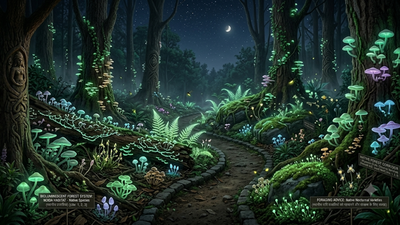
For centuries, plants have been associated with daylight, photosynthesis, and the natural rhythms of the sun. Now, researchers in China have taken a step that sounds straight out of science fiction by creating plants capable of glowing after dark.
It involves complex technologies such as biotechnology, materials science, and plant engineering, and is used to create living organisms that glow in the absence of any artificial source of electricity. Although glowing forests like those on the planet Pandora in the movie “Avatar” may be fantasy, bioluminescent landscapes come closer to reality. From genetically modified flowers to rechargeable luminous succulents, these innovations open new possibilities for sustainable lighting, urban design and environmental technology while raising important questions about the future role of living infrastructure in modern cities.
How Chinese scientists designed plants that glow without electricity
One of the most ambitious efforts was led by Chinese biotech researchers, who introduced bioluminescence pathways derived from fireflies and naturally luminous fungi into plant cells. They engineered plants that glow autonomously by incorporating a specific fungal bioluminescence pathway (FBP) into the plants’ metabolic systems. The modified plants emit a soft glow as part of their biological processes rather than relying on external electrical energy.
More than 6 species, including Nicotiana tabacum (Tobacco), Arabidopsis thaliana, Dahlia pinnata, Rosa Rubiginosa (Rose), Catharanthus roseus (Madagascar periwinkle), Petunia hybrida (Petunia), are designed to produce visible light.According to researchers, the goal goes beyond modernity. Bioluminescent plants could ultimately contribute to low-energy urban environments by reducing reliance on artificial lighting in parks, gardens, and tourist attractions.
This technology relies on naturally occurring biochemical reactions that convert stored chemical energy into light, similar to the mechanism used by fireflies and glowing fungi.This concept builds on previous advances in plant bioluminescence, including fungal bioluminescence systems that use caffeic acid, a compound already found in plants, as part of a self-sustaining light production cycle.
The hack behind the rechargeable juicer that glows in the dark
Another research paper that appeared in the journal “Mada” showed how a new method was used. Scientists from Zhejiang University have developed the world’s first multi-colored succulents using micrometer-sized phosphors that emit stored light after being charged with light.
Unlike bioluminescence, where living organisms produce light, in the first case, phosphor molecules are charged when exposed to sunlight and LEDs and then emit the light stored in them.Green, red, blue and violet emissions are generated with a lighting duration of up to 2 hours after charging. The scientists created a wall of 56 luminous succulents, creating enough light to read text in dark conditions.In a study titled “Engineering autonomously luminous plants using the fungal bioluminescence pathway,” the researchers write:“We produced multi-colored, uniform fluorescence in living plants through material engineering.”The study showed that living plants can act as renewable light storage systems while maintaining normal growth and physiological activity.
Could live plants become the street lights of the future?
Despite the excitement surrounding incandescent plants, significant challenges remain before they can replace traditional lighting infrastructure.
Researchers are developing tissue culture-free transformation methods, such as “cut, dip and budding” and neomeriste induction, to allow stable implementation of luminescent pathways in diverse ornamental and woody plants. Current bioluminescent plants emit relatively low light levels compared to modern LEDs, and researchers continue to work on improving brightness, efficiency, and long-term stability.
While these plants are currently viewed as “living light art” or decorative ambient lighting, the ultimate goal is to enhance their density enough to serve as sustainable urban “tree lighting” that can partially replace traditional electrical grids.However, scientists see great potential in specialized applications. Future uses could include illuminated botanical gardens, low-energy landscape lighting, sustainable tourist attractions, environmental monitoring systems, and decorative urban architecture.
Some researchers also believe that living light sources could contribute to carbon reduction strategies by incorporating biological systems directly into city design.What once seemed purely cinematic is increasingly becoming an area of serious scientific research. Although glowing forests that rival those in Avatar remain a distant possibility, the emergence of engineered luminous plants demonstrates how advances in biotechnology are reshaping the boundaries between organisms and functional technology.