

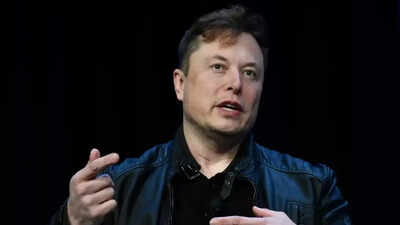
Elon Musk has never been shy about stretching timelines or forecasts, but his latest commentary about SpaceX reaches a scale that makes even the most optimistic market forecasts seem constrained.
In Elon Musk’s writings about The observation came amid a broader wave of expectations, valuations and investor commentary following SpaceX’s recent public listing. Between the ambitious internal goals and the Wall Street model, the gap began to look less like a difference of opinion and more like two entirely separate versions of the future of the same company.
Elon Musk’s $1 Trillion Worth Claim Amid Growing Valuation Pressures
SpaceX’s public appearance has already pushed it into unusual territory for space-focused businesses. The scale of the evaluation also reshaped the perception of Elon Musk himself. Based on the value of his holdings after the IPO, he is now described as the first person to cross the trillionaire threshold. It’s a label that doesn’t fit easily with the company’s financial disclosures, which still show losses and heavy capital demands rather than consistent profitability.
Within the same set of documents that accompanied the listing, SpaceX’s latest financial statements look more like a company still working to expand its industrial base than one approaching maturity. According to a recent post by X (formerly Twitter), revenues will reach $18.7 billion in 2025.
There’s also the issue of future earnings expectations. The Morgan Stanley model, referenced by Musk himself, puts revenue at around $160 billion by 2028 and around $330 billion by 2030, as reported in a recent X (formerly Twitter) post.
Even this trajectory assumes a sharp acceleration from current levels, requiring sustained expansion across both launch and satellite communications services.Musk’s response to this prediction was frank in tone. He said SpaceX may be able to generate annual revenue of about $1 trillion by 2030, and noted that he would be surprised if that number was not surpassed by 2031.
SpaceX is shifting from space infrastructure to a trillion-dollar AI-driven market vision
Part of the explanation lies in how SpaceX now frames its long-term market.
According to SpaceX’s official documents, the company’s offering document sets the total addressable market at approximately $28.5 trillion. What stands out is that the vast majority of this number, about 90%, is not related to rockets or satellite broadband, but to opportunities associated with artificial intelligence.Starlink, its satellite internet arm, and commercial launches still provide the current revenue base.
But the long-term argument for investors is that these companies are just a starting point, not the main event. The point is that space infrastructure could eventually become a distribution layer for much larger AI-related services.
SpaceX: From current expansion to $1 trillion speculative results in its long-term vision
The gap between current performance, analyst expectations, and Musk’s expectations has become unusually wide. Morgan Stanley’s numbers already assume a sharp rise in annual revenues to $330 billion by 2030.
Musk’s $1 trillion estimate pushes this assumption into uncertain territory.The company’s own documents acknowledge this tension in cautious language, indicating that it may not achieve profitability. This contrasts with the scale of the market opportunity being described internally, where artificial intelligence and satellite infrastructure are expected to open up a multi-trillion-dollar space.