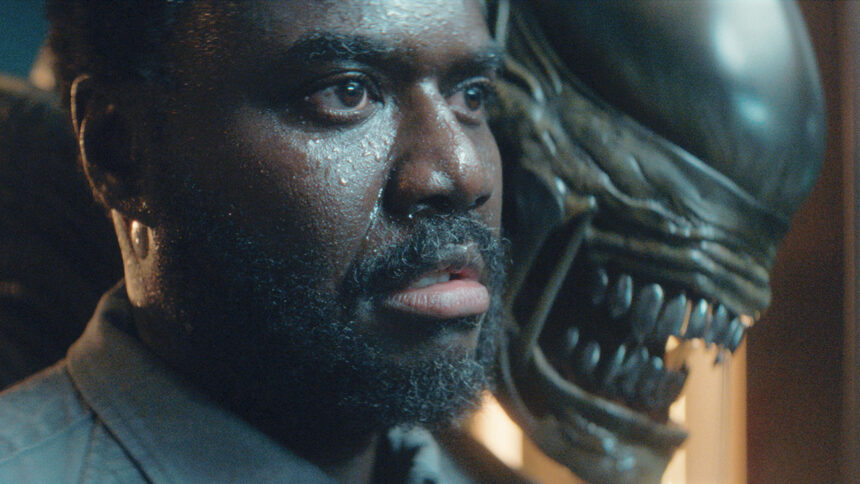
Writer-director Noah Hawley has a style he’s developed over the past 16 years working with editor Regis Kimble across their FX shows Fargo, Legion And now, Alien: Earth: What is the least number of cuts they can get away with?
“Noah is absolutely trying to tell the story with the least cuts,” Kimble says. “He likes to give the audience a chance to get what they want out of it [a scene]Instead of force feeding people. Another stylistic preference: take wide shots and rarely indulge in close-ups. “We stay wide in a lot of places and sit in shots for a long time,” he explains. “We use close-ups, but we gain them by the time we get to them, rather than having every line of dialogue done in close-up.”
It’s a style somewhat similar to that of Stanley Kubrick, as well as the Coen brothers (the latter two, of course, created the original theatrical version of Fargo). It’s also well suited for a straight horror series like Alien: Earth. There’s something unsettling about a shot that’s taken over a long period of time, or that’s wide enough to include a lot of areas where a creature could hide.

However, surprisingly, hiding the famous Xenomorph designed by H.R. Giger was not a priority for Kimble, even though the films in the series attempted to downplay the monster’s presence. “Everyone has seen a lot of the Xenomorph, that cat has been out of the bag since 1979,” Kimble says, referring to Ridley Scott’s groundbreaking film. Alien.
However, Kimble was asked to cut back one scene with the creature – an attack on a soldier in the second episode which turned out to be so bloody, Hawley deemed it too much even for FX. “We shortened the shots and darkened some of the material, so it wasn’t so in your face,” Kimball recalls.
Overall, Kimball makes his job seem relatively simple: “If you have three-dimensional characters that people can empathize with and have believability to them — it all starts from there,” he says. “If it was written that way, and shot that way, it would be fun to cut through the material.”
This story first appeared in the June standalone issue of The Hollywood Reporter magazine. To obtain the magazine, click here to subscribe.