Four members of the pro-Palestinian activist group Palestinian Action have been sentenced to long prison sentences for their role in a 2024 raid on an Elbit Systems factory in the UK near Bristol that caused more than £1.2 million (more than $1.5 million) in damage.In a landmark ruling, the court found that the crimes bore a “terrorism connection”, believed to be the first time criminal convictions in Britain have been dealt with in this way, leading to harsher sentences for the accused, the BBC reported.
The judge cites ideological motivation and government influence
Handing down the sentence at Woolwich Crown Court on Friday, Judge Jeremy Johnson ruled that the activists’ actions were intended to influence the UK government and promote a political cause.“The aim of this action was to influence the government and intimidate a section of the public,” the judge said, adding that this constituted an aggravating factor under the provisions of the terrorism-related sentences.The operatives – Charlotte Head (30), Samuel Corner (23), Leona Cameo (30), and Fatima Rajoani (21) – stormed the Elbit Systems facility in August 2024 wearing red jumpsuits. Prosecutors said they destroyed drones, computers and other equipment while live-streaming parts of the operation on social media.
The longest sentence for an activist who injured a police officer
Corner received the harshest sentence – seven years and eight months in prison – after also being found guilty of causing grievous bodily harm to police Sergeant Kate Evans.The court heard that Corner hit Evans with a sledgehammer during the raid, fracturing her spine. Judge Johnson described the attack as involving “excessive and unjustified force” and rejected arguments that Corner’s autism explained his actions.Head and Cameo were each sentenced to five years in prison, while Rajoane was sentenced to four years and eight months. All four will remain on license supervision for an additional year after their release.
The officer recounts the lasting shock
In a victim emotional impact statement, Sgt Evans told the court she was still receiving treatment and was suffering from a sleep disorder and recurring disturbing dreams.She said, “The emotional impact of this incident was deep and persistent,” adding that she was subjected to offensive messages accusing her of supporting “the Zionist occupation of Britain.”Avon and Somerset Police Chief Constable Sarah Crowe said the attack had permanently changed the officer’s life.“It’s important for everyone to realize that behind every uniform is an ordinary person with a family and responsibilities,” Crowe said.
Supporters denounce the ruling as an assault on protest rights
The rulings sparked sharp criticism from activists and politicians sympathetic to the Palestinian cause.Green Party leader Zach Polanski described the ruling as “painful” and warned that it represented a “dangerous attack on the right to protest.”Labor MP John McDonnell described the prison sentences as “truly shocking”.Defense barrister Rajeev Menon KC said the application of terrorism-related sentencing enhancements to a criminal damage conviction was unprecedented and risked having a chilling effect on legitimate protest activity.
Mass arrests outside the court
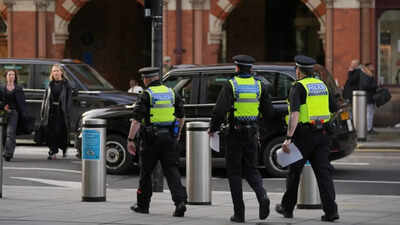
About 500 demonstrators gathered outside the court to support the defendants. According to the Metropolitan Police, 107 people were arrested during the protest.A dispersal order was issued after the ruling, but several hundred protesters remained, and some attempted to block the prison vehicle believed to be carrying the convicted activists. Police eventually cleared the road and left the vehicle later in the evening.
Palestinian work ban faces legal test
This ruling comes as the UK government continues its legal battle over the future of the Palestinian Labor Organization.The Direct Action Group was banned under the Terrorism Act after a series of high-profile actions, including a raid on the Bristol factory.
Membership or support for the organization became a criminal offense punishable by up to 14 years in prison.However, the Supreme Court ruled earlier this year that the ban was disproportionate and had a significant impact on human rights. The government has appealed this decision, and the ruling is expected on Monday.The outcome could have major implications for both protest movements and the government’s use of counter-terrorism powers in the UK.