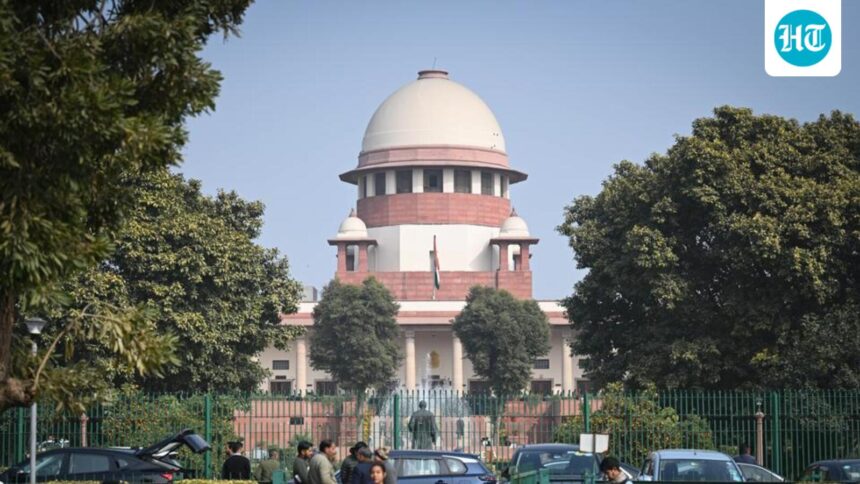
The Supreme Court said that the court should not order psychological examination of child victims as a routine matter in custody battles and sexual abuse cases, as such orders can lead to psychological trauma to the disturbed child, and issued directions to be followed in such matters.

A bench of Justices Sanjay Karol and N Koteswar Singh on Thursday asked the courts to adopt a cautious, child-centred approach that prioritizes the child’s dignity, emotional security and psychological well-being over the interests of the litigating parents. “Since the psychological development and well-being of the child are closely linked to the psychological state of the parents, it is advisable for the courts to request the submission of psychological evaluation reports of both parents, as it will help in making appropriate orders regarding the well-being of the child.”
The court passed the order after a Maharashtra woman challenged two orders of the Bombay High Court (2023), subjecting her 10-year-old daughter to psychological evaluation at the request of her father, who is accused of sexually assaulting the child when she was under three years of age. The US-based father denied the allegation and blamed his wife for trying to keep him away from the child. The mother said the child suffered the trauma of having her statement recorded in criminal proceedings under the Protection of Children from Sexual Offenses (POCSO) Act against her father. She said that subjecting her to evaluations would be a “new shock.”
The bench agreed with the mother’s concern. “In matters relating to child custody rights in the context of bitter disputes between parents, the courts need to adopt a very cautious approach before making orders which may exacerbate the trauma of an already troubled child.”
The bench modified one of the Supreme Court’s orders, noting that the order did not take into account the best interest of the child. She added that the Supreme Court did not record why a panel of experts examined the child instead of a single independent expert.
The court raised doubts about its impartiality, as the child’s father often suggested experts, including experts based abroad. She said the Supreme Court failed to consider the impact of subjecting a child to mixed interaction with experts.
Justice Singh, who wrote the judgement, said the justice system must guard against any process that effectively prioritizes the adversarial claims of litigating parties over the child’s emotional and psychological safety, and is detrimental to his or her well-being.
The court noted the nature of the case under the POCSO Act and said that well-established norms require “minimum intervention and minimum exposure” of child victims to such an operation. “Therefore, the judicial procedures themselves must comply with the standards of sensitivity, minimal intervention and psychological safety of the child.”
The court referred the matter back to the Maharashtra Family Court and directed psychological examination of the parents first. She added that the psychiatrist treating the child will then submit a report to the competent court. The family court will then determine whether the child needs a psychological evaluation, the court said.
She noted the complexities presented by the case and the need for a child-centred approach, consistent with the constitutional obligation of the courts to preserve the dignity, emotional security and psychological well-being of child victims involved in judicial processes.
The bench asked courts dealing with POCSO Act cases to take into consideration the welfare, emotional security, dignity and psychological well-being of children. “Psychological or psychiatric evaluation of a child victim should not be directed as a matter of routine simply because issues of custody, visitation or access to parents arise between disputing parents/relatives.” The bench said that the courts must provide reasons justifying the necessity, purpose and importance of the proposed practice if such an order is issued.
“The courts must adopt the principle of minimum intrusion and minimum exposure while directing psychological interaction with child victims,” the bench said. Typically, she said, this would be done by an independent, court-appointed psychologist. “The establishment of a committee of experts must remain an exceptional course that should only be followed when the court is satisfied that the particular facts of the case make such a course indispensable.”
She said experts must be independent and impartial, and the process must be child-centered and focused on their well-being, not an adversarial, investigative or evidence-gathering exercise. The bench said that the procedures and results of such a practice should remain strictly confidential.
The court said that the courts must ensure guarantees of privacy, emotional safety, absence of external influence and general appropriateness, taking into account the child’s age and psychological state. It said its guidelines were neither “comprehensive” nor “inflexible,” and courts must decide the correct course of action on a case-by-case basis with the assistance of experts as the case requires.