Political rebellions are rarely about numbers at first. They are about signals.

For Mamata Banerjee, the most worrying aspect of the unrest within the Trinamool Congress is not the exact size of the dissident camp. It is the profile of those who have chosen to break ranks.
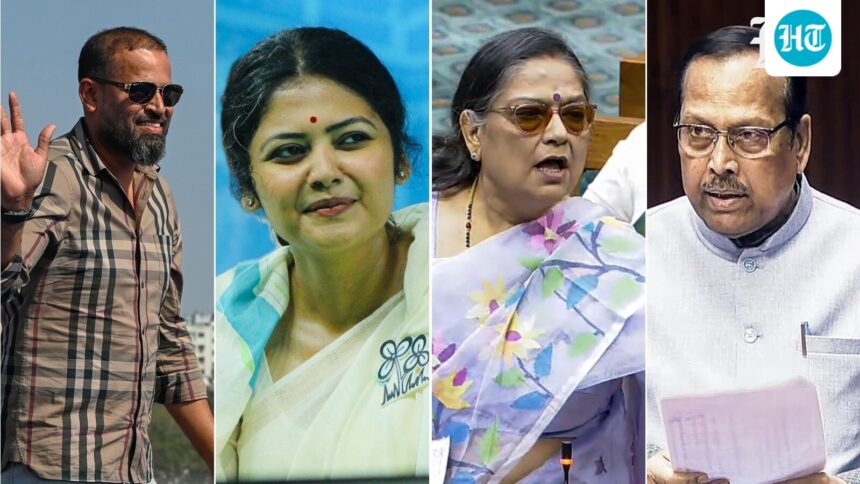
The names associated with the rebellion come from vastly different corners of the party — a veteran parliamentarian who has stood by the leadership for years, a youth icon nurtured by the organization, a popular recruit who notched one of the party’s biggest electoral victories in 2024, and a nationally recognized political heavyweight brought in to expand the TMC’s footprint beyond Bengal.
Together, these factors indicate that dissatisfaction is neither ideological nor generational. It goes beyond the party’s internal factions.
Sukhendu Sekhar Rai: The Insider Who Walked Away
Every political revolution needs a trigger. In the case of the TMC, Sukhendu Sekhar Rai played this role.
Unlike many rebels who emerged from the fringes of power, Ray belonged to the establishment. A Rajya Sabha MP, a lawyer and one of the party’s most vocal parliamentary voices, he was considered part of the leadership’s trusted inner circle. For years he defended the party through controversy and crises.
Therefore, his resignation carries a significance that goes beyond the loss of one representative.
In Bengali politics, defections from Trinamool are not uncommon. What made Ray’s exit different was that it came from a leader who had little to gain from the rebellion and a lot to lose. His criticism gave credence to growing grumbling since the election loss to the BJP, which had until then been dismissed as isolated grumbles.
Veterans rarely jump in first unless they believe others are willing to follow.
Sayoni Ghosh: Rebellion reaches the next generation
Sayoni Ghosh represents the generation that was supposed to determine the future of the Trinamool Congress. She entered politics from the entertainment industry, quickly rose through the ranks and eventually became the face of the Trinamool Youth Congress.
Her rise has often been seen as part of the party’s attempt to project a young leadership structure around Abhishek Banerjee.
Raising her voice undermines the argument that the unrest is merely a struggle between an aging old guard and a younger leadership group.
Yusuf Pathan: Symbol of the TMC’s national ambitions
Yusuf Pathan entered politics with little political baggage but his public visibility is formidable. His victory from Baharampur in the 2024 Lok Sabha elections was one of Trinamul’s most high-profile victories. By defeating veteran Congress candidate Adhir Ranjan Chowdhury, Pathan demonstrated the party’s ability to use celebrity appeal and social alliances to redraw political equations in areas once considered tough territory.
Its importance extends beyond parliamentary calculations.
Pathan represents Trinamool’s attempt to craft a national image that transcends Bengal’s traditional political class. It was part of a broader strategy to bring well-known faces into electoral politics and make the party appear more expansive and ambitious.
Kakoli Ghosh Dastidar: The organizational loyalist with popular weight
Kakoli Ghosh Dastidar represents the traditional organizational backbone of Trinamool. Dastidar, a doctor and multi-term MP for Barasat district, is among the party’s most experienced parliamentarians.
Unlike many new faces in the TMC, her political career has been built through years of constituency work and close involvement with the party organization in North 24 Parganas, one of Trinamul’s most important political strongholds.
Its importance lies not in television exposure, but in organizational influence. Leaders like Dastidar are deeply rooted in the district-level networks that have supported the Trinamool electoral machine over the years.
For Mamata Banerjee, maintaining the trust of leaders like Dastidar is crucial as they serve as the bridge between the state leadership and the party’s worker base.
Dave: The star activist who became a political asset
One of Bengal’s biggest film stars, MP Ghatal spent more than a decade in electoral politics and gradually transformed himself from a popular candidate into a serious political figure. Unlike many actors who enter politics for symbolic value, Dave built his reputation by maintaining a strong presence in his constituencies while remaining one of the party’s most recognizable public faces.
His importance to Trinamool extends beyond his parliamentary seat.
For many years, Dave was one of the party’s most effective advocates, especially among young voters and urban middle-class masses. He embodies the softer, more ambitious image that Trinamul has often sought to project alongside its combative political style.
What makes his alleged association with the splinter bloc noteworthy is that Dave has generally maintained a wary distance from internal factional battles. He was rarely linked to the old guard or emerging power centers within the party.
Shatrughan Sinha: The national face with symbolic value
Among the names associated with the dissident camp, none carries more symbolic weight outside Bengal than Shatrughan Sinha.
A former BJP leader, former Union minister and one of the most recognizable public figures in Indian politics, Sinha was recruited by Trinamool as part of Mamata Banerjee’s efforts to position herself as the national leader of the opposition.
His value to the party was not measured merely by votes. It lies in the vision. For a regional party striving for national importance, figures like Sinha help create a political scope that transcends state borders. Their presence indicates ambition.
Read also- Congress merger buzz, heavyweight rebel camp, MPs abandoning Mamata: What’s happening in TMC
Below is a complete list of opposition TMC leaders
Lok Sabha MPs
- Kakoli Ghosh Dastidar
- Shatrughan Sinha
- Yusuf Pathan
- Sayoni Ghosh
- Dave (Deepak Adhikari)
- Arup Chakraborty
- Babi Haldar
- Jagadish Basonia
- Prasoon Banerjee
- Sharmila Sarkar
- Partha Bhowmik
- Asset money
- Metallic bag
- Shatbi Roy
Rajya Sabha MPs who resigned
- Sukhendu Sekhar Rai
- Sushmita Dev
- Prakash Shik Barak
What the rebellion reveals
The emerging picture is striking.
Sukhendu Sekhar Rai represents the institutional core of the party. Sayoni Ghosh represents its future leadership. Yusuf Pathan embodies his more recent social and electoral experiences. Shatrughan Sinha reflects his national ambitions.
These leaders share little in common politically or socially. Yet their names appear in the same conversation.
This is what makes the current unrest different from previous bouts of dissent within the Trinamool Congress.
For nearly three decades, Mamata Banerjee’s greatest political strength has been her ability to keep disparate interests united under one umbrella. The current revolution indicates that tensions are beginning to emerge across multiple layers of this alliance at the same time.
It remains uncertain whether the rebellion will eventually fade away or evolve into a more organized challenge.
But in politics, perception often matters before numbers.
Currently, the perception facing the Trinamool leadership is that dissatisfaction is no longer limited to one faction. It has acquired faces that the party itself helped create.