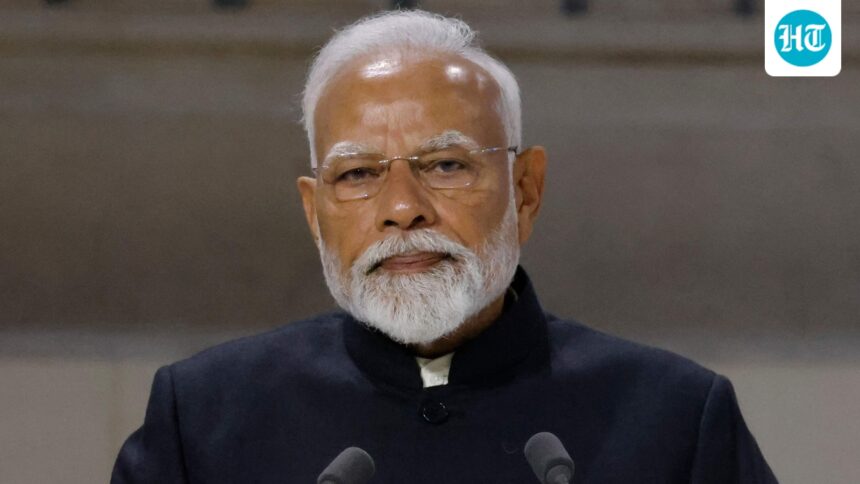
With Prime Minister Narendra Modi completing 12 years in office, India can look back on a remarkable journey of change. These years have been marked by development, good governance, and a strong commitment to improving the lives of ordinary citizens. The trust that people continue to place in Prime Minister Narendra Modi comes from his dedication to serving the nation, his tireless work ethic, and his vision of building a developed India by 2047.

The first phase of his leadership focused on ensuring dignity and basic necessities for every citizen. Through landmark initiatives like Swachh Bharat, Jan Dhan Yojana, PM Awas Yojana and Saubhagya, millions of poor families have access to toilets, bank accounts, Pucca houses and electricity. Development is no longer viewed as a privilege, but rather as a right that should go to the last person in line.
In the years that followed, several historic decisions reshaped the country. The abrogation of Article 370 in Jammu and Kashmir and the construction of the Ram Mandir in Ayodhya have fulfilled long-standing national aspirations. At the same time, India’s standing in the world has become stronger, reflecting the confidence and determination of a nation moving forward under decisive leadership.
The influence of these years is particularly evident in Bastar and the tribal areas of Chhattisgarh. For decades, many parts of Bastar remained isolated from development. Naxal violence created fear, limited opportunities, and prevented government services from reaching people. Many believe that this problem will never end. But thanks to the strong political will, effective governance, security measures and development-oriented policies of the Prime Minister, the situation has changed dramatically and the long-standing challenge of Naxalism is coming to an end.
Prime Minister Modi’s approach combines strong action against Naxalism with a commitment to development and tribal welfare. As a result, conflict-affected areas now see new roads, schools, healthcare facilities and livelihood opportunities. Nearly 200 security camps in Bastar are being converted into Veer Shaheed Gundadhur Seva Deras, where people will get the benefits of 371 schemes of the central and state governments. Under the Nayad Nilnar initiative, benefits from 43 schemes across 17 districts have reached 525 villages. With the Nayad Nilnar 2.0 project, this effort expands from seven to ten regions.
His tenure was also a period of unprecedented empowerment for tribal communities. The election of India’s first tribal chief symbolized a new era of representation and respect. The Union government has increased expenditure on tribal social welfare from approx $28,000 Crores during the previous governments to approx $1.5 million crores. Across the country, 722 Eklavya Model Residential Schools are helping tribal children get quality education. Programs providing housing, electricity, tap water, food security and health insurance coverage under Ayushman Bharat have improved the lives of millions of tribal families.
In Chhattisgarh, we are committed to taking this vision forward. Through Mukhyamantri Swasth Bastar Abhiyan, digital health profiles are being prepared for 36 lakh people. To improve education in remote areas, education cities are being developed in Abujmad and Jagargunda with an investment of Rs $100 Crores. A medical college in Geedam, a super-speciality hospital in Jagdalpur and a new government medical college in Dantewada will strengthen the healthcare and education infrastructure in Bastar.
Economic development is also gaining momentum in Chhattisgarh. The Raipur-Visakhapatnam Expressway is nearing completion and will significantly improve connectivity and investment opportunities in Bastar. the $The Rs 3,513-crore Jagdalpur-Rowghat railway project and expansion of air services are connecting the region to national markets. In the field of agriculture, new barrages have been constructed on the Indravati River in Mathnar and Durgaon, with investments of more than $Rs 2,000 crore will provide irrigation to nearly 32,000 hectares of land and improve farmers’ income.
At the same time, we preserve and celebrate the unique cultural heritage of Bastar. The world-famous Bastar Dussehra continues for 75 days showcasing the rich tribal traditions of the region. Events like the Bastar Olympics and the Kilo India Tribal Games provide young tribal athletes with new opportunities to compete and excel. Teaching local languages in Aleppo, Gondi, Patri and Maria helps maintain cultural identity while improving learning outcomes.
Through better governance, stronger infrastructure, tribal empowerment, improved healthcare, quality education and economic growth, we are building a Vixit Chhattisgarh that will meaningfully contribute to India’s development.
Bastar and Chhattisgarh will continue to play an important role in realizing Prime Minister Modi’s vision of a strong, prosperous and developed nation.