Last day Reimagines Virginia Woolf’s masterpiece Mrs Dalloway In many ways. Set in contemporary New York, this stark drama (which premieres Saturday night at the Tribeca Film Festival), the directorial debut of decorated visual artist Rachel Rose, reimagines its heroine, Clarissa, as Julia (Alicia Vikander), a writer who feels drained of creativity and purpose while navigating motherhood. Rose was inspired by her own experience with postpartum depression: after she came out of that period, she reconsidered it. Mrs Dalloway On the advice of a friend, he drafted the script months later.
But the film’s most ambitious gambit is what it does with the other half of its story. It enhances – and gender-swaps – the role of Septimus, a traumatized war veteran who loses sight of reality, to run parallel to Julia. “When I re-read Mrs DallowayI was greatly moved and astonished by Septimus, a character whom I had never understood before, and who I was now apprehending through my own experience, in his mad mental anguish and anguish.
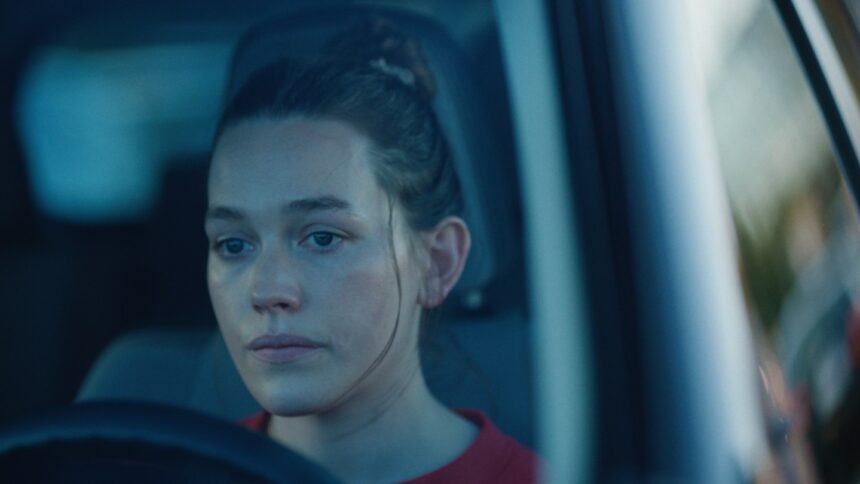
Here, the role is reimagined as Taylor, a younger mother of three who, at the beginning of the film, has a fleeting encounter with Julia before trying to go on with her special day. She was portrayed by Victoria Pedretti – which broke out on Netflix You Before starring opposite Jeremy Strong on Broadway Enemy of the people – In a devastating performance befitting Wolf’s bruising, cutting, and precise characterization. “Victoria is very primal, and she brings that to how she experiences space and her body,” Rose says.
What at first resembles the story of Julia, as expected from A Mrs Dalloway The interpretation gradually shifts toward something darker and more complex: as Julia rediscovers herself, Taylor completely loses her grip—leading to a tragic outcome that Pedretti depicts with complex and heartbreaking emotional insight. I talked to Hollywood Reporter About how to withdraw it.
I read the script to Last day While on Broadway Enemy of the peoplewhich was obviously an intense experience. How did it shock you in this context?
It’s interesting. At that point, we had been performing the play for a few months, so it was a bit refreshing to feel stimulated and inspired by reading something new. I’m sure I took inspiration from reading that, which came back into the play, especially when you’re doing the same story every night. It’s important to find different ways to keep in touch with him and keep him fresh. Not that the story is much the same Enemy of the people Not at all, but anything that can seed new ideas while you’re dealing with the same story every night is great.
You have to go to some deep and dark places here. What did you connect with in the role?
The feeling when I finished the script was an overwhelming love for the character. I felt like I had an enormous amount of love and protective instinct for Taylor and wanted to carry her story and protect her. There were definitely conversations at the meeting just – well, I feel like there’s a lot of focus on people playing things they’ve experienced themselves, and I’m not someone who has kids. I did not experience hormonal changes during pregnancy and after childbirth. There is no point in hiding this fact. I thought about the fact that it might take me out of the running to play Taylor.
But our conversation ended up talking about women and mothers in general, and how people in their lives create these illusions of normalcy and these illusions of perfection based on superficial things. There are a lot of people who don’t realize what’s going on in Taylor. We were talking about how she was probably very exceptional for most of her life, and she had a very normal life in many ways, and she was someone who was admired by a lot of people around her because she seemed like she could handle everything and how that doesn’t really exist for anyone. It’s always an illusion, and there’s a tremendous amount of pressure.
So what was it like to live in this skin? Was it difficult to get rid of him?
I shot this movie for a little over a month, but it required me to shoot for a few days and then have a big break in the middle where they shot all of Alicia’s work. Then it came back to me. It was incredibly sad. I found it amazing that when I tried to take my mind to the places she had been, I found it so easy to get there. I found myself wanting to grab it but not wanting to swim in for fear of drowning.
Which can be difficult.
Yes, it’s dangerous. I’m trying to get more comfortable talking about what can seem like an awkward aspect of the work, which is that I involve myself in my imagination, which has great power.
These weeks of waiting between beginning and end, I found myself wandering the streets, listening to music, holding it and just waiting. I felt like I was really in this waiting pattern. Even in production, as they say, you’re “on hold,” and there will be an H next to your name when the call sheet comes out. I really stuck to it, but it felt like I was standing on a cliff and using an enormous amount of force to stand there with one toe over the edge and look at what was an inch away. It’s very present there.
It’s not like I’m living a suicidal life every day, whether that’s information people need to know or not — but in the context of this, I think it’s relevant. I don’t know what that would show because everyone is an individual, but for me, it really underscored the strength that we all use every day to not look into the abyss, or some days, to just stick it out. The strength it takes to keep walking and walking around and to hold it when it’s not yet time to let go. I feel like I’m talking a bit abstractly, but it’s all very abstract.
that it. I imagine you will feel some degree of responsibility, since you are telling a story about suicidal ideation. Is that fair to say?
Incredibly yes. It was very shocking. I knew the story was a little off on something [Rose] I read it, but then when I actually went to look at it, there was a tremendous amount of responsibility that I found, where it was a lot Cases during that year when we shot the film. There were reports and news about women killing themselves and their children, and that happened throughout that year. I wrote these names on notes at home. I kept looking at him. I didn’t want to get away from him. It’s uncomfortable, so I can understand the instinct of wanting to put it aside or not go into it entirely, but the reality is that these things happen and no one notices.
The question is how do we get to this point without anyone’s help or intervention – how come we still don’t have enough research about women and what support they need during the postpartum period, and how much hormonal fluctuations can drive us crazy? There are reports of suicide due to all these massive hormonal fluctuations, yet women are left in the dark and misinformed about what to expect. We are so skilled at making things seem okay because we have a tremendous tolerance for pain and discomfort. We’re not invincible, so yeah, there was a lot of weight carried in representing these stories.
You describe a lot of research into understanding Taylor’s world and its circumstances. Was that an eye-opener for you?
Yes. I’m not surprised at how the medical industry has so often failed women. There were four different murders and suicides during the year, of which I heard nothing; That was absolutely amazing. You hear stories about the postpartum period. I heard about it from my mother. It’s a very common thing, but to that extent, I was like, “How do we walk around day in and day out, not trying to deal with this, not trying to do something about it and bringing it up in discussions just to loosen any taboos?” Of course, suicide, there’s a lot of taboo around it already, but in this case specifically, it was shocking to me.
Were you aware? Mrs Dalloway?
No, I haven’t read Mrs Dalloway When I read the script. I’m not, frankly, the most well-read. (He laughs.) fair enough. But I knew a little about Virginia Woolf’s voice and her unique way of writing, and I don’t think you have to know anything about her. Mrs Dalloway To estimate scenario A Yalm.
This movie reflects you and Alicia working the entire time, even though you only have a short amount of screen time. Were you aware of each other’s experiences or processes?
I have no idea what her process was. We didn’t talk much. There’s one scene where we interact, where she passes the baton to me and we start working on my stuff. Even with coverage, you’re often shooting separately. It’s incredible how much illusion can be created. Fortunately, none of these things happened to anyone in the group. We were able to tell this story and we were able to have some fun, some real fun and play and enjoy. I’m a firm believer in that.
As uncomfortable as it was, I don’t like to talk about how hard it was because ultimately it was just pretending. It has an impact, but I think it’s very important to try to stay fresh in it and enjoy it as well. I hope it’s not uncomfortable to say that. I get annoyed with all these actors saying, “Are we supposed to only care about how hard it is??” It’s like, “Duh, it’s art.” It’s hard to put something out of your mind and into the world, but it’s a huge privilege. This was a lucky opportunity, playing Taylor.