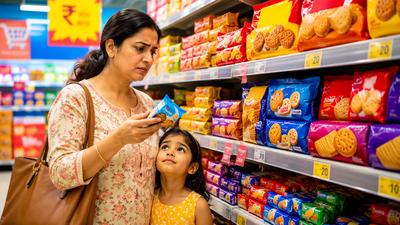
The impact of the US-Iranian conflict is no longer limited to oil markets and geopolitical headlines. They are now finding their way into kirana stores and supermarket aisles, as consumers turn to smaller packages of everyday goods and as monthly budgets already face pressure due to rising prices.Companies across categories like edible oils, biscuits, soaps, detergents, shampoos and food staples are witnessing faster growth in sales of Rs 5-20 packs compared to larger packs. Small package sales have expanded 4 to 10 percentage points faster since April than in the January-March quarter, as consumers look for ways to manage rising expenses, industry executives said.The shift comes as makers of fast-moving consumer goods are already dealing with rising raw material and packaging costs, fueled by rising crude oil prices amid chaos in the Middle East.
While companies, as reported by ET, have already implemented price increases of 4-10% across categories since April, many are now turning to weight reductions in smaller packages to protect popular price points.At AWL Agri Business, demand for 200ml and 500ml edible oil packs rose significantly during the quarter. The company responded by adding production lines dedicated to these package sizes.“Small pack sales have been on the rise in the last two months, rising by 8-10% during this quarter compared to the previous quarter,” Angshu Mallick, Executive Vice President, AWL Agri Business, told ET.
“We have expanded the availability of such packaging. It appears that economic pressures have caused this.”A similar trend is seen in the biscuit sector. Packs priced up to Rs 20 have registered 3-4 percentage points higher growth than larger packs over the past two months, Parle Products said.According to Parle Products Vice President, Mayank Shah, the rise has been more pronounced in urban and semi-urban markets, where rural consumers have traditionally relied more on low-end unit packages.He said: “It may be related to the impact of the geopolitical situation, but it is too early to determine a specific trend.”Britannia Industries also noted that consumers are moving towards lower priced products. Managing director Rakshit Hargav recently told analysts that Rs 5 and Rs 10 packs are gaining momentum, while conflict in the Middle East is adding to inflationary pressures. These packages represent between 60 and 65% of Britannia’s total sales.Across the FMCG sector, small packaging contributes between 30% and 60% of sales in most categories. At Dabur, they make up about 30% of the company’s business.Mohit Malhotra, CEO of Dabur International, said the company has started reducing the gram in Rs 10 and Rs 20 packs as increasing prices at these levels is not feasible. Companies had previously increased their fines after reducing the goods and services tax last September while maintaining current prices.“There is space available from pre-GST time to post-GST time. So this is beneficial,” he told analysts recently.As consumers increasingly shift toward lower-priced options and companies look for ways to accommodate rising costs, smaller packaging is emerging as a key battleground for fast-moving consumer goods makers navigating a challenging consumer environment.