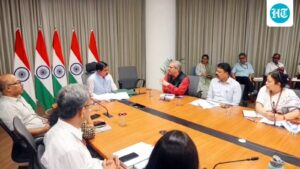
Metro systems serve less than 5% of Delhi’s population and less than 3% of Bengaluru and Hyderabad’s residents despite investment $4.5 lakh crore in 1,095 km of rail networks across 26 cities, according to a review of the National Urban Transport Policy 2006 (NUTP) presented on Friday at the Indian School of Public Policy (ISPP).

The review, conducted by ISSP Professor of Practice O P Agarwal, who was also the lead author of the 2006 NUTP, found that implementation of the 20-year-old policy has become heavily skewed towards metro rail projects while neglecting bus services and non-motorized transport, which the policy has identified as priorities.
The Union government called for the formation of an expert committee to prepare the National Urban Transport Policy 2026, saying the current framework no longer adequately addresses contemporary urban mobility challenges.
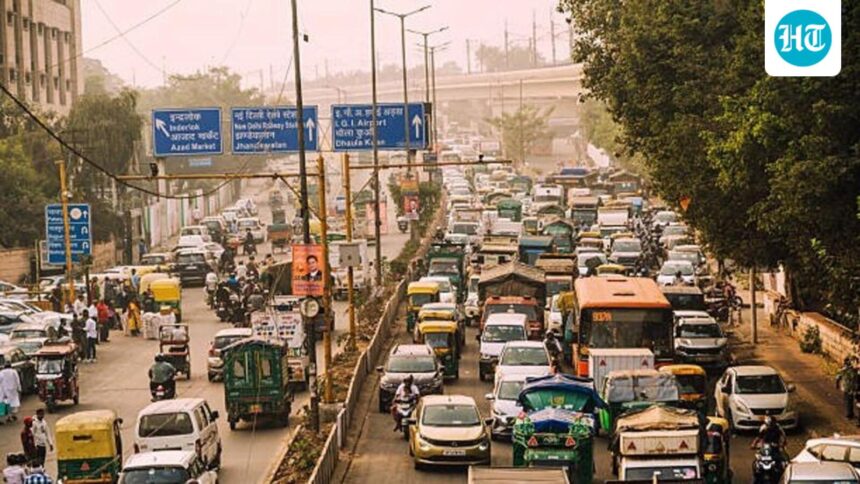
The audit results confirm the widening gap between investment and passenger numbers. While the NUTP has sought to shift commuters away from private vehicles and towards public transport, the number of registered vehicles in India has increased from 90 million in 2006 to 413 million today, the report said.
“The main problem was the engines. If you look at the engines, the primary goal of NUTP is how to slow this down because that is the root cause. How do you slow it down? In this context the main recommendation was to shift from personal vehicles to public transport,” Agarwal said.
Read also:MP Metro allows birthday parties to generate revenue and increase ridership
He stressed that while it took the country 55 years to reach 90 million registered vehicles by 2006, it has added another 320 million vehicles in just the past two decades.
The review attributed much of this growth to neglect of bus systems, which remain inadequate in most cities except Bengaluru. As a result, fuel-efficient two-wheelers have emerged as the preferred mode of transportation by providing a direct “bed-to-office” connectivity that public transport systems often fail to provide.
Speaking at the event, former bureaucrat Sanjeev Sahay who headed Delhi’s Integrated Multimodal Transport System, said urban transport planning must go beyond focusing on large infrastructure projects and pay more attention to commuter experience.
“To move beyond suboptimal outcomes, we must focus on the finer details of what the traveler truly values: comfort, reliability and convenience,” Sahai said. “Rather than being obsessed only with building massive physical assets like subways, we need to prioritize operational excellence – like ensuring buses arrive on time – to provide a truly competitive and affordable alternative to personal vehicles.”
The review said the new policy should address many gaps that were underestimated in 2006 or that have emerged over the past two decades. These include demand management measures such as higher parking fees, the rapid urbanization of smaller cities, and the need to enhance bus systems and non-motorized transportation that have been overshadowed by metro expansion. He also called for greater recognition of para-public transport services and stronger integration of transport-oriented development with mass transport networks.
She said passenger and freight movement platforms driven by e-commerce and climate change have transformed urban mobility since the original policy was formulated. It recommended greater use of data and technology in transportation planning and greater focus on accelerating the adoption of electric vehicles.
He also highlighted the need to integrate transport planning with affordable rental housing for low-income workers, arguing that long commutes from informal settlements undermine mobility goals.
Among its recommendations are the creation of an integrated urban mobility ecosystem and new financing mechanisms for public transport. The report said monetization of public land assets, including Delhi Transport Corporation bus depots, could generate up to $4000 Crores per annum in rental income.
She also suggested subsidizing interest on car loans as a more effective way to encourage electric vehicle adoption, and said cities should move away from standalone infrastructure projects toward integrated planning that links transportation, housing and land use.