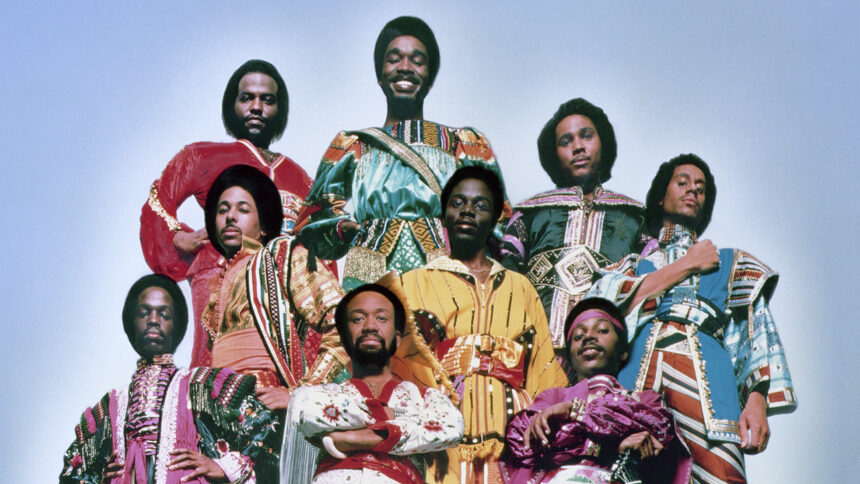
The breadth of Questlove’s list of contacts is on full display in his new documentary chronicling the long career of the legendary band Earth, Wind & Fire. Along with many past and present band members featured, the film includes commentary by figures such as Stevie Wonder, Lionel Richie, HER and Flea, among others, all of whom attest to the band’s lasting influence. Oh, and there’s also Barack and Michelle Obama, commenting on important issues like the intricacies of slow dancing to the band’s love songs.
The musician/director – who demonstrated his cinematic bona fides by winning an Oscar Summer of the soul and Cunning life! – delivers another great effort with a colorful title Earth, Wind, and Fire (to be heavenly vs. this is the weight of the world), receiving its world premiere as the opening evening film of the Tribeca Film Festival days before it airs on HBO.
Earth, Wind, and Fire (To Be Celestial vs. This Is the Weight of the World)
Bottom line A shining star in a music documentary.
place: Tribeca Film Festival (concert)
exit: Red “Questlove” Thompson
1 hour 59 minutes
What distinguishes Questlove’s documentaries is not only his clear knowledge of his subject, but also his sheer enthusiasm. He approaches these projects with the energy and excitement of a true fan, which proves contagious.
He has a lot to delve into in this effort about the six-time Grammy Award-winning band still touring more than a half-century after their 1971 debut album. The group was formed by Maurice White, who recounts his troubled childhood in the film’s opening minutes. He grew up in racially segregated Memphis, and was raised by his grandmother when his single mother moved to Chicago in order to find work. According to those who knew him, White never got over his feelings of abandonment.
After working as a session musician for Chess Records, he became the drummer in the hugely successful Ramsey Lewis Trio. He left that jazz band at the height of its success to form his own band, the name of which was inspired by the elements of his astrological chart (“wind” sounds better than “air”). The band struggled commercially at first, and White had already demonstrated his tough, practical style, firing its original members and forming a new group featuring younger musicians including vocalist Philip Bailey.
This incarnation fizzled out, and the band’s fortunes began to take off when they were signed to Columbia Records by Clive Davis. After being overshadowed by George Clinton’s Funkadelic Parliament when Earth, Wind & Fire served as their opening band, White became determined to make the group funnier. Due to their appearance on the televised “California Jam” festival in 1974, they began to cross over to white audiences.
“He was a visionary, and the power belongs to the visionary,” Billy says of the endlessly ambitious White, who was soon adding sophisticated orchestration and theatrics to the band’s mix. They had their first big hit with “Shining Star,” which we know started out as a simple jam. Questlove shows us several interviewees listening to the song, including Stevie Wonder, who says it led him to write his classic song “I Wish.”
“My mind is blown!” exclaims Questlove. “I didn’t see that coming!”
Inspired by his explorations in religion, philosophy, metaphysics, and Afrofuturism, among others, White has continued to expand the band’s horizons. He added a horn section and elaborate costumes, and hired Tony Award-winning choreographer George Faison (Wiz) to organize their tour and magician Doug Henning to create the illusions.
“It wasn’t a show, it was a musical,” comments a still terrified Lionel Richie. Stunning footage from one concert shows bassist Verdine White (Maurice’s brother) not missing a note as he rises and continues to play his instrument sideways.
Ultimately, White’s ambitions got the better of him. He opened his own studio and production complex at enormous expense, and the band’s touring became so complex that they were constantly losing money. In search of hits, he embraced trends such as disco, and “Boogie Wonderland” as a result. The record did well, but not everyone was a fan.
“It’s not that I didn’t like it,” says songwriter and producer Jimmy Jam. “But it didn’t come into my account spirit As their music usually does.
White also recruited David Foster as a collaborator, which resulted in a more pop sound. But the move alienated the band members, who felt pressured, as if they were just musicians.
“The idea of democracy is just an illusion in our group,” Bailey says.
The film pays tribute to White’s musical genius without neglecting his mistakes, including serial adultery that resulted in him having multiple children with women other than his longtime partner, Marilyn White.
“I’m Maurice’s youngest son,” Aiden White introduces himself, before adding with a laugh: “The one we know.” When Marilyn confronted Morris about his infidelities, he justified his behavior by saying: “I’m a star.”
Darker times followed for the band in the 1980s, when musical tastes changed and record buyers were drawn to the likes of Michael Jackson and Prince. White treated his bandmates poorly, depriving them of royalties and underpaying them. The quality of the music suffered, several members quit, and in 1984 he suddenly dissolved the band.
“He did to them what happened to him when he was a child,” explains White’s son KB (one of the film’s executive producers).
White’s solo album stand by me It failed, while Billy achieved new heights with a solo career that included the hit collaboration with Phil Collins titled “Easy Lover.” At the request of his record company, White reformed a younger version of the band a few years later, including five of the original members. But the power dynamics have changed. “I said I would work with him, not for him,” Billy says.
However, the audience moved on, and the subsequent tour failed. The band found themselves playing smaller and smaller venues, but they persevered. With their music widely featured in films and hip-hop samples, they have been performing ever since in what is essentially a decades-long victory lap. White suffered from Parkinson’s disease, retired from touring, and died in 2016.
Using a well-edited mix of old and new interviews and copious amounts of archival footage, the documentary tells the band’s story in a compelling way, with Questlove introducing enough imaginative stylistic flourishes to keep it from feeling like an extended film. behind music episode.
Most important of all, the film vividly conveys the brilliance of the band’s innovative music, culminating in a joyous celebration of their hit song “September” that will have HBO viewers getting off their couches and dancing.