

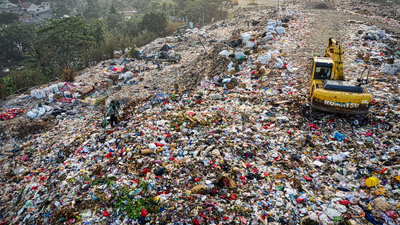
Although many people believe that their plastic waste is managed effectively and properly through recycling, a large amount of exported plastic waste goes to countries that lack proper waste management facilities.
Sometimes plastic, which is considered recyclable, is burned outdoors, emitting dangerous gases and particles into the atmosphere. Plastic recycling, plastic waste export, international plastic recycling, plastic pollution, open plastic burning, threats to public health, air pollution, waste management, environmental pollution, especially due to global plastic waste, are increasingly linked to each other in emerging environmental crises.
The hidden truth of exported plastic waste: where does it go?
Over the years, developed countries have dumped plastic waste in poor countries for treatment. The waste will be processed and eventually re-entered into circulation. However, a large amount of these materials cannot be properly recycled due to contaminants and mixed materials.When recycling facilities become overcrowded, plastic waste is often thrown away, buried, or incinerated. Researchers studying global waste management have identified open burning as one of the most overlooked forms of plastic pollution.
Dr. Therese M. describes… Carlson, Ph.D., a scientific and technical advisor at the International Pollutants Elimination Network (IPEN), describes the open burning of plastic waste as “extremely widespread around the world” and suggests that the true amount of plastics and plastic waste, the toxic chemicals found in plastics and waste transmitted globally by trade, is likely even higher. As plastic production increases, plastic waste will also rise significantly.
It is estimated that we will produce 26 billion tons of plastic waste by 2050. We cannot manage this level of waste generation sustainably, and without global policies to reduce plastic production, the unequal exchange of plastic waste from high-income to non-high-income countries will continue.The problem extends beyond garbage sites and landfills. Once plastic is burned, pollutants are released directly into the atmosphere, impacting local communities and wider ecosystems.
How does burning plastic affect public health?
The health consequences of burning plastic are becoming increasingly clear. Studies show that when plastic is burned, a complex composition of toxic substances such as dioxins, furans, heavy metals and fine particulates is released into the air.In their study, “Open Burning of Plastic Waste: An Urgent Global Health Problem,” scientists claim that pollutants released during plastic burning may remain active even after all the smoke and odor are gone.These pollutants may affect not only the air, but also the lungs, blood, and surrounding environment.
Exposure to these pollutants can lead to respiratory infections, heart disease, growth disorders, and various other diseases.Joseph Hoover, who holds a Ph.D. from the University of Arizona and is also part of the core faculty at the Center for Indigenous Resilience, speaking in an interview with Susan Kozier of the National Institute of Environmental Health Sciences, also noted that burning plastic waste at home has a significant impact on air pollution and health, especially in areas where there is no waste collection system.It is estimated that about two billion people worldwide do not have any waste collection facilities at their fingertips.
Why open burning remains a global environmental challenge
An additional reason why open burning persists despite efforts to address this problem is that it can sometimes turn into an informal method of waste disposal due to inadequate infrastructure. Communities may lack other options if waste collection services are either sporadic or non-existent at all.The aforementioned study on waste management practices in India, Indonesia, the Philippines and Zambia indicated that burning plastic is often considered a practical way to reduce the amount of waste despite insufficient awareness about its long-term effects on health.Open burning of plastic waste can pose severe risks to both professional residents and the general population due to inhalation of polluted smoke by waste workers and neighboring communities.
Aerosols produced by burning plastic waste are more toxic than aerosols produced in most other combustion processes.
Improve recycling and reduce plastic pollution
According to specialists, the solution to the problem is not limited to just getting people to recycle. Local recycling, reducing plastic production, improving waste management practices, and increasing transparency in plastic waste exports must be considered.Specialists point out that the issue of open burning must be addressed in international plans related to plastic pollution, as this area is currently neglected.Consumers are reminded of the study’s findings that putting plastics in the recycling bin is just the first step. Further fate will depend on management systems. Without proper recycling infrastructure and proper waste management regulations, plastics destined for recycling may end up contributing to pollution anyway.