Looking back at the world map, the land versus water diagram is less tidy than it first appears. Some countries are spanned by hundreds or even thousands of shards, scattered like broken glass across vast expanses of ocean.
Others sit almost entirely on a single mass of rock, but still qualify as island nations in their own right. There are places where the distance between communities is measured in ferry hours rather than roads, and other places where the capital is closer to another continent than its outer edges. WorldAtlas reports that these countries do not sit comfortably in one format. It is, to some extent, drifting through waters that have long shaped the way people live within it.
10 The largest island country in terms of area
| Rank | nation | Area (km²) | Area (miles²) |
| 1 | Indonesia | 1,904,569 | 735,358 |
| 2 | Madagascar | 587,041 | 226,658 |
| 3 | Papua New Guinea | 462,840 | 178,704 |
| 4 | Japan | 377,915 | 145,913 |
| 5 | Malaysia | 329,847 | 127,355 |
| 6 | Filipino | 300000 | 115,831 |
| 7 | New Zealand | 268,838 | 103,798 |
| 8 | UK | 243,610 | 94,058 |
| 9 | Cuba | 110,860 | 42,804 |
| 10 | Iceland | 103000 | 39,769 |
The world’s largest island countries
Indonesia
Indonesia lies in a long arc between Asia and Australia, divided into a mass of islands that seem to keep moving once you start counting. The spread is so wide that the country crosses different time zones without much effort. Some islands are densely populated and built up, others remain quiet and forested, rarely mentioned outside of maps.Java has a large population, while the shared expanses of Sumatra and Borneo give the country a sense of uneven heaviness.
Farther east, New Guinea’s western side adds another layer of distance, making the country feel cohesive rather than integrated in the usual sense. Traveling through it is not a journey within one place, but rather a series of separate worlds linked by the sea.
Madagascar
Madagascar lies alone off the coast of Africa, separated by a wide strip of ocean that has kept it physically distant for millions of years. Most of the country lies on one large island, with a few smaller pieces nearby that hardly change their general outline.This long separation has shaped life there in extraordinary ways. Species have evolved without any significant outside influence, which is why many of the plants and animals found there do not appear anywhere else. The landscape shifts from dense forests to dry areas with little shift, giving the island a sense of interior contrast that seems almost self-contained.
Papua New Guinea
Papua New Guinea occupies the eastern half of New Guinea and is spread across the surrounding islands.
The terrain is steep in some places, densely forested in others, and is often isolated by natural barriers that make movement between communities difficult.Within that geography there is an extraordinary spread of languages, with hundreds of them still in use. Many developed in isolation across valleys and hills, where contact between groups remained limited for generations. The surrounding islands add another layer of separation, leaving the country fragmented not only by water, but also by land that resists easy travel.
Japan
Japan stretches along the edge of East Asia in a narrow ridge that curves through cold northern waters and into the subtropics. The main islands form a clear backbone, but the smaller islands surrounding them complicate any simple picture of the country.At some point, official maps suggested a certain number of islands. Subsequent surveys, using improved methods, revised the number sharply upward. Nothing has changed regarding land, but the way it is calculated has changed.
The coastline remains irregular, shaped by volcanic activity and shifting seas, giving the country a constantly measured and somewhat uncertain geography.
Malaysia
Malaysia is divided into two separate parts, separated by a strip of ocean that physically separates them. Half of it is located on the Malay Peninsula, sharing a land border with Thailand. The other is located on Borneo, along with Indonesia and Brunei.This disconnect affects daily movement in practical ways.
Flights often replace what would otherwise be land travel, and the open water gap is covered by national management. Islands and coastal fringes add further fragmentation, although most of the population is concentrated in the urban centers that underpin each half of the country.
Filipino
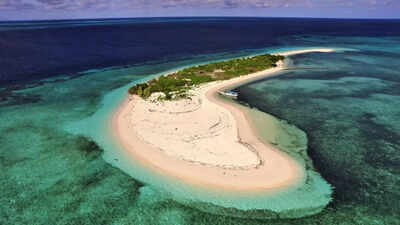
The Philippines is spread across a wide sector of the western Pacific Ocean, and is made up of thousands of islands of different sizes and shapes. Some are large enough to contain major cities and entire provinces, while others are little more than strips of land surrounded by coral reefs and deep water.The three broad regional groupings help make sense of this, although they do not eliminate the sense of fragmentation. Travel between islands often depends on weather and sea conditions, which can change quickly. The result is a country where distance is measured less in kilometers and more in the time it takes to cross water.
New Zealand
Located away from major landmasses, New Zealand consists mainly of two large islands and a long list of smaller islands.
The South Island holds mountains, rivers and wide open spaces, while the North Island houses most of the population and administrative centres.Despite its size, the country feels relatively contained, with most people living in coastal cities. Outside of those areas, the landscape quickly opens up to sparsely populated areas. The sea plays a constant role in shaping this separation, so that internal travel often involves long distances between settlements.
UK
The United Kingdom is based on Great Britain, which is one large island comprising England, Scotland, and Wales. Nearby is another large area of land that it shares with the Republic of Ireland, with Northern Ireland forming part of the political structure on its side.The surrounding waters have long influenced how the country communicates internally and externally. Even within the main island, distances are short enough that no point is too far from the coast.
Marine areas and small islands extend even further, although the core remains tightly concentrated on one stretch of land.
Cuba
Cuba lies at the meeting point of several major bodies of water, giving it a long, narrow shape stretching across the Caribbean Sea. The main island dominates, while the smaller islands surrounding it add texture to its outline without changing its overall shape.Its location puts it close to other major land masses, yet still clearly separated by water.
Coastal areas vary between quiet stretches and more developed urban areas, while inland areas remain less densely populated. The shape of the island makes travel across it relatively easy compared to fragmented archipelagos.
Iceland
Iceland is located in the North Atlantic Ocean, and is closer to the Arctic Circle than to the continent of Europe. Most of the population is concentrated in a small part of the island, while large areas remain uninhabited due to volcanic terrain and harsh weather.The Earth itself continues to move slowly as tectonic forces pull it. New formations appear over time, while others change shape under the influence of geothermal activity. Despite its size relative to the existing one, it stands as a single landmass shaped by movement beneath the surface as well as by the surrounding ocean.