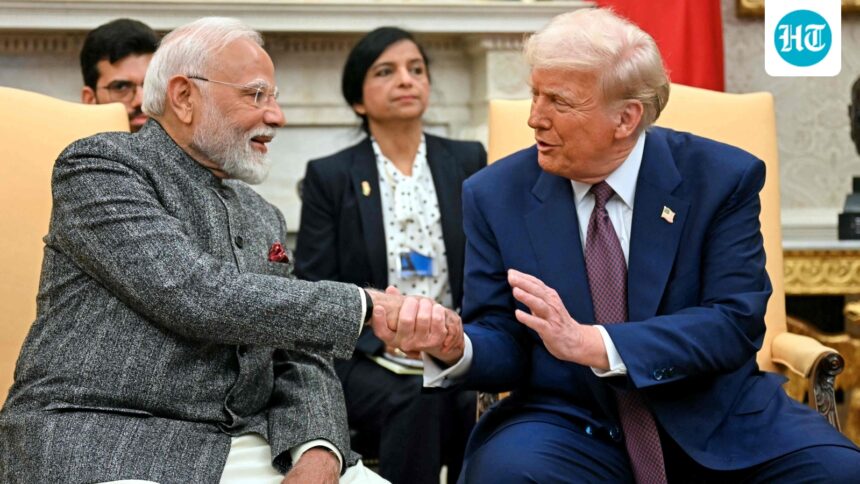
Negotiating teams from India and the United States on Tuesday began three-day in-person discussions to finalize an interim bilateral trade agreement (BTA), as Washington seeks increased market access and New Delhi demands a comparative tariff advantage for its goods in the US market, people familiar with the matter said.

The source, who requested anonymity, added that except for the tariff structure, almost all other matters were settled on February 7. The US is now working on a new, legally defensible tariff structure that would give an advantage to Indian goods over those coming from competitors like Vietnam, Bangladesh, Sri Lanka and Pakistan, they said.
On February 7 of this year, the two countries reached a framework for an interim agreement after negotiations that lasted for almost a year. But before the two sides could reach an agreement, the US Supreme Court on February 20 invalidated the basis of the tariff structure. India and the United States have been engaged in interim FTA talks since March 2025, following the joint statement issued by Prime Minister Narendra Modi and President Donald Trump on February 13, 2025.
“Since the burden of tariffs is ultimately borne by US consumers, the size of the proposed import duties is not a concern for India. Indian exporters want tariffs on Indian goods to be lower than those offered by competitors in the US market. India must ensure this in the text of the deal,” one of the people said.
He added that the comparative advantage would immediately open up a $30 trillion market for Indian exporters, especially small and medium enterprises, farmers and fishermen. The interim deal, expected soon, will provide a huge market opportunity in labour-intensive sectors such as textiles, apparel, leather goods, footwear, plastics, rubber products, organic chemicals, home decor, handicrafts and selected machinery, this person said.
The people mentioned primarily said that negotiations are progressing in the right direction in New Delhi and some results are expected by June 4. While visiting US Trade Representative Brendan Lynch is leading the negotiations, India is represented by Chief Negotiator and Additional Secretary for Trade Darpan Jain. This is the second personal meeting between the teams of the two countries after the US Supreme Court ruling on February 20. The previous meeting of the two teams was held on April 23 in Washington.
According to the people mentioned above, the negotiations are moving along two broad tracks: creating a legally viable tariff structure in the wake of the Supreme Court ruling, and securing India’s comparative advantage over competing exporters. The uniform tariff currently in place under Article 122 – which applies to all countries equally – gives India no advantage over its competitors.
The need to rebuild the agreement on a firm legal foundation has been the main challenge since the US Supreme Court on February 20 invalidated Trump’s sweeping global tariffs as exceeding his legal authority – a ruling that invalidated the proposed 18% tariff on Indian goods that was the cornerstone of the February 7 framework. The administration has since imposed a temporary unified tariff of 10% on all imports under Section 122 of the Trade Act of 1974, which is valid for 150 days and is scheduled to expire on July 24. Washington has also launched Section 301 investigations into alleged excess industrial capacity against several countries, including India as a bargaining tool.