The Center on Tuesday moved against the leadership of the Central Board of Secondary Education (CBSE) and ordered a probe into the controversial Grade 12 paper assessment contract, on the same day a 17-year-old who exposed the tender chaos submitted his findings to a parliamentary committee.

CBSE chairman Rahul Singh and secretary Himanshu Gupta have been transferred amid growing scrutiny in procurement for the board’s on-screen marking (OSM) system, sources told the media. Their new posts were not immediately identified. Separately, in an office memorandum dated June 2, the government constituted a single-member committee to probe the procurement of services for OSM, the platform used to record nearly 1 crore answer scripts this year.
Blogger in Parliament
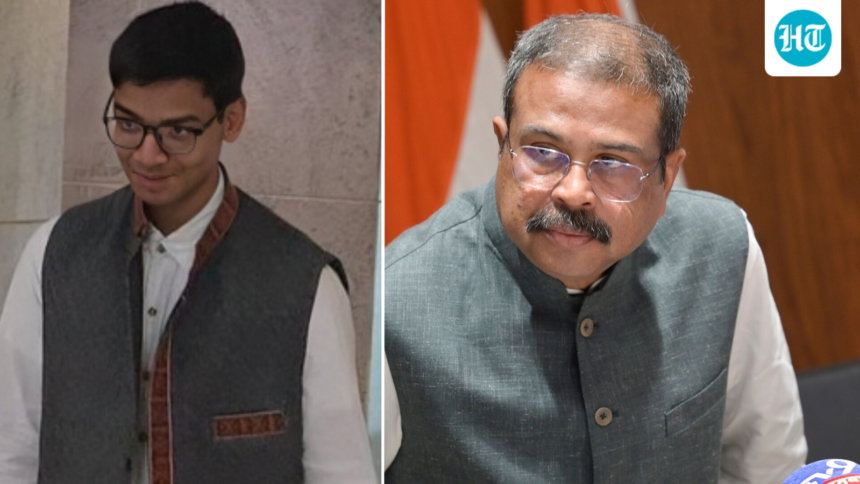
Hours earlier, Sarthak Siddhant, 17, presented his findings to the Parliamentary Standing Committee on Education, Women, Children, Youth and Sports, which is reviewing the use of OSM in Class 12 exams.
Congressman Jairam Ramesh referred to the chronology of events, as the committee is headed by a representative of his party and the government had rejected it earlier because it had an opposition member as its chairman.
He said the action against the officials “is a testimony to the ingenuity and skill of Generation Z students – who exposed this online scandal and even submitted it to the Parliamentary Standing Committee on Education headed by Digvijaya Singh today.”
Education Minister Dharmendra Pradhan should also be sacked, he added.
Siddhant, who posted his analysis on his website after going through tender documents on the central public procurement portal, claims that the CBSE has rewritten its tender rules to favor Coempt EduTeck, the company that runs the OSM system. He says a comparison of successive tenders revealed “at least 15 inconsistencies”, with provisions relating to blacklisting, financial qualifications and eligibility changing across rounds. He made clear that he was not opposed to OSM itself, but said it needed broader testing and pilot operations before a full launch.
HT also reported on the changes; The contract was awarded to Coempt EduTeck on December 5, just 74 days before the first board exams began on February 17.
CBSE officials have so far denied any wrongdoing and maintained that the tender was conducted in accordance with general financial rules and applicable government procurement procedures, and that the work was awarded to the lowest bidder. Quimbet also denies any corruption.
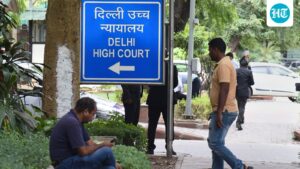
The ramifications of the OSM rollout have been wide-ranging. After the Grade 12 pass rate fell to its lowest level in seven years, students reported missing pages, unclear scans and, in some cases, answer sheets that were not theirs. About 1.27 lakh requests covering nearly 3.87 lakh answer books have been submitted by students looking for scanned copies. The Congress’s student wing, NSUI, has moved the Delhi High Court seeking reopening of the verification process, re-examination of the disputed cases and an independent probe.
CBSE finally opened the verification and re-evaluation portal on Tuesday, but the mechanism meant to address OSM complaints has had a troubled start in itself.
It was only launched after a delay – it was expected by May 29 – and even the launch had problems.
The board said “malicious actors” attempted to disrupt the portal through a barrage of cyberattacks, including a denial-of-service attempt that caused 1.5 million visits within two minutes and more than a thousand attempts to gain unauthorized access to files.
CBSE said it has improved the platform based on student feedback, including extending session time limits; More than 16,000 students had completed their applications by 3pm, with more than 8,000 concurrent users on the portal. The portal, which is open till June 6, is only available to students who have received scanned copies of their answer books.
What can a parliamentary committee do?
The parliamentary committee itself has no punitive power, but it can subpoena officials to testify under oath and demand internal records, with any failure to cooperate amounting to a violation of parliamentary privileges.
Neither the Ministry nor CBSE can directly reject its findings; Both must submit an Action Taken Report to explain how each defect was addressed or why it did not occur.
It is the same panel that, in the wake of the paper leak in the 2024 NEET-UG medical entrance test, warned in its report that the National Testing Agency’s performance “did not inspire much confidence”.
However, in a press conference on May 15 this year after NEET-UG 2026 was also leaked, Education Minister Dharmendra Pradhan said he would not act on these findings: “I don’t want to abide by the observations of the parliamentary committee… Opposition members are in the parliamentary committee. You know better than me how they prepare reports.”
The committee consists of 31 members from across parties – 21 MPs from the Lok Sabha and 10 from the Rajya Sabha. Although it is headed by Congress MP Digvijaya Singh, it does not have an opposition majority. The BJP-led NDA has the majority vote.
The government instead chose to follow the recommendations of the committee it set up headed by former ISRO chief K Radhakrishnan.
A broader examination crisis
The CBSE procedure is amidst a spate of exam failures. NEET-UG 2026, which was bagged by over 22 lakh candidates on May 3, was canceled on May 12 after paper leak; The CBI has arrested 13 people and the re-test is scheduled for June 21.
Hearing the repeal petitions, the Supreme Court on May 29 told the National Tourism Agency: “Either there is something wrong with the original recommendation or there is no proper implementation.” Solicitor General Tushar Mehta told the court that “the honorable Prime Minister is personally supervising” the reinstatement.
Opposition leader Rahul Gandhi demanded Pradhan’s removal, accusing him of betraying aspirants and insulting Parliament. Gandhi sought a judicial inquiry into the OSM dispute, questioning why Coempt – formerly known as Globarena and linked to previous controversies – was awarded the contract.
He also praised Generation Z for raising their voice, mocking BJP supporters’ suggestion that the youth protests were a “global conspiracy to destabilize India”.
Pradhan said he took “full responsibility” for the unrest and promised not to commit any further lapses.
Siddhant is one of three teenagers who led the audit — along with Vedant Shrivastava, to whom CBSE sent the wrong answer sheet, and 19-year-old Nisarja Adhikari, an ethical hacker who reported a vulnerability in the OSM portal.
Their findings have been combined into a single demand by the Kokroch Janta Party, an online movement seeking Pradhan’s removal and planning to hold a protest at Jantar Mantar on June 6.