Book of Love — the Philadelphia-bred quartet best known for their 1985 single “Boy” — will release a 40th anniversary reissue of their landmark debut album on June 26, just in time for Pride.
The band emerged from the Philadelphia art school scene in 1983, moving to New York’s East Village at a time when the downtown creative world was colliding with the emerging pop music revolution.
Their early break came as the opening act for two Depeche Mode tours in 1985 and 1986, exposing them to huge audiences who recognized their similar sensibilities. Their music is built on tubular bells, deadpan vocals, and an emotional flow unlike anything else in the American pop scene. They never became household names, but in gay clubs and on college radio they built a following that has proven remarkably durable
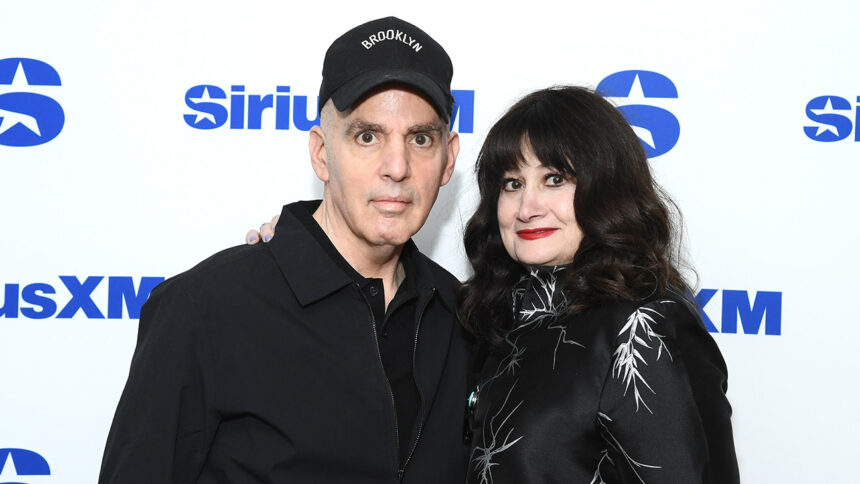
Ahead of a sold-out 10-city fall tour with all four original members, Hollywood Reporter I met songwriter and keyboardist Ted Ottaviano and lead singer Susan Ottaviano (no relation) via Zoom.
I want to start with “Boy” because it means a lot to me. Every time I hear it, I have to stop whatever I’m doing, turn it up and listen to the end. There aren’t a lot of songs that stick with me. How about that song?
Ted Ottaviano: We’ve been trying to figure this out for 40 years. For some reason one has magic. I’ve got some kind of voodoo in it. But I think there is no fat on it. It’s a piece of fat.
The bells, the singing, the message. Who wrote it?
Ted: I did. I wrote the lyric.
But you are a boy. So what were you thinking? What was on your mind?
Ted: I was a disenfranchised boy trying to find myself. At that point I became a gay man, but at that point I was just a very confused little boy. “Boy” is ostensibly about a girl who wants to be a boy, but it’s really just about belonging. Feeling like you don’t fit in with the rest of the people around you and wanting to be accepted: I feel like that’s the message people get, whether it’s overt or not.
Susan Ottaviano: It’s for all strangers. People who felt neglected and who felt different in some way. Ted has written many songs from a female point of view.
There is a sadness to it. It’s not a triumphant gay anthem — like “Free Me, I’m Out the Door.” It’s “I want to be somewhere I’m not allowed to be.” This is a sad feeling.
Ted: completely. Peter Rauhofer, the great remix maker who passed away a few years ago, remixed the song in 1999 and it hit No. 1 on the Billboard dance charts. But he called me and said in his nice German accent: ‘They wanted it to be a rush-hour record, Ted, but the strings are too sad.’ He was able to achieve both at the same time: sadness and climax.
Spaces and gender have become a major political flashpoint ever since. Has the song taken on new meanings?
Susan: definitely. The real thing for us is that we wrote from our point of view — life in New York City in the mid-’80s, and the things that happen in our lives. But the song still speaks to people because there’s such a question about sex now. For us, we were writing from what we know and what we experience, including the exclusion of women from things.
“Pretty Boys and Pretty Girls” – I thought it was the first song to directly address AIDS. Is this correct?
Susan: This is what we were told. He was the first major artist to address the AIDS crisis. They kind of tried to make us tone it down a little bit, but we’re very proud of it.
Tell me the story behind it.
Ted: When people think of 80s music, there’s always a peppy feeling about it, and that’s true. But in New York City in the 1980s, it was a very dark time. That’s when the AIDS pandemic hit the city hard. We lived in the East Village, which was a real multicultural artist neighborhood, and it influenced all kinds of people.
When I think about our first decade in New York, I have a mixed bag of feelings about it. So I wrote “Pretty Boys and Pretty Girls.” It’s got two levels. You can hear it as a fun pop track, but if you turn on another filter, it’s basically saying “We live in a dangerous world now. Stay safe.”
We were asked to use that song in a Sunkist commercial and we said no. We can’t have a bunch of people in swimsuits strolling around the beach to this song. Our managers were completely frustrated with us.
Susan: People were dying around us. In cities, this is where AIDS hits hardest.
Your music has ended up in some interesting films. Writers of Love member Lauren Rosselli had a small role in it Silence of the LambsOne of your songs ended up happening through her relationship with the director.
Ted: Jonathan Demme heard a cover of the album and clicked on “Sunny Day”. It was actually used in her scene – a pivotal one. It’s a small scene but it’s really important. She gives Jodie Foster’s character the clue that leads them to Buffalo Bill’s house.
Susan: “They can’t cut me, she gives them the clue,” Lauren used to say. Demy used a lot of musicians and friends in small parts in his films. He used a lot of Chris Isaak.
Then “Touch the Roses” in American Psycho. I don’t think it’s a coincidence – Silence of the Lambs, American Psychothe cover of “Tubular Bells” that I did with it Exorcist communication. There is a tension and sadness in your music that matches the horror. You don’t make happy music
Ted: I didn’t realize this horror category occurred in our catalog.
Susan: Well, Ted said that the song “I Touch Roses” is about empowerment, and the movie “Boy” is about empowerment too – especially the way it was used companionwhich just came out. The roles are reversed, at first the girl is on the bottom, and at the end she is on top.