

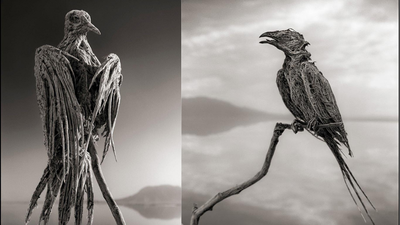
At first glance, the animals appear frozen in time. The bird appears to be trapped in mid-flight. A bat hangs heavily from a branch, its wings spread wide like a Gothic statue. Their bodies appear to be carved from stone rather than flesh, as if an invisible force turned living beings into lifeless statues.
The haunting images, taken by British photographer Nick Brandt, shocked the Internet and gave rise to one of nature’s strangest myths: a lake in Tanzania that can turn animals into stone. The truth behind Lake Natron is less supernatural, but no less extraordinary.
Hidden dead lake in northern Tanzania
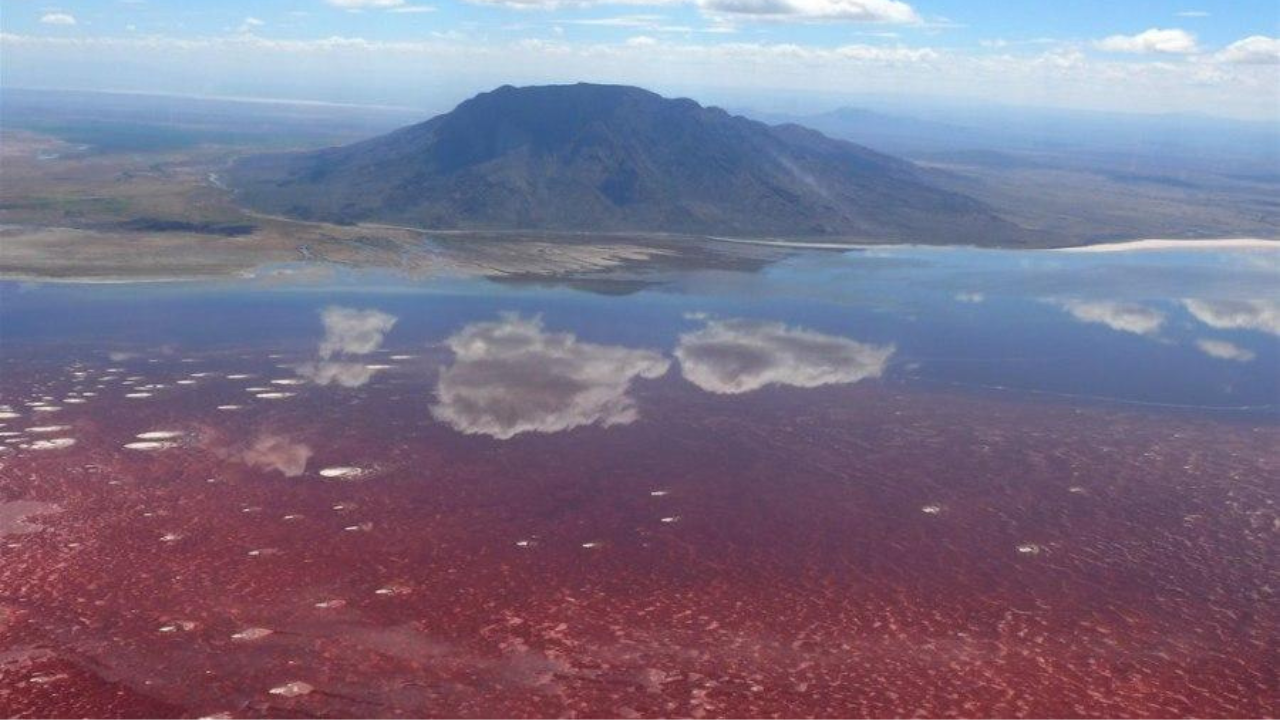
Lake Natron is located in northern Tanzania near the Kenyan border, deep in the East African Rift Valley. From above, the lake often appears blood red or bright orange, giving it an almost eerie appearance.Unlike regular freshwater lakes, Lake Natron is highly alkaline. Its water contains high concentrations of sodium carbonate and other minerals, pushing the pH level to about 10.5, and is almost as caustic as ammonia. During the hottest months, water temperatures can rise to nearly 60 °C (140 °F).The lake’s unusual chemistry comes in part from nearby Ol Doinyo Lengai, an active volcano known for spewing rare carbonatite lava rich in sodium and potassium minerals.
Why do animals look like they have turned to stone?
The popular claim that Lake Natron instantly petrifies animals is not scientifically accurate. The lake does not magically turn living things to stone simply by coming into contact with water.What is actually happening is a form of nature conservation.Birds and bats sometimes die near the lake, either after colliding with its reflective surface or becoming trapped in the harsh conditions. Over time, the mineral-rich lake salts coat and preserve the bodies, drying them in exquisite detail.The result is strange. The animals appear to be calcified, fossilized, or carved into rock, although the process is closer to natural taxidermy than true petrification.Scientists say the intense alkalinity slows the decomposition process while salt deposits build up around the remains, preserving feathers, wings and body shapes with extraordinary clarity.
Pictures that horrified the Internet
The lake became world famous after photographer Nick Brandt published haunting black-and-white images in his 2013 book Through the Ruined Land.Brandt discovered preserved animal remains along the coastline and later carefully placed them on branches and rocks before photographing them dramatically.Brandt wrote in the book’s introduction:“I unexpectedly found creatures – all kinds of birds and bats – washed up along the shore of Lake Natron.”
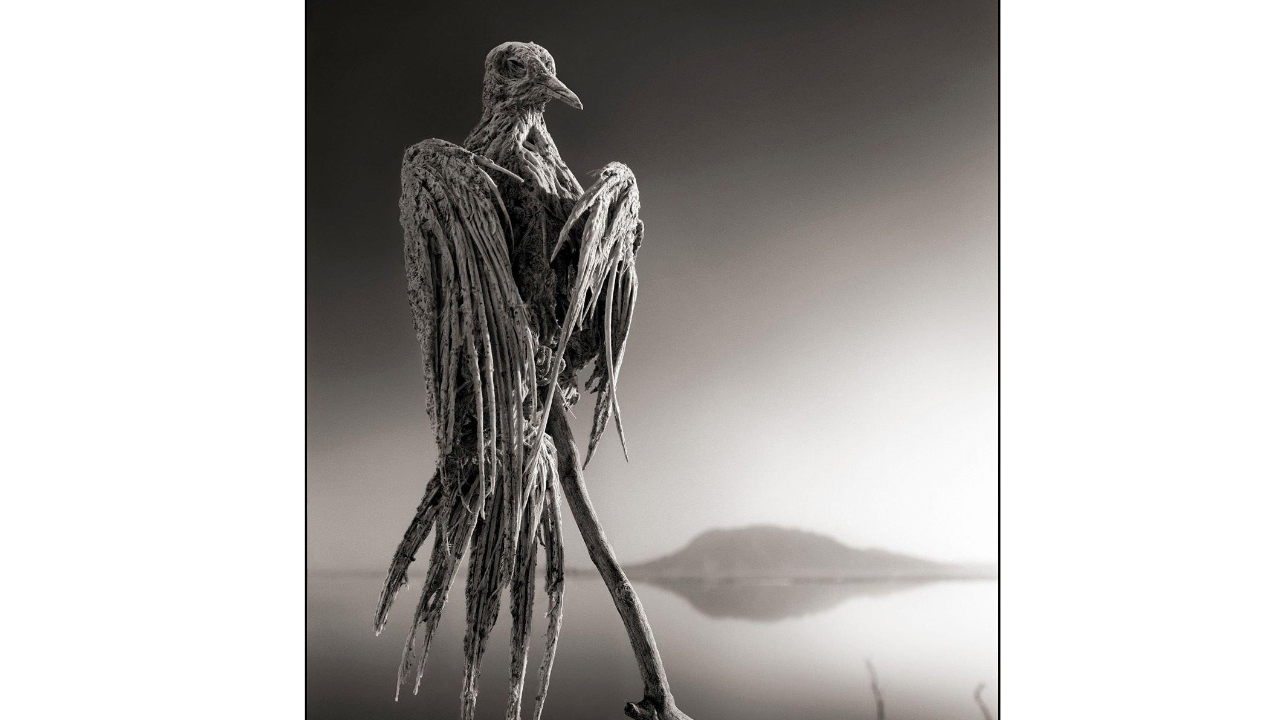
He added that no one knows exactly how the animals died, although the quality of the lake’s reflection may confuse the birds and cause collisions.The images quickly spread online, often accompanied by exaggerated claims that the lake instantly “turns animals to stone.” In fact, the images showed naturally preserved remains that had actually dried out under the harsh mineral conditions of the lake.
Deadly for some, and a paradise for flamingos
Despite its terrifying reputation, Lake Natron is not lifeless.In fact, it serves as one of the most important breeding areas for lesser flamingos in the world.
Millions of flamingos nest around the lake because the harsh alkaline conditions keep most predators away.The birds feed on cyanobacteria and salt-loving algae that thrive in the lake’s harsh environment. These microorganisms also contribute to the lake’s stunning red and pink colors.For flamingos, the dangerous lake is almost a natural fortress.
The volcano feeds the lake
Much of Lake Natron’s chemistry is shaped by the first Duinio Lingai, one of the strangest volcanoes on Earth.Unlike most volcanoes that erupt silica-rich lava, Ol Doinyo Lengai produces rare carbonate lava, which contains significant amounts of sodium and potassium carbonate minerals.These minerals eventually wash into the surrounding basin and contribute to the extreme alkalinity of the lake.Combined with high evaporation rates and extreme heat, volcanic minerals create one of the harshest lake environments on the planet.
Why does the lake appear red from space?
Satellite images of Lake Natron often reveal stunning shades of crimson, orange, and pink stretching across the water.These colors are produced by halophilic microorganisms and cyanobacteria that are specially adapted to survive in hypersaline conditions. Many of these organisms produce red pigments, especially during dry seasons when salt concentrations become more intense.The surreal colors of Lake Natron have made it one of Africa’s most striking natural landmarks.
Myths surrounding the “Dead Lake”
Over time, Internet stories have turned Lake Natron into something almost mythical. Some online posts falsely claimed that animals that touch the water die instantly and turn to stone within minutes.Scientists strongly dispute these claims.The lake is certainly hostile to many forms of life due to its alkalinity and heat, but it does not calcify live animals immediately. The preserved remains photographed by Nick Brandt were animals that had already died and later became covered in mineral deposits.The real science behind this phenomenon is slower, quieter, and perhaps more fascinating than the myth itself.
Nature at its most beautiful and brutal
Lake Natron exists at the strange intersection between death and survival.For some animals, it is an unforgiving environment, able to preserve remains in haunting detail. For flamingos and their specialized microorganisms, it is a thriving haven protected by their extreme chemistry.It is this paradox that continues to fascinate scientists, photographers and Internet users around the world.The lake may not literally turn creatures to stone, but under the right conditions it can preserve them so perfectly that they appear frozen somewhere between life, death, and petrification.
Get all the live updates on the US-Iran conflict, the Israel-Iran war, Donald Trump’s reactions, and the impact of the global oil market here.