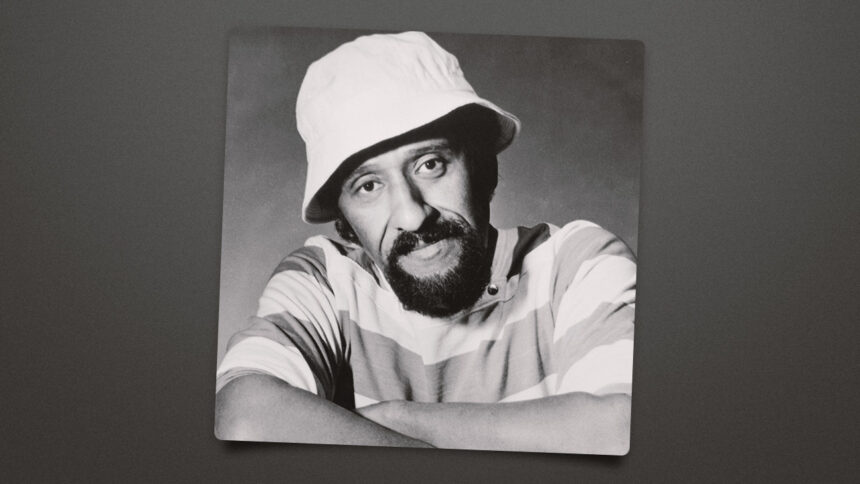
Sonny Rollins, the powerful jazz saxophonist and figurehead whose improvisation sessions became legend and standards for his compositions “St. Thomas,” “Olio,” “Doxy,” “Rent Up House” and “Eregen,” died Monday. He was 95 years old.
His family announced that Rollins died at his home in Woodstock, New York.
Rollins is widely recognized as one of the most important and influential musicians of all time, having recorded more than 60 albums during his seven-decade career.
Along the way, he was awarded a Guggenheim Fellowship in 1972, inducted into the Downbeat Jazz Hall of Fame in 1973, a Grammy Lifetime Achievement Award in 2004, a Polar Music Award in 2007, a National Medal of Arts from President Obama in 2010, a Kennedy Center Honor in 2011, and a Lifetime Achievement Award from the American Jazz Foundation in 2015.
Rollins has won two competitive Grammy Awards, the first in 2001 for Best Jazz Solo or Group Album for This is what I do The second was in 2005 for Best Jazz Instrumental Solo for the song “Why Was I Born?”, from his live LP. Without a song: September 11 concert On Milestone Records. The latter was recorded in Boston four days after the World Trade Center bombing, which Rollins witnessed from his apartment a few blocks from the site of the tragedy.
Theodore Walter Rollins was born in New York on September 7, 1930, and grew up in Harlem, near the Savoy Ballroom, the Apollo Theater and the home of his idol Coleman Hawkins. His parents were immigrants from the Virgin Islands.
After discovering Fats Waller and Louis Armstrong, Rollins, inspired by Louis Jordan, began playing the alto saxophone. But at the age of 16, he tried to imitate Hawkins and became fascinated by bebop, so he picked up the tenor saxophone. He began modeling himself after Charlie Parker and soon came under the tutelage of Thelonious Monk.
In the Sugar Hill neighborhood, where his musical peers included Jackie McLean, Kenny Drew and Art Taylor, Rollins was the first to emerge, working and recording with the likes of Babz Gonzalez, JJ Johnson, Bud Powell, and Miles Davis before he was twenty years old.
In the early 1950s, Rollins took on the role of the new young Turkish tenor on the scene, working with Miles, Monk and the Modern Jazz Quartet after serving time on Rikers Island for armed robbery and then heroin use. His artistic breakthrough came in 1954 when he recorded “Oleo,” “Airegin” (Nigerian spelled backwards) and “Doxy” with a quintet led by Davis and featuring pianist Horace Silver.
He entered the Federal Medical Center in Lexington, Kentucky, in 1955, volunteered for experimental methadone treatment that would kick his heroin habit, and then lived for a time in Chicago.
Also in 1955, Rollins became a member of the Clifford Brown-Max Roach Quintet, his trademark being a caustic and often playful style of melodic invention with a range of musical styles from ballads to calypso that highlighted his talent for thematic improvisation. It was during this time that Sonny earned the nickname “Newk” for his resemblance to Brooklyn Dodgers outfielder Don Newcomb.

Rollins began recording the first in a series of landmark albums under his name in 1956. The “False Hot” songs introduced the now common practice of playing pop music in 3/4 time; St. Thomas began his interest in Calypso. “Blue 7” showed off his improvisational skills.
The road to the westfrom 1957, was Rollins’ first album to feature a trio featuring sax, bass, and drums (except piano), and contained his inspired take on such hackneyed standards as “Wagon Wheels” and “I’m an Old Cowhand.”
“It Could Happen to You”, also from 1957, was the first in a series of single recordings, while the 1958 album Freedom Pavilion It foreshadowed the political stance of jazz in the 1960s.
At the height of his fame in 1959, Rollins stayed away from public performance for two years. “I felt like I needed to improve different aspects of my craft,” he recalls. “I felt like I was getting too much, too soon. I was going to do it my way.”
Back to work in 1961 with bridge, Rollins delivered live sets that showcased his marathon covers, epic stream-of-consciousness solos, and belted out popular song melodies with stunning chops and dazzling variations. From 1962 to 1966, he worked with Jim Hall, Don Cherry, Paul Bley, and even his idol Hawkins, but because of his constant anxiety, he took another sabbatical in 1966, and immersed himself in Eastern religion and yoga, specifically Zen Buddhism.
He performed in Japan and India, then signed with Milestone in 1972 for Next albumHe worked with Orrin Keepnews, then produced his own sessions with Lucille Rollins, his wife of 40 years and his manager since 1971. She died in 2004.
His long association with the Berkeley, California-based Milestone label has produced twenty albums, including all-star bands featuring Jack DeJohnette, Stanley Clarke and Tony Williams and live recordings with labelmates Ron Carter and McCoy Tyner.
In 1986, he was the subject of a Robert Moog documentary Giant saxophonewhich included an accompanying audio clip, G-Man.
In June 2006, he was inducted into the Achievement Academy – and performed a solo show – at the International Achievement Summit in Los Angeles hosted by George Lucas and Steven Spielberg.
Rollins has released albums under his own Doxy Records label since 2006. The first film on his imprint was the Grammy-nominated 2001 Sony, please – its title came from one of his wife’s favorite phrases – and it is his first studio recording since then This is what I do. In 2007, he performed at Carnegie Hall to commemorate the 50th anniversary of his first performance there.
In 2008 he was released Road Shows, Vol. 1the first in a series of recordings from his audio archive. The second volume was released in 2011, featuring material recorded in Sapporo and Tokyo during the 2010 tour, as well as several songs from his 80th birthday concert in New York, which included his first onstage encounter with Ornette Coleman on the 20-minute “Sonnymoon for Two.”
When he was greeted at the Kennedy Center, he said: “I am very appreciative of this great honor. By honoring me, the Kennedy Center honors jazz, American classical music. And for that, I am very grateful.”
Rollins’ last public performance came in 2012. He moved to Woodstock in 2013 and that spring made a guest appearance on The Simpsons. A year later, he announced his retirement and was the subject of a Dutch television documentary.
Among his recent publications are the third and fourth volumes of his book Road shows Albums released in spring 2016.
Survivors include his nephew Clifton and nieces Falene and Gabrielle. No public memorial is planned at this time.
In 2005 The New Yorker Profile, jazz critic Stanley Crouch wrote of the instrument Rollins had in his hands: “With its brass body, pearl keys, mouthpiece and reed, the trumpet becomes a vessel for the saga of Rollins’ talent and the impeccable power and tradition of his jazz predecessors.”