Logo text
[Thisstorycontainsspoilersfrom[Thisstorycontainsspoilersfromtrance Season 3 Episode 7.]
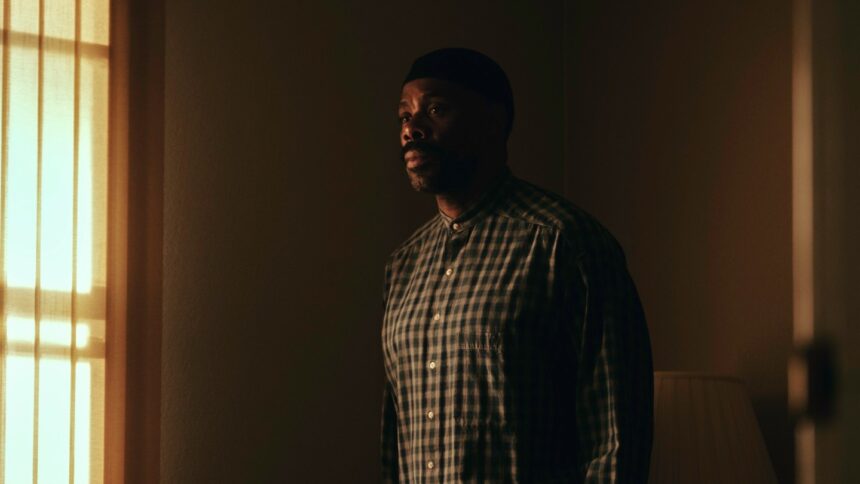
Colman Domingo only appears briefly tranceSeason 3 has been highly anticipated through its first six episodes, but on Sunday night, Emmy Award-winning actor’s portrayal of Ali, a recovering addict who has served as Rue’s (Zendaya) caretaker and mentor since Season 1, took center stage like never before. The penultimate episode of the season, “Rain or Shine,” opened with a poignant glimpse into Ali’s past, showing viewers, for the first time, the dark side he often hinted at. It showed him getting high and cheating on his wife with a fellow addict (played by Natasha Lyonne), then bringing an abusive mood into the house.
This leads to an important moment between Ali and Ro in the present, as he learns of her precarious situation while trying to navigate her fragile relationships with two rival drug cartels – and the DEA as an informant. She details her elaborate life-or-death plan for Ali to escape the situation, which he listens nervously to. Given the new context we get about the man, when he steps in to help, we understand it’s not just because of the love he has for Rue, but also because he believes he has to function in the world after causing so much pain and experiencing so much loss.
Now, with Ali also set to play a key role in next Sunday’s final, Hollywood Reporter Domingo learns about Ali’s dark side, takes him out of the restaurant and what happens next.
How did Sam Levinson pitch Ali’s story to you this season? When did you know we were getting this glimpse into his origin story?
From the beginning, Sam was extremely helpful, not only presenting the character and story, but really telling you his thoughts on the character and the “why” and “why now.” This season was a great opportunity to delve into Ali’s backstory, to give you more context and understand who he is and why he does what he does, and why he’s been doing it for the past two seasons — and then how that propels us into the final episode of the season, in a really big, dynamic way. I think that’s why he put off Ali’s origin story for so long.
I like what he styled. We can see a little bit of some of the darkness that Ali says he can’t shake, but we never saw that, so now we’re given another layer — instead of just embracing it [advice] Like the Buddha at dinner, you get a little more context which I think humanizes it a little more. Sometimes, Sam will show you a bigger version of himself, in a way – like a more extreme version of himself. But then he’s a very smart editor, he edits himself just to make sure it’s honest.
What was it like tapping into the dark side, and showing me a version that wasn’t related to Buddha’s Restaurant?
I knew that was part of his backstory, realizing that he was an addict and that he came from a dark place of abuse – he had just been shaken off. The idea of actually putting that into practice was really dynamic and exciting. Also, let’s go back and show Ali as younger but more vibrant – we’ve never seen Ali outside of Rue. I like the idea of someone putting him in other places that we haven’t seen before, where even his haircut gives us another time period, and with his wife and daughters, you see where he’s coming from. It doesn’t get as deep as, “Well, why did he start using?” Because that’s not even necessary.
It’s obviously a pivotal moment for your character, over three seasons now. What is important for you to express in what Sam wrote?
This won’t be the sad story that got me hooked. I wanted him to look like he was having a good time, whatever that meant. I don’t know what he holds. I can say that I always have special stories about what I think my character feels when he is under pressure. Maybe he just needs to be released. Some people do drugs, some people do alcohol, some people have sex. And I love the idea that he’s so physical because you never see how physical he is. He’s trying to extract some demons from his body or something.
I’ve been friends with Natasha Lyonne for years, and here she plays Ali’s addict boyfriend, basically. How did that come together?
We met at Zola The first show in many years, they became fast friends and Natasha was gunning for a role in it trance For years. She was like, “Hey Sam, you should text me and Coleman. We should do this.” It’s common knowledge that my friend Natasha had her own struggles with addiction, so I think she was looking for an outlet to put that to good use. It’s good service. The second it came, Sam said, “It’s a great idea to bring us together in this conversation between two addicts.”
It’s liberating, yet sad, but honest. And that’s what she was willing to give, too. The blessing I feel with this show is that Sam will fill the screen with people who actually have lived experience. There’s an authenticity in the room, so I can’t fake it or lie, I have to be really honest about the experience. I feel like this is what Natasha offered me.
These are shorter scenes, but the chemistry between you is so strong, that it jumped off the screen for me instantly.
Natasha is my sister and someone I love dearly, so we’re physically with each other – we love, we play. As actors, we’re very similar in that way. We are very open minded and will go where our scene partner goes because it is always an offer and we say yes. It’s funny because of course more is filmed, and we get very physical with each other, and have sex with each other [on screen] Because we were comfortable with each other’s bodies. We had an intimacy coordinator, but we knew we were like, “Oh, let’s figure out where these two are going to go.” So we enjoyed that. It was then modified to what was necessary.
Halfway through the episode, you have a long, emotional scene with Zendaya while Ali comes to terms with Rue’s predicament. Given what you were saying about Natasha, what was it like going deeper with Zendaya there, with the three chapters of history between the two of you?
I knew for sure that I was hoping I wouldn’t have to be in a restaurant that looked like a sticker on a bumper. I was really happy. I said: We have already done that. Instead of a big brother and little sister, it seemed more like a surrogate father and daughter. Both were supplying the need. She doesn’t have a father. I don’t have my daughters. We were really slipping into it. “Just be honest with me and I can handle anything,” he said, but this is his request: Just be honest. So when you don’t, it’s kind of a violation.
I love working with Zendaya because she’s one of the most generous scene partners, but we don’t do a lot of talking throughout the day or anything like that. We’re just holding on. We did our own thing and showed up, listened and responded to each other. I think in a way that’s kind of the thesis of the show. I always tell people if they’re afraid it’s going to be a little saucy, like, “Skip to the slower episodes. That’ll give you some foundation to let you get on with everything else to figure out what it’s about.” I love that they have these deep conversations about faith. It’s a kind of Bible. There are lots of references to the Bible throughout. It’s as if Sam is writing his own testament to our faith and curiosity for something greater than ourselves.
I spoke with Sam last month, and he talked about how his experiences with grief and death, related to the show and beyond, have influenced this season. I was fascinated by the way Ali took up this space in this episode: He made this comment to Rue about her contribution to the fentanyl crisis, and he had his notebook where he wrote down the names of all his fellow recovering addicts who didn’t make it. Did you feel this weight?
That’s why this season went through a retooling during its creation, because there was death all around us. We kept losing people. I know Sam had to lean into that because that’s where his heart was. Knowing that we’re always losing people as we go forward, the idea of having someone like Ali hold—it’s like, “I’m bringing people down. I’m investing in having hope and belief in people.” But he keeps losing, and yet he rises. He buries another woman, he buries another man, but he still has hope and faith, because that’s all he has. This is what we say: you have to hold on.
From the way he looks at Rue, as he decides how to involve himself in what she is immersed in, to what degree is there a desire to keep her alive?
I think keep it alive Life, means keeping it alive. As we know now, he lost a lot of young men, and he is still standing. He really believes in this. “I can make a difference with this,” he said. So in the end, yes, it’s an act of generosity, but it’s also very selfish – to keep oneself alive. This is part of his way to protect himself. Maybe he’d be a better father, maybe a better husband, maybe a better human being – he feels like he was so ugly in the world, so I think he has to give that back to Rue. I don’t know if that’s fair or not, but that’s when he decided that he saw the beauty in her, he saw the grace in her. He says, “If I can give you some help, some honesty, some thoughtfulness, perhaps you can extend grace to yourself and that grace will spread throughout the world.”
Have you been watching the show from week to week? How did you find that?
I hope. I’ve always thought the show should have stopped at once because I think it’s hard to put the whole thing in context, just having a chunk of an hour a week, because there are such great themes. Sydney [Sweeney]Story, Jacob [Elordi]Maud [Apatow] – And then we want to see how it all ties together. We have new characters. It’s pretty much epic. I feel like it’s cinema. Sam doesn’t even make TV, he makes a movie. You can’t tell me it’s not cinema.
He said he just wanted to show it in theaters and unfortunately was unable to do so. But that was his goal.
I mean, man, the lenses, the staging – he’s making a Western. I think Sam will be one of those artists who will be respected after many years, where his work will be looked back on and people will see how brilliant he is. It’s textbook: when we look for questions, our morals and those of Westerners are very clear. There are good guys, there are bad guys, and there is a sheriff who will come and save the day. It’s a very simple equation. But that’s also a very American conceit, kind of story. It’s a reflection of where we are now, and what young people value. I mean, Sydney’s story can be looked at in many ways, but I feel like it’s really about finding strength in the way people see you. It’s meta in a way too. I say, “Wow, that’s very descriptive. It’s like a play within a play.” There is awareness of it and every actor has awareness of this.
It’s about all of us, and I think that’s what Sam was always trying to do is just tell the story. It’s about all of us. We think it’s only addicts at first, but it’s not. It’s really about: What are we all addicted to? What do we want? What do we need? What happens when we don’t get it? What will we become until we do some careful and deep examination?
The ending and Ali’s role in it upset me. What should we look for?
It will slap people in the face. You don’t see it coming, but the foundation has been laid. They’re made for the seasons. The characters are all in such a heightened state right now. I’ll just say: It can only go in one direction.