Robotic wolf, bear attacks in Japan, feral wolf, solar-powered animal repellent, conflicts with wildlife, Japanese bears, and technology used on the farm to prevent wildlife intrusion have become increasingly important in rural Japan.
As incidents between humans and bears increase, people in the countryside have begun to rely on strange methods including new technology to keep themselves and their farms safe from any harm caused by wildlife. In particular, the invention that has generated the most buzz is the so-called “Monster Wolf,” a robotic wolf equipped with lights, sensors, solar power, and sound effects intended to frighten any animal.
What is the monster wolf robot in Japan and why is it on the rise
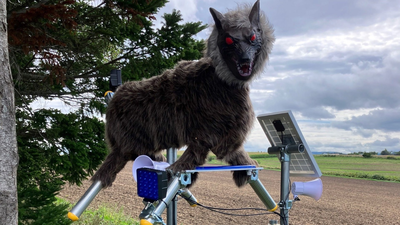
At first glance, the wolf monster resembles some kind of creature from a sci-fi movie. The robot wolf has fur all over its body, bright red eyes, and sharp teeth, and is designed to scare away animals before they get too close to farms or homes.It was created by the Japanese company Ohta Seiki in collaboration with scientists and regional authorities who were concerned about animal encounters. The robot has a motion sensor that makes it move when it detects any activity around it.
Once turned on, it emits loud noises, lights and roars to scare away bears, deer, pigs and other animals.As the company itself explained, the wolf monster contains solar cells to operate outside the home and can make dozens of sounds to confuse the animals. This exceptional robot costs about $4,000, and has already been used in many rural areas. Its unique design was not chosen at random because it is intended to confuse animals.
Why are bear encounters increasing in Japan?
Encounters with human bears have increased in Japan in recent years. Many experts have suggested that there are several factors contributing to this trend.As the Wildlife Society points out, for example, one of the main reasons is declining rural populations. As young people move from villages to urban centres, vacant farmlands and abandoned villages become quiet havens for wildlife, making it easier for them to wander in search of food.
Hence, bears increasingly wander into towns and farmlands in search of food.Environmental and climate changes may also be another factor contributing to this trend. According to the Japanese Ministry of Environment, the change in the availability of food in the forest leads to the movement of bears to populated places. Such movements are affected by poor acorn yields, habitat disturbance, and seasons. According to researchers at the Wildlife Conservation Society who study human-wildlife conflicts, bears are very intelligent creatures. Traditional methods of scaring them, including the use of bells, scarecrows and fences, fail because the animals get used to them over time. For this reason, the introduction of mechanical robots such as Monster Wolf is being considered.In field tests discussed by developers and local authorities, the robot wolf reportedly reduced frequent animal intrusions in some agricultural areas.
Their ever-changing sounds and sudden movement patterns seem to make it difficult for wildlife to adapt.
How technology is changing wildlife protection
Robotic wolves represent another trend in wildlife management that involves technological innovations. Around the world, specialists are trying to find ways to reduce human-wildlife conflicts with the help of artificial intelligence, drones, automated tracking equipment, and smart deterrence technologies.While lethal methods are used to exterminate animals, automated deterrent systems seek to repel wildlife from populated areas without causing death. In fact, conservationists nowadays advocate the idea of using non-lethal solutions because of their positive impact on the environment and local residents.However, some experts point out that technological solutions alone will not be enough to address environmental challenges.
Wildlife experts stress that practices such as habitat conservation, forest management, and proper waste disposal remain indispensable elements in efforts to reduce human-animal conflicts.Based on studies conducted by the International Union for Conservation of Nature in 2025 regarding human-wildlife coexistence, both environmental protection and community safety play key roles in successful conservation activities.
Could these robotic wolves become the future of wildlife management?
As people’s interest in the Japanese wild wolf grows, it is clear that communities are quickly adopting innovative ways to deal with environmental issues.
An initiative that once seemed far-fetched has proven to be a practical way to control wildlife.For many rural farmers, the mechanical wolf symbolizes their fears associated with interactions between humans and wildlife. However, on another level, this innovation demonstrates how society can embrace innovations that provide better methods for dealing with dangerous wildlife encounters.Will this be replicated around the world? No one knows at this point. However, Japan’s initiative is evidence of the need for new approaches to coexistence.