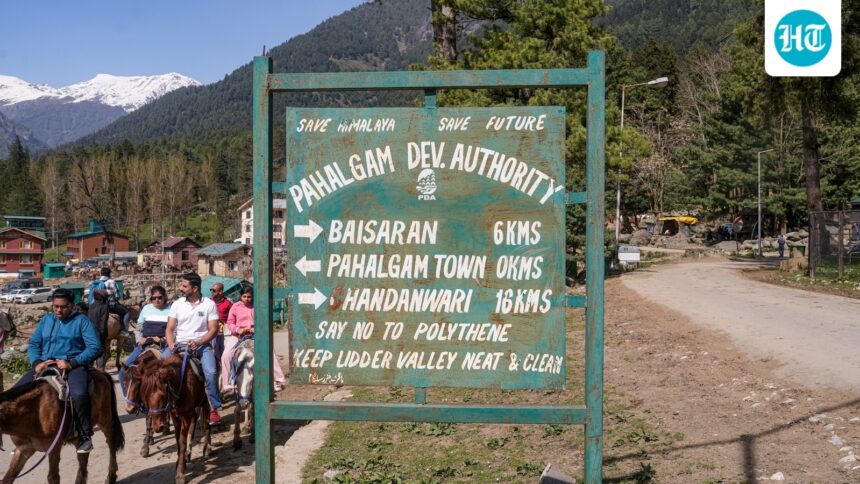
The terrorists who masterminded the terror attack in Pahalgam in Jammu and Kashmir on April 22 last year, sat together near Baisaran Marg on the same day and had lunch before killing 26 people, 25 of them Indians.

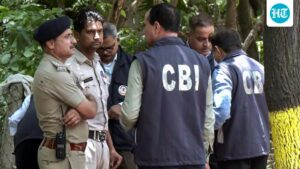
This was revealed in the indictment she filed National Investigation Agency (NIA), which also provides evidence of Pakistan’s involvement in the attack. She also said that the terrorists indulged in celebratory firing after the deadly killings.
According to the indictment, the attack was planned by the Resistance Front (TRF)/LeT terrorist, Sajid Saifullah Jat, also known as Langda, who shared the coordinates of Marj Baisaran with the attackers. It also linked one of the terrorists involved in a terror attack on the Srinagar-Leh highway in October 2024.
The indictment, which was filed on December 15 last year, also provides a detailed account of the period leading up to the attack. HT has reviewed a copy of the indictment.
Pakistan link created
The NIA indictment provides evidence of this Pakistan has been implicated in the Pahalgam attack that killed 25 tourists and a dowry operator by tracking the IP addresses of social media accounts and purchase details of the two phones recovered from the attackers.
The agency has named seven accused: Sajid Jat, a resident of Kasur, Pakistan; The three attackers – Faisal Jat alias Suleiman, Habib Tahir alias Jibran Bhai, and Hamza Afghan (all three were killed in a gun battle with security forces on 28 July 2025); Local residents Bashir Ahmad Gottad and Parvez Ahmad; and LeT/TRF in the charge sheet. They have been charged with murder, waging war against India, and relevant sections of the Arms Act and the Unlawful Activities Prevention Act (UAPA).
According to the indictment, Sajid Jatt, who is believed to be at large in Pakistan, shared the coordinates of Al-Marj with the three attackers on April 15.
According to the indictment, data recovered from two phones recovered from the terrorists revealed “conversations with Sajid Jatt giving them directions… and screenshots from the Alpine Quest app showing coordinates of locations near Baysaran Park.” Both phones were sold in Pakistan, the NIA said, based on data from the Indian arm of phone maker Xiaomi.
“The hierarchical command structure, encrypted cross-border coordination, weapons logistics, and handler-driven missions, as described in the indictment and supported by physical evidence, leave no doubt that the attack was a terrorist operation sponsored by Pakistan and carried out by the Lashkar-e-Taiba/NLF,” the report adds.
It also reveals that shortly after the Pahalgam attack, at 16.32, Mastodon organization @KashmirFight, widely known to be affiliated with TRF, published a statement claiming responsibility for the attack. On April 25, when the UN Security Council issued a statement condemning the attack and mounting international pressure on Pakistan, the TRF launched a bot on Telegram to automate the posting of updates and propaganda content, claiming that the attribution of the attack to them was false, hasty, and part of a coordinated campaign to malign the Kashmiri resistance.
“Both the claim and denial came from social media outlets based in Pakistan and were verified through technical analysis,” the NIA said in the charge sheet.
While the IP address of the social media account used to claim the attack was traced to Batarwala in Khyber Pakhtunkhwa, the denial came from an IP address traced to Rawalpindi. Some Facebook accounts and phone numbers used to share photos of the attack in Rawalpindi and Bahawalpur in Pakistan were also traced.
Calculate blow by blow
On April 21, the three arrived outside Parvez Ahmed’s hut, about a kilometer from the meadow. Ahmed was arrested on June 22 last year along with Gothatad, a pony operator and his uncle. It was Gothatted who met the trio for the first time at around 4pm on April 21. They demanded a safe place and food in the name of God, according to the indictment.
He recognized them for what they were and allowed them into the hut. Ahmed, his wife Tahira, and their infant child were present. The three asked to hide their weapons and asked for food. While eating, they questioned the uncle and nephew about the upcoming Amarnath Yatra, the nearby security force camps, and their movements. According to the indictment, they also spoke to Jett. The terrorists took shelter in the hut for about five hours, then left at around 10 p.m., after asking Tahira to make them some pancakes, taking some spices, two checked blankets, a tarpaulin, and a cooking pot. Before leaving, they gave Ahmed $3000.
Lunch, then the fatal attack
According to the indictment, Gothatad and Ahmed saw the terrorists the next morning (April 22) when they arrived at Besaran Park for work. The three were sitting outside the fence, but the uncle and nephew did not think to warn the security forces, the tourists, or even their fellow pony operators.
Before entering the park, the terrorists sat under a tree and ate lunch, according to the NIA charge sheet. After some time, they took blankets out of their bags and wrapped them over themselves. The indictment added that two of the three terrorists then moved towards the point where a small river entered Baysaran Park and sat there to monitor the activities inside.
They then launched their attack at 2.23pm.
Faisal Jett was carrying an M4 carbine and was wearing a GoPro camera around his head. Two of them, Tahir and Afghan (AK-47), moved directly towards the main entrance gate of the park along the toilets, while Faisal Jett moved towards the end of the zipline. According to the indictment, the three “systematically verified the religious identity of the victims before killing them.”
She added: “The victims who were unable to recite the word or who revealed that they were not Muslims were shot at close range in an execution-style manner. Throughout this sequence, the attackers told the victims ‘Modi ko bolo (Tail Modi)’, explaining that the attack was intended to send a message to the elected government of India, thus proving the ideological intent behind the act.”
According to the indictment, coordinated attacks from the zip line in the south and from the main gate/Al-Dabbas axis in the north created a “closed killing zone in the central marj,” and the motive was to maximize civilian casualties. The three did not exclude anyone.
As they fled, the terrorists encountered three civilians hiding behind trees outside the fence and shot them at close range, the NIA wrote. They also indulged in “ceremonial” gunfire on their way out, the agency said.
The NIA cited the testimony of a protected witness (identity is kept confidential in such cases) to say that, on April 21, this witness saw Gothatted point out three individuals near Dohuk Ahmed and then entered.