

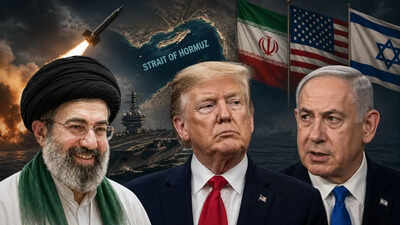
US President Donald Trump and Israeli Prime Minister Benjamin Netanyahu held a tense phone call on Tuesday over efforts to reach a new deal with Iran, with disagreements emerging over whether to continue diplomacy or resume military action, according to US media reports.According to Axios, Trump and Netanyahu discussed a revised peace proposal drafted by Qatar and Pakistan, with the support of other regional mediators, aimed at bridging the gaps between Washington and Tehran.One source, quoted by Axios, described Netanyahu’s reaction after the call by saying that “his hair was on fire.”Trump has continued to publicly express his hope that an agreement with Iran can be reached, while also warning that military strikes remain an option if negotiations fail.“We’re either going to make a deal or we’re going to do some really bad things,” Trump said on Wednesday.He later added that the talks were “on the dividing line” between agreement and renewed conflict.Read also: Donald Trump warns Iran of “bad” American action as negotiations enter their “final stages”
Netanyahu calls for a tougher military approach
Netanyahu reportedly remains deeply skeptical of the negotiations and wants Israel and the United States to resume military operations against Iran to further weaken Tehran’s military and strategic infrastructure.
According to CNN, Netanyahu told Trump during the hour-long call that delaying planned strikes against Iran was a mistake and called for continued military action. The report said that the Israeli leadership is feeling increasingly frustrated with what it considers a diplomatic “slowdown” on the part of Iran.Trump had previously informed Netanyahu that the United States was likely to move forward with targeted attacks on Iran as part of a proposed operation called “Operation Hammer.”
However, within a day, Trump temporarily halted the strikes after requests from his Gulf allies including Qatar, Saudi Arabia and the United Arab Emirates.Trump told Netanyahu during a call on Tuesday that mediators were working on a “letter of intent” that the United States and Iran could sign to formally end the war and begin a 30-day negotiation process covering Iran’s nuclear program and the reopening of the Strait of Hormuz.
New mediation efforts are underway
According to Axios, Pakistan, Qatar, Saudi Arabia, Turkey and Egypt have refined a new draft proposal in recent days.
Qatar reportedly sent a delegation to Tehran earlier this week for talks with Iranian officials.Iran confirmed that it is reviewing the updated proposal. Iranian Foreign Ministry spokesman Ismail Baghaei said that Tehran “received the views of the American side” and is studying them.Read also: US envoy Sergio Gore hints at ‘big things’ in India-US nuclear energy partnershipIran continued to demand the release of frozen assets and an end to what it describes as American “piracy” against Iranian shipping.Iranian President Masoud Pezeshkian stressed diplomacy in a statement, saying: “Iran has consistently respected its commitments and explored every avenue to avoid war; all paths remain open on our side.”
Trump warns that the window for diplomacy may be closing
Despite the ongoing talks, Trump has repeatedly warned that the window for diplomacy could quickly close.“It’s on the borderline, believe me,” Trump said. “If we don’t get the right answers, it will be over very quickly.
“We’re all ready to go.”Trump also said that Netanyahu would eventually follow Washington’s lead regarding Iran. “Netanyahu will do everything I want him to do,” he said.At the same time, the Israeli military leadership maintained a high state of readiness. Israeli army commander Eyal Zamir said that the army is “ready for any development.”The diplomatic efforts come after an April 8 ceasefire halted open fighting between Iran, the United States and Israel, although tensions remain high and the Strait of Hormuz continues to face major disruptions affecting global energy markets.