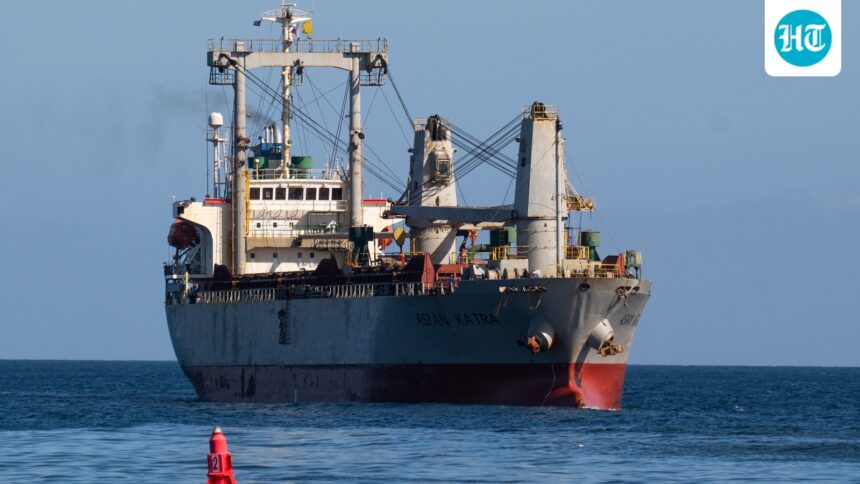
The United States extended a temporary exemption allowing the delivery of Russian oil already on ships even with the imposition of sanctions. This gives more time for these shipments to reach buyers, including India, while global oil markets remain unstable amid the US war on Iran. The extension pushes the deadline for these transactions to June 17.

The decision comes at a time India’s imports of Russian crude remain near record levels and global oil markets remain sensitive to supply risks.
What did the United States say?
The US Treasury Department said the exemption is limited to oil already at sea and does not completely lift sanctions on Russian energy exports.
“This extension will provide additional flexibility, and we will work with these states to provide specific licenses as needed.” “This general authorization will help stabilize the physical crude oil market and ensure oil reaches the most energy-vulnerable countries,” US Treasury Secretary Scott Besent wrote on X.
What does this mean for India
- There is no immediate supply disruption – the extension ensures that Russian oil already passing through can be delivered. This reduces the risk of short-run supply shocks.
- Continued access to discounted crude oil – Russia remains a major source of discounted oil for India. As long as the exemption mechanism continues, refiners can maintain existing trade flows with less legal risk.
- Stable but uncertain environment – Repeated short stretches show that this is not a stable system. Businesses find it difficult to plan long-term deals and manage shipping in advance.
- Geopolitical balance – India is trying to ensure that it has enough oil to meet its needs while also following Western sanctions rules. The exemption helps India continue to buy Russian oil without directly conflicting with those sanctions.
– India’s increasing dependence on Russian oil
India has become one of the largest buyers of Russian crude at discounted prices since then Western sanctions on Russia began. Data from shipping analytics firm Kpler showed that New Delhi imported a record 2.25 million barrels per day from Moscow in March. This was almost double February levels. Russian oil now represents about 50% of India’s total crude oil imports.
Reuters reported that imports remained high in April at about 2.1 million barrels per day. The decline in mid-April was related to supply disruptions following Ukrainian drone strikes on Russian export facilities in late March.
India’s response
India has consistently maintained that crude oil purchasing decisions depend on price and supply needs. Refineries continued to obtain Russian crude through commercial channels that comply with sanctions frameworks.
Previous purchases from Russian companies such as Rosneft and Lukoil slowed after sanctions were tightened, but flows have continued through alternative arrangements.
Sujata Sharma, joint secretary at the Ministry of Petroleum and Natural Gas, said on Monday that the purchases were not dependent on the waiver: “Regarding the US waiver for Russia, I would like to emphasize that we had purchased from Russia earlier, before the waiver as well, during the waiver as well, and now as well,” she said, according to Reuters.
New Delhi also emphasized that its procurement decisions are independent of Western regulatory timelines. Indian refiners had reportedly already secured most of their May delivery volumes before the latest announcement. The country paid premiums of $7 to $9 per barrel compared to dated Brent crude, which is consistent with pricing structures for April.
Before the exemption, Indian refiners had reduced purchases from sanctioned Russian energy companies such as Rosneft and Lukoil. The exemption allowed Indian buyers to legally secure supplies using non-sanctioned companies and ships and expanded marine insurance cover.
The Directorate General of Shipping of India recently increased the number of eligible Russian insurance companies from 8 to 11 to keep trade running smoothly.
(With inputs from Reuters)