

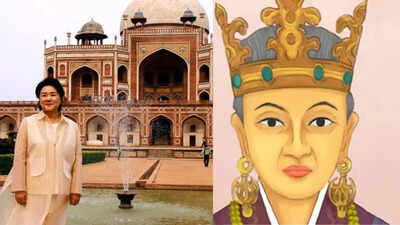
Indian princess Suriratna And her journey to ancient Korea as Queen Heo Hwang Ok
It all began in the past, around the year 48 AD, when a young princess from India, known as Suriratna, was rumored to have traveled from her country to South Korea. Based on traditional literature, she was said to have become Queen Heo Hwang Ok after her marriage to King Kim Soro, the king who founded the Kingdom of Gaya, as reported by the BBC.
Pass a long journey by sea to strange shores and then marry a king who founded a new kingdom. All of these events are written down in documents such as the Samguk Yusa, one of the oldest collections of tales and history in Korea. Many researchers claim that its original homeland, called “ayota”, is Ayodhya in India, although the idea remains unconfirmed.
Queen Heo Hwang Ok in Korean traditions and her lasting legacy
The character of Queen Heo Hwang Ok plays an important role in the legend.
She is commemorated in Korea as a queen who came from another country and was part of the royal establishment of the Gaya dynasty. In Indian folklore, the queen’s name is identified as Suriratna, and the story is associated with the city of Ayodhya.It is said that she married King Kim Soro and had many children with him. Historians believe that both established the lineage that still exists today among some Korean families, such as the Gimhae Kim and Heo clans.
The family history claims that their lineage originated with the Queen, and they proudly narrate it from one generation to the next.According to some accounts, their lineage had several members living in different parts of Korea. But historians point out that there is no factual support for these assertions.
What do contemporary historians say about its historical evidence?
However, most contemporary researchers and historians consider the legend of the princess to be a myth rather than a historical fact.
There is no concrete evidence from archaeology that can confirm the veracity of the existence of the princess who came from India to Korea. It is possible to interpret the name “Iota” mentioned in some ancient Korean documents, and this term could also refer to places other than India.According to scholars, including those who have conducted research on Korean history, the legend about the princess could have emerged as a result of many centuries of development. In other words, imagination, symbols and people’s desire to trace their origin to a distant and special place can play a major role in the appearance of the tale.