Wartime has always had a prominent place on screen. Less well known are films that deal with the effects of war. Movies like Deer hunter and The best years of our lives Show the difficult transition back home after the battlefield. Even rarer is a film like Atonementthe debut feature film from director Reed Van Dyke, which sees the returning soldier battling his demons while coming face to face with people whose lives were destroyed by his actions.
Based on a The New Yorker Article by Dexter Filkins, Atonement It follows Second Lieutenant Lou D’Alessandro (Lou Lobello, in real life) who, during a firefight at the beginning of the invasion of Iraq, shoots cars crossing at an intersection, killing three men from the multi-generational Khachaturian family (Kachaturyan, in real life), Iraqi civilians trying to find shelter after an explosion destroys parts of their home. Back in the United States, the Marine, suffering from PTSD and panic attacks, discovers that some Khachaturian survivors have immigrated to the United States and reaches out to them, hoping for forgiveness.
Van Dyck read Filkins’ original story while at his apartment in Los Angeles. “I couldn’t stop crying,” he says, but adds: “I wasn’t in a position at that time to make a film.” He then went to the University of California to study cinema and directed several short films, one of which was, DeKalb Elementary SchoolHe received an Academy Award nomination in 2018. He often thought about The Soldier and the Catchadorians, and “whenever I had anyone to support me and help me figure out how to make a feature film, I asked them.”
Van Dyke was determined to make this his first feature film, and it was important for Van Dyke to connect with the real people at the heart of the story. “I didn’t want to open up these old wounds for them without making sure that I wanted to breathe life into this film.” He flew to New York to have dinner with Filkins and headed to Las Vegas to sit down with LoBello. He came to know the Catchadorians better, as they lived just 20 minutes away from each other in Los Angeles. “It’s been a beautiful process, over the years, talking to them, getting their blessing,” the director says.
Van Dyck attached special importance to achieving the early conquest of Baghdad. The city on screen often serves as a “background for American stories,” he says. He and his cinematographer traveled to Baghdad on an exploratory trip, carrying a reading list of Iraqi authors. Abbas Fadel’s six-hour documentary, Homeland: Iraq Year Zero, was a major source.
The director also spoke with the Marines to bring authenticity to the film’s central battle, avoiding outdated Hollywood battlefield stereotypes. The director says these events can feel more like sporting events where “on their side and on our side. From above and below.” He instead focused solely on the Americans pulling the trigger, aiming for the sequence to become more documentary-like. Or at the very least, “closer to the truth than you’re used to seeing in movies, where Iraqis are often viewed through sniper scopes.”
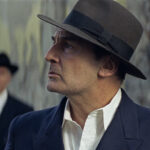
As for casting, Van Dyke was not familiar with Boyd Holbrook’s more famous works, such as the Marvel film. Loganand the long-running Netflix series Narcos. Instead, he scored Holbrook for the first time in a small role in Jeff Nichols’ motorcycle piece Cyclists. “I left the theater talking about him. I said, ‘I saw this guy in the Indiana Jones movie[[Dial Destiny]And it was not the same as it was in that. Soon after, the director saw Holbrook playing Johnny Cash in the Bob Dylan biopic Completely anonymousand was amazed by the actor’s range. “I thought, ‘This guy can do anything,’” Van Dyke says. He’s a character and really puts his shoulder into finding that person’s body, movement, and voice.
He was confident that Holbrook, who is prolific but often cast as a supporting character, could carry this film.
For his part, Holbrook was drawn to Van Dyck’s more nuanced take on a wartime film. “We see a lot of versions of war being monetized. That’s something you never see,” the actor says. Eventually, he was drawn into Lou’s search for forgiveness: “I’m going to meet these people face to face and put myself aside.”
The role was physically exhausting. First, there was the shootout, shot on location in Jordan, which doubled for Iraq. Holbrook wore 40 pounds of gear in 100-plus degree heat. But he says the embarrassment and discomfort served to reinforce the practicalities of war that the filmmakers were hoping to depict. “It wasn’t, ‘I’m going to look like a great soldier.'” This is the complete opposite of the atmosphere Reed wanted.
Van Dyke pushed for a Jordan series film first, allowing Holbrook to rely on those scenes in the second half of the film that sees Law returning to the United States, struggling with the memories he has of Iraq, and suffering from panic attacks.
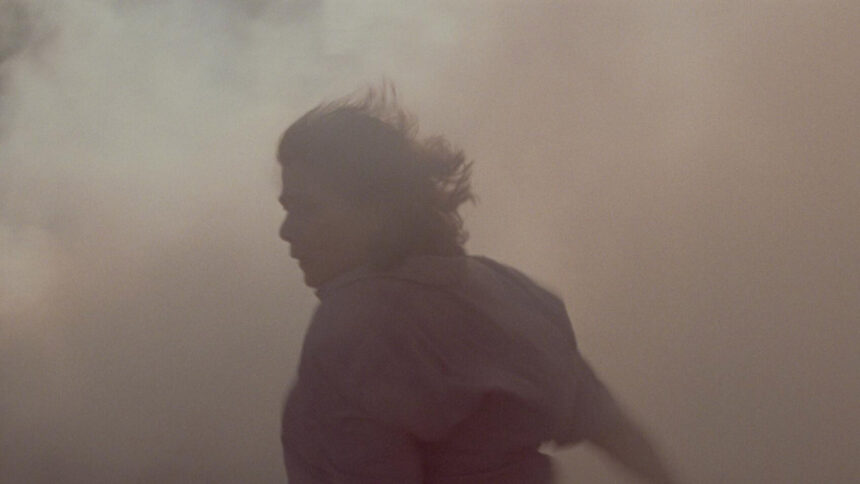
“I’m not going to be able to fake a panic attack,” thought Holbrook, who had signed on to the film just two months before filming began. He sets up a breathing exercise that will “kick this thing in the diaphragm,” and works himself up to the point where he feels like he’s having a panic attack, and he’ll keep going. “I got to a place where I couldn’t control what I was going through physically,” he recalled being subjected to what seemed like an attack for more than two hours.
“When you have an actor committed in this way, where the body more than the mind believes the circumstances of the story, my job in that situation is to try to move through the scene as quickly as possible and stay out of his way,” Van Dyke says.
Opposite Holbrook, Palestinian actress Hiam Abbas plays the Khachaturian family matriarch, whom Law meets at the climax. “I wanted to do the acting thing and not meet her until I met Lou [in the script]”But they were filming in Jordan at the same time and decided they’d better get to know each other,” Holbrook says of trying to avoid Abbas. “I was so glad I did it, because I got to understand her and her story, so when it came time to do our big scene, we didn’t need any rehearsal.”
As in the original The New Yorker story, Atonement It builds on the encounter between Lou and the surviving Kachaturians, and is a powerful mix of unrealized emotion and catharsis. Hollywood Reporter A review of the film, which premiered at Directors’ Fortnight, highlighted the scene: “Abbas gives a masterclass in less-is-more self-control in these scenes, her character’s fortitude severely challenged but not broken by her years of suffering.” Meanwhile, Holbrooke is “a bundle of exposed nerves as he reckons with his guilt and the enormous weight of grief and anger on the Iraqi family.”
AtonementThe film’s goal is to show an extraordinary screen depiction of war and its consequences achieved in this moment.
“There’s something really profound about two people on opposite sides of a war coming together in a living room, connecting with each other almost in spite of themselves,” Van Dyke says.