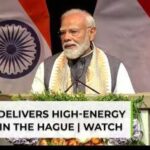
Indian Prime Minister Narendra Modi delivered one of his strongest warnings yet about the state of the global economy on Saturday, telling the Indian community in the Netherlands that decades of hard-won progress against poverty is at serious risk if the world’s cascading crises are not urgently reversed.

“The world is dealing with new challenges,” he said, speaking at a community event in The Hague during the second leg of his five-country European tour.
In light of the ongoing conflicts, especially in the oil-rich West Asia region after the attacks launched by the United States and Israel on Iran, Modi described the current decade as a period of compound disasters.
Speaking in Hindi, he explained: “First came the coronavirus pandemic; then wars started breaking out, and now there is an energy crisis. This decade is turning into a decade of disaster for the world.”
He issued a clear warning about the consequences of inaction. He said that if these conditions do not change quickly, “the achievements of the past several decades will be lost, and a huge segment of the world’s population will be pushed back into poverty.”
These statements came at a moment of acute economic anxiety across India, West Asia and beyond.
He calls for austerity
Days before his European tour, in Hyderabad, Prime Minister Modi called on Indians to adopt voluntary austerity measures, urging them to work from home where possible, limit foreign travel, and reduce gold purchases.
He described conserving fuel and saving foreign exchange as a “patriotic” act that encourages increased use of public transportation, use of cars, and reduced fertilizer consumption.
Referring to the times of the Covid pandemic, he stressed that remote work has become normal during that period, and the government is now looking at such behavioral changes as tools to manage demand in the short term.
He said: “We must make efforts to use only the amount required to provide foreign currency and limit the negative effects of war crises.”
High fuel prices
On Friday, May 15, after four years of not raising retail fuel prices, state-owned oil companies Indian Oil Corporation, Bharat Petroleum and Hindustan Petroleum, which together control 90 per cent of the country’s petrol stations, raised petrol and diesel prices by 100%. $3 litres. In Delhi, the price of petrol rose to $97.77 per liter and diesel to $90.67. It was higher in other parts of the country depending on local fees.
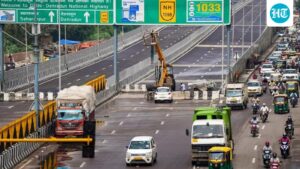
Industry leaders and analysts have warned that… $The rise in oil prices will be felt not only at the gas station, but also across household expenditures, freight rates and factory prices through July and August 2026, given the inflationary effects of fuel price shocks through input costs in agriculture and manufacturing.
Government response
The ruling Bharatiya Janata Party has defended the increase, claiming that India had managed to protect its citizens from the global oil shock for more than two months, implementing only a “limited and calibrated” increase even as many countries saw a sharp rise in prices.
Ministers and BJP spokespersons said that public sector oil marketing companies in India absorbed a large part of the rise in crude oil costs for 76 days after the West Asian crisis intensified, without passing the full burden to consumers.
Opposition leaders pointed out that Modi’s austerity call came only after the end of a major round of state elections, and noted that fuel prices remained unchanged during and before the election campaign, when crude oil prices were lower.
Across Asia, energy-hungry countries have resorted to increasingly extreme measures to keep their economies afloat. The Philippines became the first country to declare a national energy emergency. She advised South Koreans to take shorter showers and charge phones during the day to save electricity. Japan has launched its largest-ever release of emergency oil reserves.
The strait and the war in its heart
The crisis stems from Iran’s closure of the Strait of Hormuz, through which about 20% of global oil trade passes. The International Energy Agency described this as the largest supply disruption in the history of the global oil market.
India, which imports 90% of its oil and relies on the strait for nearly half of its usual crude oil supplies, is particularly vulnerable.