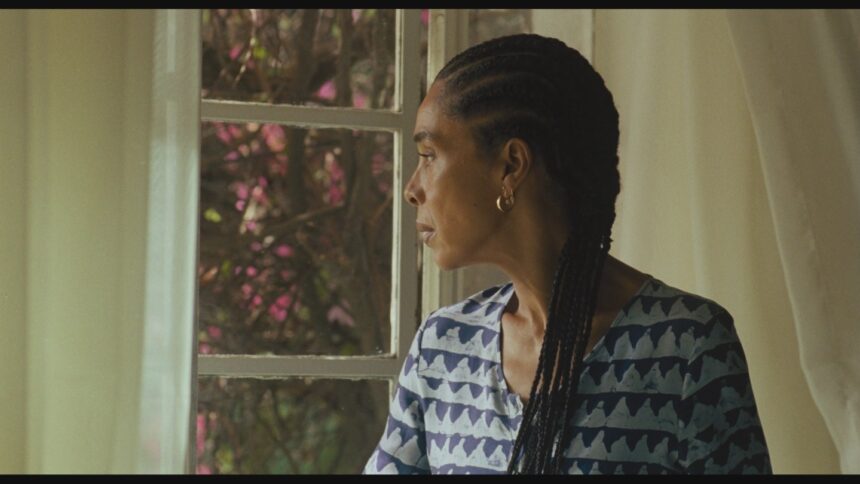
In the style of stream-of-consciousness and fragmented viewpoints, Virginia Woolf Mrs Dalloway It’s a tricky novel with understandably a few tweaks. Marilyn Gores tried it with her own shaky 1997 film starring Vanessa Redgrave as the titular hero and Rupert Graves as the tragic Septimus. Film based on the book Inspired by Wolf (written by Michael Cunningham Watches) followed, and a host of theatrical adaptations came and went. Now, Ari and Chukwu Esiri, the twin brothers behind the critically acclaimed drama imovThey tried their own translation – and how lucky we are.
Premiering in the Directors’ Fortnight sidebar, Clarissa It is a convincing explanation for Mrs Dalloway It moves the events of Woolf’s novel from London in the 1920s to present-day Lagos. Clarissa, played with restraint by Sophie Okonedo, is now a woman in Nigerian society, preoccupied with Lagos’ congested traffic, interactions with her housekeepers, and memories of youthful summers spent debating the meaning of democracy in Nigeria and the intellectual and political priorities of a developing nation-state.
Clarissa
Bottom line Quiet revelation.
place: Cannes Film Festival (Directors’ Fortnight)
ejaculate: Sophie Okonedo, Ayo Edebiri, David Oyelowo, India Amartefio, Tawheed Jimoh, Fortune Nwafor
Managers: Ari Esiri, Chukwu Esiri
screenwriter: Chokwu Esiri
2 hours and 7 minutes
Septimus (Revelation Fortune Nwafor) is an off-duty military officer who has just returned from fighting the Boko Haram insurgent group in the northern region of the state. He struggles to ward off thoughts of conflict (ongoing since 2009) and stabilize himself in his current reality, where he is happily married to Aisha, a distinguished Muslim seamstress (Modisinola Ogundiwin).
The Isery Twins combine this new framework with a poetic register that has become increasingly popular since it premiered in Berlin six years ago. Clarissa Embraces the cinematic grammar used by filmmakers like Raven Jackson (All dirt roads taste of salt), savanna leaves (Mama Earth), Ramil Ross (Nickel Boys) and more recently Akinola Davis Jr. (My father’s shadow). Like the films of these directors, Clarissa He enjoys the language of torn memory. Jonathan Bloom’s gorgeous cinematography (the film was shot on 35mm) and Blair McLendon’s disciplined editing demonstrate an intuitive understanding of the source text, finding rhymes and echoes in close-ups of a lip touching a knee or a kingfisher crying from a tree branch. Kelsey Lu’s spectral score brings these images together, adding to the dreamy quality of the film.
Clarissa It begins on a slightly different note than Woolf’s novel. The Esiris family (the film was directed by both but the screenplay was written by Chuko) eventually got to the flowers, but first they presented a portrait of young Clarissa (Netflix’s India Amarteifio Queen Charlotte(He sneaks out of young Peter’s room)industryCheers Jimoh). It is 1994, and the couple, along with other friends, are in Abraka, a green town in Nigeria’s southern Delta state. They spend their days swimming in the lake, strolling on the beach and discussing poetry and literature. To the sound of morning prayer, the older Clarissa awakens from this dream and heads toward her garden, where the lush jungle has been replaced by the industrial skyline of Lagos. This is how her day begins. Flowers must be purchased, tents set up in the garden, and finishing touches added around the house before her guests arrive.
As Clarissa meanders through Lagos, an image of the bustling West African city emerges. Just as in their debut, The Isiris relish scenes of people at work and their observations of an increasingly cosmopolitan place, subtly revealing sharp class differences. Nowhere is this more evident than with Septimus, whose story comes to us in powerful fits and starts. When looking at Lagos, the camera often closes, reflecting the kind of claustrophobia that poverty tends to generate. Septimus lives in a small apartment with his wife, travels by danfo (shared minibuses) and struggles to adapt to civilian life after a traumatic tour of the north. Just as Mrs Dalloway He sought to uncover how Britain had abandoned its war veterans, Clarissa Gestures about the power and collateral damage of the Nigerian military. Nwafor, who played the lead role imovIt’s amazing; In his hands, Septimus becomes a heartbreaking symbol of the nation’s unfulfilled promises. His performance lives on in his eyes, which manage to convey sincere naivety and melancholy at the same time.
While Clarissa’s life seems broader—as wider shots accompany her subject—it is also colder. Okonedo captures that toughness well, illustrating the oppressive nature of the character’s life within the context of Nigerian society. Clarissa is married to Richard, a respectable man with a passion for politics, played by Jude Akyodeke, but she still thinks about her ex-lover Peter (now played by David Oyelowo) and the intensity of her relationship with Sally (played by Ayo Edebiri as a young woman and Nikki Amuka-Bird as an older woman). The only person she seems to still be in touch with is Ugo (Danny Sabani), whom they all used to lightly tease and who now acts as a kind of crier in town, delivering news and gossip alike.
In flashbacks, attraction blossoms between young Clarissa and Sally. Amarteifio and Edebiri have an easy chemistry that makes the secret passion between these two women believable. For Clarissa, Sally is an effortlessly cool figure—an amalgam of countercultural norms that she secretly desires to embody. While there is an understandable aberration in their relationship, one wishes that the filmmakers had allowed more space for their intellectual conflict. There is something attractive about Sally, who is never far from a cigarette or a book, and how her beliefs clash with Clarissa’s traditional beliefs. One of the best scenes in Clarissa It is when young friends gather around the table to discuss the state of postcolonial literature and the paradox of a modern democratic state under military rule.
There is a radical tendency to interpretations of the Isoris and their deviations from them Mrs Dalloway. Woolf wrote the novel to reveal the madness of post-war society and the disintegrating nature of a nation undergoing great changes. For all the ways in which it clearly articulated the oppressed condition of women, it also relied on a colonial framework and deployed racist tropes. Malicious achievement for Clarissa It is in how to not only acknowledge this history, but also turn it around.