
James Dyson built 5,127 failed prototypes before one finally succeeded. Image credit – Wikimedia
The story of Dyson founder, inventor of the bagless vacuum cleaner and former Dean of the Royal College of Art, and the perseverance of James Dyson are among the most discussed business success stories.
In preparation for developing the first bagless vacuum cleaner, which later made the company a global brand, Dyson is supposed to build 5,127 prototypes.What’s important about this number is that it seems completely unimaginable. However, according to Dyson’s official materials, the inventor worked on thousands of designs before coming up with the final prototype.The importance of the story lies in the shift in perception it causes.
Rather than being an example of sudden inspiration, it illustrates a long process of designing, testing, failing, making corrections, and repeating the steps again.Why did the number become famous?In general, successful inventions happen because of a flash of genius. According to Dyson, the process of creating the prototype took many years and involved thousands of attempts. Each prototype was developed as the previous one revealed some problems.
For example, the form can easily become clogged. Or it will lose suction. Sometimes models could not solve the initial problem effectively.The 5,127 examples proved important because they highlighted the importance of experimentation and trial and error as fundamental processes of creativity. From Dyson’s official innovation materials, it can be seen that the company still prioritizes engineering through continuous testing and development.Why is repetition more important than perfection?While many people consider the main lesson learned by Dyson to be a ‘never give up’ approach, product creators state that the main lesson is structured repetition. With such iteration and testing, inventors and companies find problems with products early on, while they have to waste time justifying bad ideas.For many, prototyping is “the conversation you have with reality.” This idea is widely used in modern technologies due to the high demand from various industries for constant experimentation. As proven in the Harvard Business Review article, shorter iterations can lead to better results due to learning opportunities for innovators.
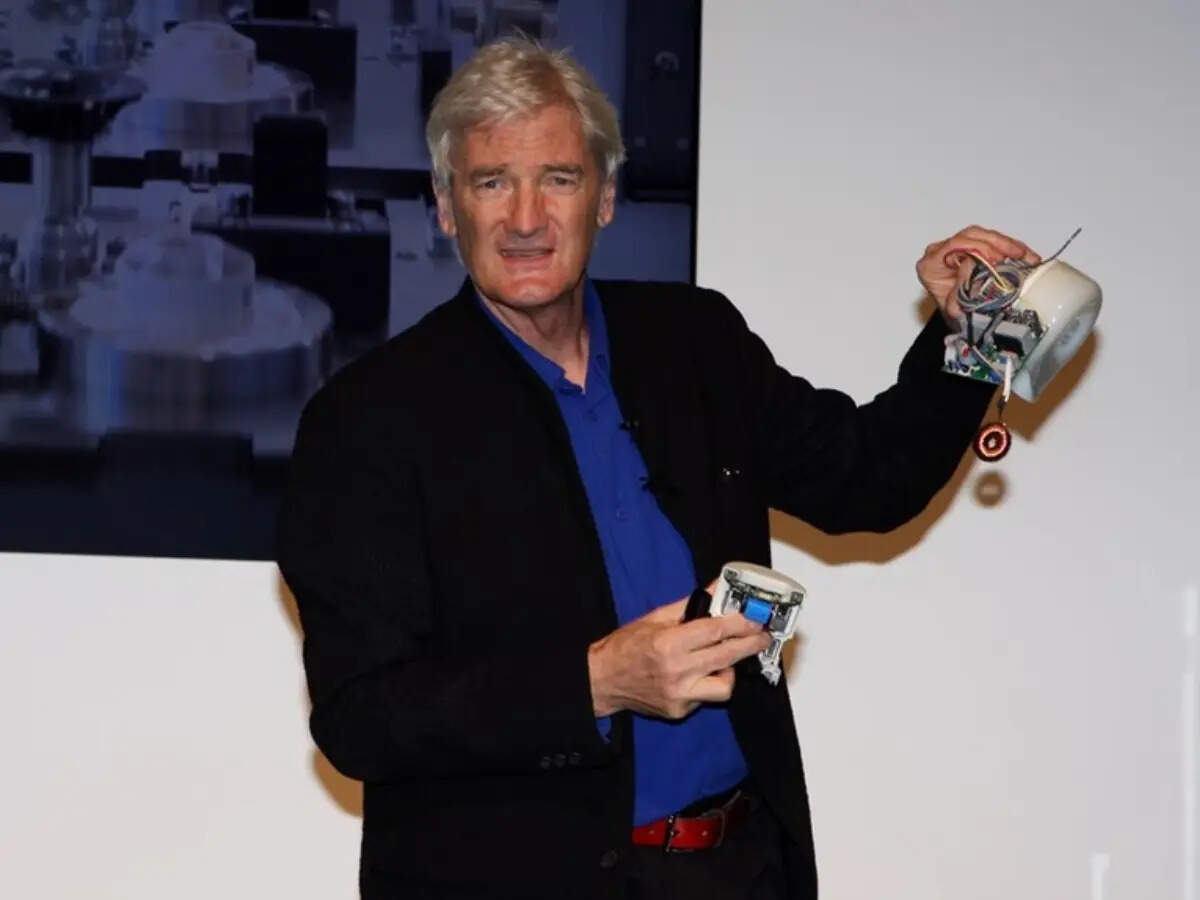
James Dyson learned this simple invention strategy after thousands of failures. Image credit – Wikimedia
Why does failure turn into valuable data?What made the difference in Dyson’s case was his ability to treat every failure as valuable data. Each iteration asked a specific question. Sometimes, airflow problems were discovered, and sometimes manufacturing problems were discovered.The shift in mindset means that instead of viewing an attempt that went nowhere as a waste, that failed attempt becomes part of the process. Engineers sometimes refer to this improvement concept as “iterative design,” where products are slowly improved through repeated trial-and-error processes.Even the National Institute of Standards and Technology has recognized the benefits of testing prototypes to improve product quality.What startup founders need to do the sameThe idea is applicable outside the world of vacuum cleaners. Startup founders, innovators, and even teams developing their products need to think about the same concept, but applying it to their own situations.
- Testing one variable at a time – Testing becomes most useful when only one key variable changes during each iteration. That’s why some products will have different versions, with only one major difference between those different iterations.
- Shorten development cycles – Longer development cycles tend to be less effective. Nowadays, many startups release quick betas in order to collect feedback.
- Failed authentication attempts – Modern teams also document what failed and how their iterations led to something better. It’s easy to avoid making the same mistake again by documenting the process.
Don’t confuse ego with reactionsThe reason Dyson’s 5,127 prototypes remain memorable is simple: the number makes innovation seem human rather than magical.
It removes the illusion that successful products arrive perfectly. Instead, it shows invention as a long series of corrections shaped by testing and perseverance.The story also offers a practical lesson for businesses and innovators. Good ideas rarely remain unchanged after contact with reality. The people who build successful products are often the ones who are willing to test, tweak, fail, and improve repeatedly until the product finally works.One of the most challenging aspects of innovation is ensuring that reality tests the initial idea. Dyson’s history proves that the best results come from continuous improvement and improvement, not from instant success.Why perfectionism usually slows developmentThere are many people who say they are perfectionists, but experts believe that perfectionism may cause a certain delay in trying new things. Lots of ideas can look great on paper and even in discussions.
Their problems will only be discovered when they are placed in realistic places.This lesson Dyson teaches is now considered one of the core concepts of modern approaches to design, lean startups, and engineering education. Prototyping helps learning much faster because each iteration brings new knowledge about usability and functionality.