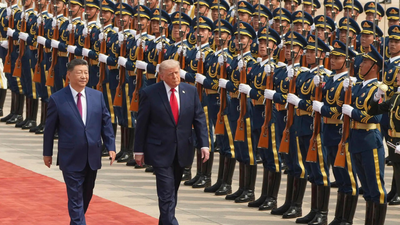
When Chinese President Xi Jinping met US President Donald Trump in Beijing on Thursday, one phrase unexpectedly dominated the strategic discussions between the world’s two largest powers: “Thucydides’ trap.”“Whether China and the United States can overcome the so-called Thucydides Trap and create a new normalization of relations between major powers; Whether we can join hands to confront global challenges and inject greater stability into the world; Whether we can enhance the well-being of the people of our two countries and the future destiny of humanity, and jointly create a better future for bilateral relations,” Xi said in his opening speech.At the opening of the bilateral meeting, Xi identified the future of China-US relations as one of the defining questions of the current era.The term reflects a deeper interest in shaping modern geopolitics—whether the growing rivalry between the United States and China can remain competitive without descending into direct conflict.On some level, the phrase sounds academic. But it actually lies at the heart of a current global power struggle that includes trade wars, restrictions on semiconductors, military tensions in the Indo-Pacific, and the race for technological dominance.
The theory behind this phrase
The “Thucydides Trap” was popularized by Harvard political scientist Graham Allison, who drew from the writings of the ancient Greek historian Thucydides.Thucydides analyzed the Peloponnesian War between Athens and Sparta nearly 2,500 years ago, concluding that it was the rise of Athens and the fear this created in Sparta that made the war inevitable.Allison later adapted the idea to modern geopolitics. His argument was that when a rising power threatens to displace an established hegemon, structural tensions emerge that make conflict more likely—even if neither side actively seeks war.
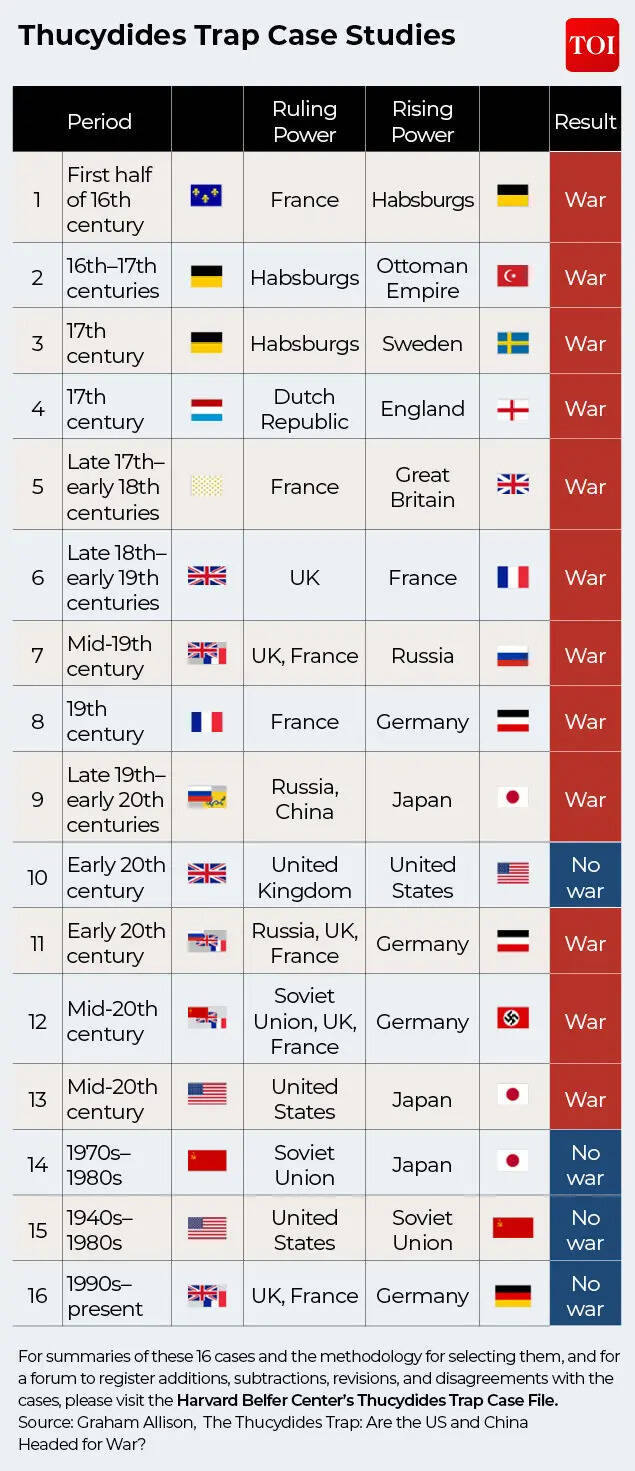
This framework was used to examine the evolving relationship between the United States and China.
Why theory matters now
China’s rapid rise over the past three decades has radically changed the global balance of power. From manufacturing and trade to artificial intelligence, maritime expansion and semiconductor technology, Beijing is increasingly challenging areas long dominated by Washington.What began as an economic competition gradually expanded into a strategic competition.Tensions are now evident across tariffs, export controls, cybersecurity, Taiwan, supply chains, and military sites in the Western Pacific.The relationship has become more tense under Trump’s presidency, as Washington has intensified technology restrictions and pushed aggressive trade measures against Beijing.Analysts say this widening confrontation is very similar to the structural competition described by the “Thucydides Trap” theory.
Why did Xi raise it with Trump?
Xi has used the phrase several times over the past decade, including during discussions with former US President Joe Biden in 2024.His message has remained consistent: Conflict between China and the United States is not inevitable if the two countries find a way to coexist through what Beijing calls “mutual respect” and “win-win cooperation.”By raising the issue directly with Trump, Xi also appeared to elevate current tensions beyond temporary disputes over tariffs or the trade deficit.For Beijing, the rivalry is increasingly seen as a litmus test of the ability of an emerging power and an established power to avoid repeating a historical pattern of confrontation.This phrase additionally reinforces China’s efforts to position itself as a global equal to the United States and not as a secondary player in the international system.
Is a US-China conflict inevitable?
Not necessarily. Many American policymakers remain cautious about using this phrase because they fear it may create the impression that war is inevitable.
Instead, Washington prefers terms such as “guardrails,” “strategic competition,” and “risk management.”Critics of the theory also point out that today’s world is more economically interconnected than previous historical rivalries, Bloomberg writes. The United States and China remain closely linked through trade, finance, and global supply chains despite rising tensions.Yet the concept still resonates because it embodies a central concern surrounding US-China relations: whether the world’s two largest powers can manage competition without descending into confrontation.As trade battles intensify and technological competition deepens, the “Thucydides Trap” has evolved from a classroom theory into one of the defining strategic debates shaping global politics today.