

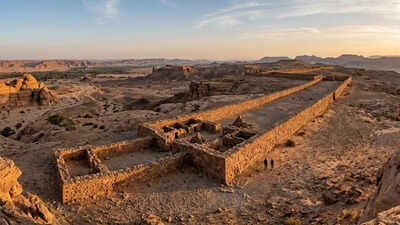
Archaeologists have discovered an extensive prehistoric ritual scene in northwest Arabia. This site is characterized by huge rectangular stone structures called “mastatilas”. These ruins are about 7,000 years old, from the late Neolithic period, and were built long before the Pyramids of Giza or Stonehenge.
Recent excavations funded by the Royal Commission for AlUla show that these were more than just markers. They served as complex centers for mass gatherings and ritual animal sacrifices. Local sandstone was used to build some of these structures, which can reach more than 600 meters in length. This represents one of the oldest traditions of large-scale memorial building around the world. These discoveries provide important insights into a sophisticated, socially cohesive society that flourished in what was once fertile “Green Arabia.”
Rectangular monuments It was discovered in the landscape of northwestern Arabia
As noted in a study conducted by the University of Cambridge, the ‘mastylas’ completely changed what we know about Neolithic societies. Studies indicate that these structures arose during a period of increased rainfall, which helped pastoral groups thrive. Rather than focusing on individual burials, these large stone constructions indicate widespread collective action and shared beliefs spread over wide areas. When researchers excavated the head parts of these sites, they often found pieces of skulls from cows, goats, and deer.
This discovery indicates that the sites served as places for ritual sacrifices.
What animal bones revealed
Excavations in certain places, such as the rectangle near the AlUla oasis, have finally given us conclusive evidence of the rituals that took place there. Scientists used radiocarbon dating on animal bones found in the central chambers and discovered that these activities occurred around 5,000 BC. This discovery shows that the builders were early pastoralists. They built these structures to help them deal with environmental issues by resorting to spiritual practices.
Drought shaped Neolithic spirituality
Remote sensors and aerial surveys have identified more than 1,600 rectangles spread over an area of more than 300,000 square kilometers. The architectural consistency – consisting of a head, long walls and a doorway – indicates a unified cultural tradition. The sheer scale of the construction meant that hundreds of people collaborated on a single monument, reflecting an early form of regionalism. The construction of the rectangles coincided with the “humid Holocene period,” when the Arabian Peninsula was characterized by fertile pastures and permanent lakes. Geological data suggest that movement toward the monument may have been a response to periodic droughts, as communities gathered at these sites to perform rituals intended to ensure the return of rains and the fertility of their herds.