Global audiences have already had the chance to see Emilio Insolera in the Netflix drama I feel my voiceabout a shy teen with a talent for singing, since he bowed out on April 3.
But they didn’t hear the Italian actor and film producer’s actual voice — except for a couple of scenes where he was screaming — because Insolera is deaf. Relying on sign language, in I feel my voice He plays the deaf father of a hearing daughter who has a passion for singing in the Italian-language remake of the film La Family Belairwhich was later adapted coda, Oscar-winning film.
Looking and being heard is important to Insolera, as he can speak and sign in four languages: Spanish, Italian, English and Japanese. Therefore, he sees a great creative opportunity for film and television directors that allows him to make his voice heard in front of the camera. “Imagine a movie character who speaks four sign languages and four spoken languages. This would break the stereotype of deaf people. What stories would we have to share, and what impact would this character have on the people around him? Would he be seen as a hero, a villain, or perhaps both?” Take risks.
Each asks Insolera — who has worked on films for Universal Pictures, Disney, Paramount Pictures and 20th Century Fox alongside Jessica Chastain, Penelope Cruz and Jacob Elordi — whether filmmakers will bring his true, authentic voice to the screen. He adds: “Audiences must become familiar with a full range of voices, just as they already see a wide range of signature abilities. It is important to embrace this diversity rather than standardize or hide it and allow the audience to become comfortable with it and recognize it as part of natural human diversity.”
Of course, the movies belong to Oscar winner Marlee Matlin Children of the Lesser God, amazing and The sound of metal Deaf actors have been featured. but Codathanks to its success at the Academy Awards, has arguably done more than any other film to break down doors for deaf actors around the world.
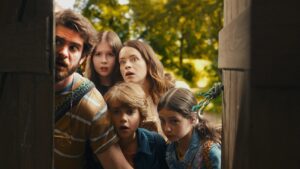
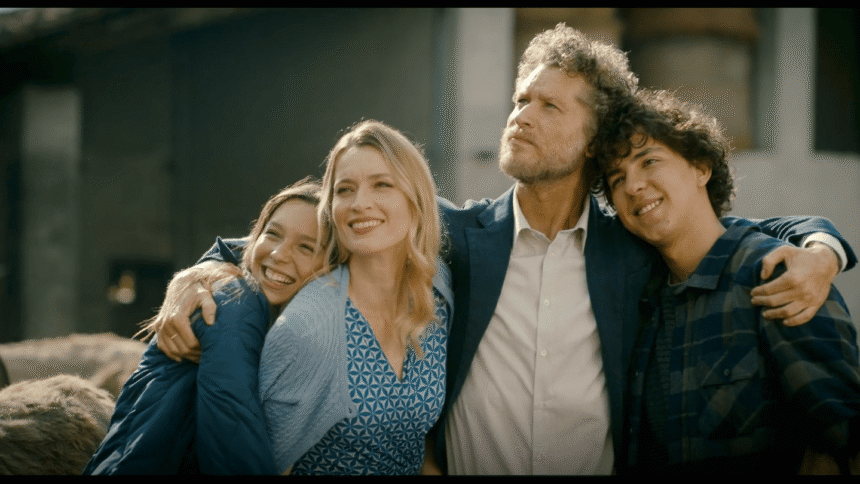
“The film also became an important point of reference for Laura Santarelli, the cultural mediator involved in our production, in advocating for authentic representation and encouraging the Italian production team to cast deaf actors, something they were initially reluctant to adopt,” Insolera explained. in feel my voice, Directed by Luca Riboli, it stars Alessandro Mosso, who has been deaf since birth and is the father of Elita (Sara Toscano), a shy, hearing teenager who discovers she has an unusual singing voice.
When her singing teacher (Serena Rossi) encourages her to audition at a prestigious music school, her dream begins to come true, but at a price: leaving behind her father and the rest of her family, to whom she speaks alone to the outside world. Insolera says director Riboli urged him to look beyond that Coda To the original Pele family Drama also shaped his father’s personality. Ultimately, this means not being an alpha male.
“After revisiting both the previous films, I tried to extract the tenderness of the father from the first version, while incorporating the rough language and roughness typical of the father into the second version. Besides these elements, I had to ensure that my character maintained a limited vocabulary, yet was still driven by a strong sense of purpose,” he recalls. Besides having to grow a beard, Insolera, a city dweller who has lived in Buenos Aires, New York, Los Angeles, Tokyo, Osaka, Berlin and now Milan, also had to play a rural farmer.
So he channeled his Italian childhood in rural Sicily for direction. “It was a very local and Italian environment, and that’s exactly what I had to reconnect with for this role,” Insolera said. “I also drew on my father’s Sicilian attitude and way of living, which helped shape the character further. Since the character in the film comes from a small village in Piedmont, I also had to adapt to the sensibility and character of northern Italy, building a new identity and creating a character that is unique in his own way.”
Another adjustment on set was with his daughter played by Toscano who tended to follow his hands while Insolera communicated using sign language, instead of looking into his eyes. “Well, our sign language conversations were basically technical and memorized, almost like remembering numbers in sequence. There wasn’t much room for improvisation. Moreover, her facial expressions were sometimes not completely in sync with every sign she used. There were moments when I felt like I was just talking to myself,” he recalls of their first days opposite each other in front of the camera.
The film’s editors cleaned up those early mistakes and Insolera and Toscano eventually became more involved as the cameras rolled. “During the last days of filming, she (Toscano) seemed to be picking things up naturally, but by then the production had already come to an end,” he added.
Insolera is encouraged by how Hollywood is finally embracing deaf actors as “complex human beings,” not just people with disabilities. “In films like 355 and Black rabbitdeaf characters support darker or more morally ambiguous roles, including villains. in very fatal, A deaf ballet dancer becomes trapped in a dangerous survival situation. We need to see more representation like this, especially more important roles, and greater visibility and richer dialogue for deaf characters.
What mistake is Hollywood making? “The roles given to deaf characters often place them alone in environments full of hearing people. It would be nice to include two or three deaf characters instead, where the magic of sign language, conversation, and natural improvisation really come to life. Seeing deaf characters surrounded only by hearing people who have just learned sign language is often neither convincing nor particularly engaging.”
Insolera would also like to see film producers hire deaf actors who are more adept at signing or fluent style. “Many of the actors I see are not native sign language users, and it is unfortunate that multi-million dollar productions still showcase talent without paying enough attention to this level of authenticity,” he adds.