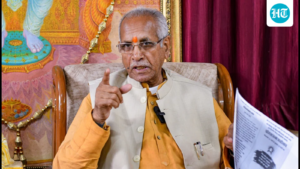
Prime Minister Modi’s campaign for WFH is seen as part of a broader fuel conservation strategy aimed at reducing India’s consumption of petrol and diesel.

Work from home, travel only when necessary – this is the latest advice given by Prime Minister Narendra Modi to citizens as India continues to reel from the impact of the US-Iran war. The Prime Minister urged companies to revive WFH practices adopted during the Covid-19 pandemic, warning that India must conserve fuel and foreign exchange.
Speaking at a public event in Hyderabad after inaugurating projects worth around $200 million $9,400 crore In Telangana, Prime Minister Modi said the country should reduce unnecessary fuel consumption by relying more on virtual meetings, online work systems, metro travel, car-sharing and electric vehicles.
“During Corona, we have developed systems like working from home, online meetings and video conferencing, and have become accustomed to them. The need of the hour is to resume these methods,” Modi said.
The Prime Minister’s statements come at a time when Brent crude prices rose above $105 a barrel after new tensions between the United States and Iran derailed hopes for reaching a peace agreement.
India, the world’s third largest oil importer, imports more than 85% of its crude oil needs, making the country highly vulnerable to global energy shocks.
The US-Iran war: Why is the conflict shaking global markets?
The ongoing crisis began after the United States and Israel launched military strikes on Iranian targets earlier this year, escalating tensions across West Asia and sparking a long standoff involving Iranian-backed groups in the region.
While Washington and Tehran have been engaged in indirect peace negotiations for weeks, efforts to end the conflict suffered another setback after US President Donald Trump rejected the latest Iranian proposal, describing it as “completely unacceptable.”
The Iranian proposal is said to seek to end hostilities, remove sanctions, and restore access to shipping in the Strait of Hormuz, while postponing negotiations over its nuclear program. However, the United States insisted that Iran dismantle key parts of its nuclear infrastructure, a condition rejected by Tehran.
The war has already caused widespread damage in parts of Iran and Lebanon and sparked repeated drone and missile incidents across the Gulf region.
The Strait of Hormuz crisis and why it is important to India
At the heart of the global energy crisis lies the Strait of Hormuz, a narrow but strategically important shipping route through which nearly a fifth of the world’s oil and liquefied natural gas supplies usually pass.
The waterway has remained partially blocked for weeks due to military tensions, a naval blockade, drone attacks and fears of attacks on commercial ships.
Reuters reported that maritime traffic through the strait was severely affected, with tanker operators avoiding the area or turning off tracking devices amid fears of attacks.
This turmoil led to a rise in crude oil prices globally. Brent crude jumped more than 4% after Trump rejected Iran’s latest peace response, raising concerns about prolonged supply shortages.
For India, the impact is particularly severe because a large share of the country’s imported crude oil passes through the Strait of Hormuz.
Why is Modi pushing work from home again?
Against this backdrop, Prime Minister Modi’s push for WFH is seen as part of a broader fuel conservation strategy aimed at reducing India’s oil consumption and reducing pressure on foreign exchange reserves.
“Today, the need of the hour is to use petrol, gas, diesel and such things with great restraint. We have to use imported oil products only as per need. This will not only save foreign exchange but will reduce the negative impact of war,” Modi said.

The Center fears that prolonged high crude oil prices will fuel inflation, further weaken the rupee and expand India’s import bill.
The rupee has already come under severe pressure due to rising oil prices and outflows of foreign investors. Market analysts warn that continued crude oil prices above $100 per barrel could significantly impact India’s growth outlook.
Work-from-home arrangements can reduce daily fuel consumption by reducing office commuting, reducing aviation demand, and reducing road traffic.
Modi also urged people to use metro networks, adopt electric vehicles, shift parcel transportation to railways and avoid unnecessary foreign travel.
Read also: Why did Prime Minister Modi ask Indians to avoid buying gold for a year?
India is moving towards self-reliance in energy
Besides environmental conservation measures, Modi highlighted India’s push towards renewable and alternative energy sources to reduce dependence on imported fuel.
The Prime Minister said that India has emerged as one of the leading countries in solar energy production in the world and has made rapid progress in blending ethanol with petrol.
He also said that the government is working to expand gas pipeline infrastructure, strengthen the CNG ecosystem, and encourage clean energy alternatives.
Apart from fuel economy, Modi also appealed to citizens to postpone gold purchases and non-essential travel abroad for a year to help conserve foreign exchange reserves during the global crisis.
Congress attacks the Center over its handling of the crisis
But the opposition criticized the government over the situation. Congress Party leader Rahul Gandhi described Modi’s statements as “evidence of failure” and not just a call for sacrifice, and accused the Center of shifting the burden of the crisis onto ordinary citizens.
In a post on website
“These are not speeches, but evidence of failure,” he said.
The congressman said that after 12 years in power, the government has pushed the country into a situation where citizens are told “what to buy, what not to buy, where to go and where not to go.”
“Every time, they shift the responsibility to the people so that they can escape accountability themselves,” Gandhi said, while also repeating his earlier attack on Modi, the “hacked Prime Minister.”

Abhimanyu Kulkarni has spent more than a decade in newsrooms and currently heads the online news desk. He coordinates the daily narrative of the digital newsroom, manages the homepage, plans long-term news events and writes about India and the world. Abhimanyu excels in high-pressure environments, and particularly thrives when navigating the complexities of major breaking news cycles. His strategic approach to digital journalism combines meticulous attention to detail with a broad vision for organizational growth. Along with managing the immediate news flow, he is the chief architect of the medium’s long-term editorial initiatives, ensuring that each project meets the highest standards of journalistic integrity and audience engagement. Experience and National Affairs: Comprehensive coverage of Indian politics, policy shifts, and electoral cycles. Geopolitics and World News: Analysis of International Relations and Global Conflict. BEYOND THE NEWSROOM Abhimanyu’s professional drive is reflected in his passion for the pulse of the world; Where others see the urgent chaos of the story, he finds a compelling narrative. This innate curiosity about world structures ensures that he brings a grounded human perspective to every title he manages.Read more