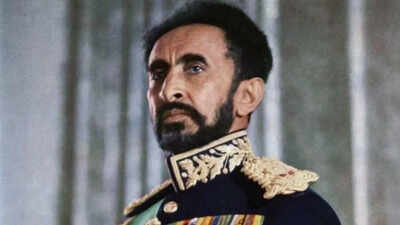
Haile Selassie (Photo: Wikipedia)
There are quotes that have lived on for decades, not only because they were poetic, but because they have stood the test of time across generations. An example of this is the words of Haile Selassie, former Emperor of Ethiopia, whose words of courage, humanity, and unity continue to resonate in discussions of leadership, conflict, bias, and global responsibility.
His quote is memorable not only because of its content but because of the historical time in which it was said.The statement is not about politics or nationality. It is about personal growth, social harmony, and the need for people to transcend division. As countries around the world grappled with war, colonialism, racial discrimination, and political instability, Haile Selassie repeatedly spoke of the importance of common humanity.
Even today, this quote is widely quoted in books, speeches, classrooms, and on the Internet because many people still feel that it reflects the challenges faced by modern societies.The line also has emotional weight because it asks people to think beyond narrow identities and personal biases. The quote urges people to see themselves as part of a larger human community rather than focusing solely on boundaries, race, religion, or nationality.
This message continues to resonate with readers searching for meaning in a time of division and uncertainty.
Today’s quote is from Haile Selassie
“We must become greater than we were before: braver, greater in spirit, greater in outlook. We must become members of a new race, overcome petty prejudice, and owe our ultimate allegiance not to nations but to our fellow men within the human community.”
The deeper meaning behind Haile Selassie’s quote
The quote begins with a powerful call for change: “We must become greater than we were. It is not about physical strength or power. It is about emotional maturity, moral growth, and a greater understanding of humanity.”When Haile Selassie talks about becoming “braver,” he seems to mean the courage to confront hatred, prejudice, injustice, and fear.
Courage in this case is not limited to the battlefield or politics. It also applies to everyday human behavior, such as standing up to discrimination, helping people, and choosing compassion in difficult times.The phrase “greater in spirit” means inner strength. It reflects the idea that societies advance not only through technology or economic development, but also through compassion, kindness, patience and understanding.Throughout history, many leaders have said that material progress alone will not resolve human conflict unless people evolve emotionally and morally.Perhaps the most important phrase in the quote is the final phrase, “greater in outlook.” It pushes people to think beyond narrow viewpoints and think globally. Haile Selassie believed that divisions based on race, nationality, or status often stood in the way of societies achieving peace and cooperation.
He suggests that when you see the big picture, you see the common humanity of people rather than just looking at the differences.
Why are Haile Selassie’s words still important today?
Although this quote was said decades ago, many people feel that the message is quite relevant to contemporary society. Across the world, countries are still grappling with political polarization, social conflict, racial tension, and questions of identity. In that environment, messages of unity and common humanity often rise to the top again.While modern communications have made people more interconnected than ever before, disconnection is still strong. Discussions on social media, political disagreements, and international conflicts often reveal how difficult it is to overcome prejudice in societies. This is one of the reasons why Haile Selassie’s quote is still widely shared online. Many readers have interpreted it as a message of human development, that it is not only about money and science, but also about kindness and respect for each other.The quote is also attractive to younger generations because it emphasizes personal responsibility. Instead of blaming systems or governments alone, it encourages people to think about how they treat others and how they view the world around them.
The historical figure behind Haile Selassie’s quote
Haile Selassie ruled Ethiopia during one of the most turbulent periods of the 20th century. Born in 1892, Tafari Makonnen became Emperor of Ethiopia in 1930 and remained an important international figure for decades.During his rule, Ethiopia faced major political and military problems, such as the Italian invasion led by Benito Mussolini in the 1930s. Haile Selassie became a global figure when he appealed to the League of Nations for help against fascist aggression. His speeches at that time had universal appeal because they primarily dealt with justice, collective responsibility, and resistance to injustice.He is considered by many historians to be one of Africa’s most internationally recognized political figures of the twentieth century.
But he also had an important symbolic role for the Rastafari movement, which viewed him as a man of great spiritual importance.His speeches often focused on human dignity, equality, peace, and cooperation among nations. The quote about becoming “bigger in outlook” reflects many of the themes he repeatedly emphasized throughout his public life.
How the quote relates to modern conversations about bias
A key element of the quote is its complete rejection of “petty prejudice.”
The phrase still applies, as prejudice still affects societies in many forms, such as racism, religious discrimination, nationalism, and social intolerance.Psychologists and sociologists have long argued that bias is often rooted in fear, misinformation, or a lack of communication between communities. Haile Selassie’s words imply that overcoming these divisions requires people to think beyond inherited biases and see their common humanity.Today, such ideas are often central to conversations about inclusion and equality. Educational institutions, social movements, and international organizations often call for empathy with people from different backgrounds. This quote is very appropriate for these hadiths because it focuses on expanding horizons.Many readers also take this quote as a reminder that humanity shares many global problems, including climate change, poverty, migration crises, and conflicts.
These are not issues that can be easily resolved by isolation or prejudice. They need to cooperate across borders and across communities.
Leadership lessons hidden inside a quote
This quote is often shared as a philosophical statement, but it also contains important lessons about leadership. Haile Selassie argues that true leadership requires a vision that transcends the boundaries of individual ambition or narrow interests of national concern.“Greater in spirit” reflects emotional resilience, and “Greater in outlook” indicates strategic thinking and a long-term perspective. Leaders who only think about short-term gains often fail to achieve lasting progress. On the other hand, those who think about greater humanitarian consequences tend to leave a stronger legacy.Today, many leadership experts cite emotional intelligence, empathy, and adaptability as important qualities of successful leadership.
Haile Selassie’s quote was made long before modern leadership theory became popular, but it is very much in line with these ideas.
Why do inspirational quotes continue to attract readers?
Big ideas are distilled into a few memorable sentences, which is why quotes like these are so popular. When readers feel nervous, uncertain, or in distress ml, they often resort to inspirational quotes. Sometimes a short sentence conveys feelings or ideas more clearly than longer explanations.In today’s digital world, these quotes spread quickly across social media, motivational pages, podcasts, and educational platforms.
But quotations related to actual historical experience are usually the longest-lasting. Haile Selassie’s words carry greater weight because they were spoken by a man who experienced war, colonial pressure, global diplomacy, and political turmoil firsthand.In modern crises, people also tend to revisit old quotes because they are looking for wisdom that seems timeless. Words about unity, courage and humanity often remain relevant regardless of the era.
How does the quote reflect the idea of a shared human community?
The last part of the quote talks about pledging allegiance “not to nations but to our fellow human beings within the human community.” It embodies a worldview that places humanity above division.Nations, cultures and traditions still matter, but Haile Selassie believes people should not allow these identities to foster hatred or conflict. “His words are words of cooperation, not isolation.”This perspective has become important in an increasingly globalized world where economies, communications systems, and environmental challenges are interconnected.
Events that occur in one country can quickly affect people around the world. Thus, many thinkers argue that humanity must learn how to cooperate better across cultural and political lines.This idea was expressed simply but memorably in the words of Haile Selassie. This means that progress requires people to think not just as citizens of an individual nation, but as members of the larger human family.
Other famous quotes by Haile Selassie
“Throughout history, it has been the inaction of those who could have acted that has made it possible for evil to triumph.”“Peace requires the united efforts of all of us. Who can predict the spark that might light the fuse?”“Knowledge is power. If it is not properly applied to creativity, it will undoubtedly destroy.”“Education develops the mind, and the mind distinguishes man from all other creatures.”“Until it is completely discredited and the philosophy which makes one race superior and another inferior is abandoned, war will continue everywhere.”
Why does the quote continue to inspire readers across generations?
Its beauty and timelessness lie in its simplicity and honesty. It does not promise easy answers. Rather, it asks people to become better versions of themselves through courage, understanding, and openness.Many inspirational quotes focus solely on personal success. What makes Haile Selassie’s phrase unique is that it combines individual development with shared responsibility. It tells us that individuals and communities become stronger when they transcend fear, bias, and narrow thinking.Today, the reader may find this quote both personal and universal. It makes you think about yourself on one level. On the other hand, it is about the very future of humanity.Perhaps this is why this quote keeps popping up in discussions about leadership, peace, education, and social progress. Even decades after it was first uttered, its basic message remains incredibly relevant: humans need to continue learning how to think bigger, care more deeply, and live together with greater understanding.