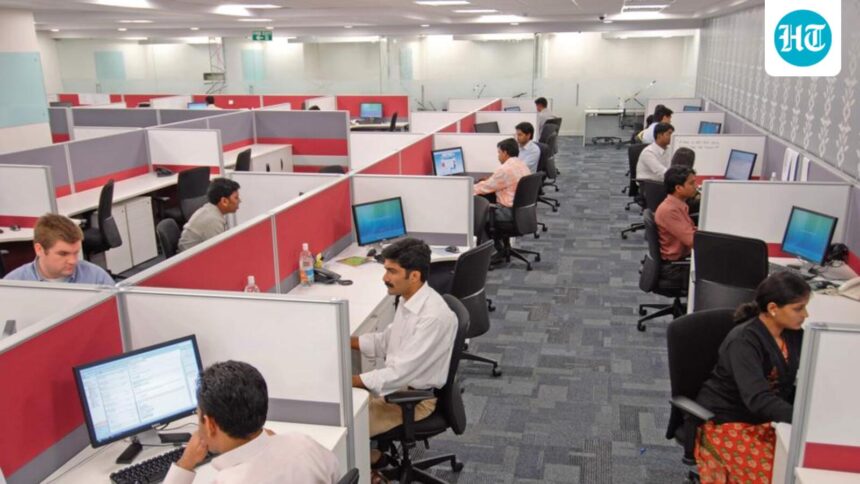
The 45-year-old Bengaluru-based engineer did not want to reveal his name. So, let’s call him Vikram. He first joined Wipro in 2004, right after graduating from an engineering college in Nagpur. He was familiar with Java at that time. He moved to the “cloud” because that is what it takes to stay relevant. Then it’s time to switch to “agile”. He changed jobs all the time. And every time he negotiated a better salary. And each time, he believed the implicit contract was in place: keep learning, stay employable.

Last month, the project he was working on stalled. The bench period ends in six weeks.
He’s not looking for sympathy. He’s looking for an answer to a question no one seems to want to answer: What exactly am I supposed to learn next? This is the right question. The honest answer is the one the industry doesn’t give him.
What the industry has not rewarded, and what it has discouraged, is breadth.
Shrinath V, a Bengaluru-based Google startup gurus who has spent years studying how technology organizations are structured, identifies the trap with uncomfortable precision. Companies have defined roles so that employees can be replaced quickly. Front-end developer, back-end engineer, systems engineer: these are the posts that the company and employees understand. To get better, you have to dig deeper. It was a reasonable strategy.
And so it has been for more than two decades. India’s IT services model has built the most reliable escalator the middle class has ever seen. You hit the bottom with your first degree, your first job, your first paycheck, and then you climb to the top. The escalator had rules. Learn the new language when the old language is replaced. Get certified. Move companies when the increase stops.
Industry built the cage. The engineers went into it rationally.
But here’s the observation that should stop all top tech pros cold.
As Shrinath says, seniority in medicine means deeper experience. You start out as a general practitioner, then move up to specialist, then super-specialised. The longer you invest, the more irreplaceable you become. In software, it works in reverse. As you move up, you move away from technical details into layers of management, coordination, and stakeholder meetings. This is why the industry has so few architects and an abundance of engineering managers.
And now it’s precisely these management layers where the exposure is greatest. People who have climbed the highest levels are most at risk. Not despite their experience. Because of that.
To be clear, Vikram did everything right. This is what makes this difficult.
I know something about this from the other side. Journalism was brutally disrupted years before the advent of information technology. Algorithms are starting to organize news. Platforms ate ads. Many newsrooms were closed overnight with a severance check. People who have spent twenty years learning to do one thing well discover that the market no longer needs that thing as much as it once did. And no one wrote columns about their disorder either. I learned, ultimately, that the only skill that remained was the ability to think across domains, to connect things, to ask the question that no one else was asking, and to be useful in ways that cannot be automated because they depend on being specifically and irreducibly human. It’s cold comfort. But this is the only comfort that is honest.
TN Hari, now CEO of STEER World, who has employed more people in the industry, highlights how the conversation around reskilling remains unclear.
“When Java gave way to Python, reskilling worked. The mix of skills was changing but the jobs were there. Those who adapted survived. But when programming itself is automated—not replaced by a different kind of programming, but automated—the reskilling argument collapses. You can’t reskill your way out of a shrinking category.”
What Harry is not ashamed to say – and he is not entirely wrong – is that the market is unethical, and always has been. “When times were good, the 45-year-old knowledge worker would ruthlessly negotiate huge paychecks with every job change. And they couldn’t complain when the same market forces they benefited from swung the other way.”
Vikram is not the first to discover this. The blue collar worker in the informal sector never had an escalator. The woman who sews clothes in a Tiruppur factory, the man who drives the delivery truck the last mile, the daily wage worker who disappears when the contract ends. They have always lived with instability which Vikram is only now discovering. Without the fat salaries. Without the degrees, EMI-financed apartments, and LinkedIn profiles. No one wrote columns about their disorder.
White collar workers are the new blue collar workers. The market has always been immoral. But they didn’t notice it, because it had been working in their favor for so long.
Welcome to reality. It’s not comfortable here. But most people already live there.
(Charles Assisi is co-founder of Founding Fuel. He can be reached at assisi@foundingfuel.com)