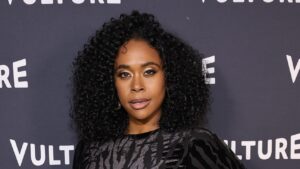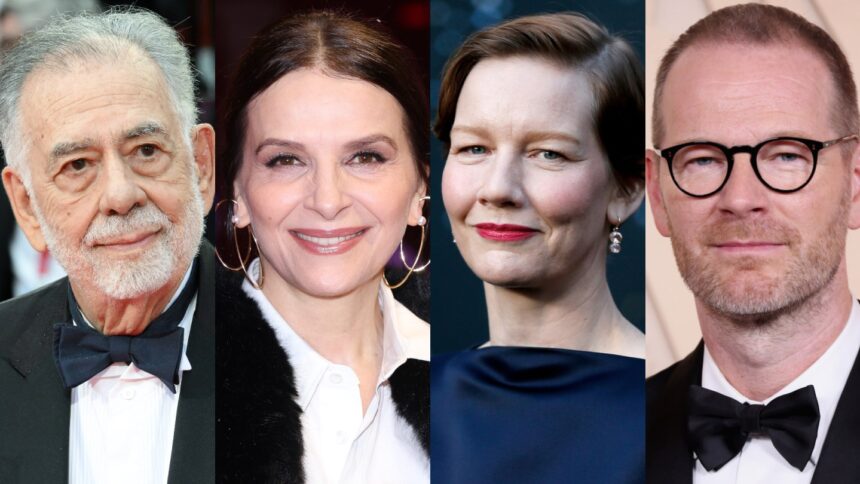
Francis Ford Coppola, Juliette Binoche, Sandra Höller, Stellan Skarsgård, Joachim Trier and Vicky Krebs were among more than 4,700 film professionals who signed an open letter calling on the European Union to protect film financing on the continent.
The letter, titled “Europe needs cinema, cinema needs Europe”, calls on the EU to support “future-proof” cinema under the European MEDIA programme, which has provided funding for thousands of films during its 35 years of existence.
MEDIA has supported almost every popular European film of the past decades, including recent Oscar winners Emotional Value, Mr. Nobody vs. Putin, Flow, Anatomy of a Fall and Favorites.
“Thanks to the media, Europe wins an Oscar almost every year,” the letter read.
The open letter comes as EU member states discuss plans to combine funding for culture, media and civil society into one pot. The so-called AgoraEU plan will see the MEDIA program merged with the new Media+ division, which will include EU funding for video games, news media and journalism. The European Commission has proposed a budget of €8.6 billion ($10 billion) for AgoraEU over the initial funding period 2028-2034. The European Parliament called for raising this amount to 10.7 billion euros ($12.6 billion). With so much money at stake, Europe’s film, television and media industries are fighting over how to divide the budget.
European film professionals want guarantees that cinema funding will be within the AgoraEU budget, and not diverted to other projects or industries.
“For more than 35 years, [MEDIA] “Supports the creation of European stories from script development to production by independent production companies, releases in theaters and online, festivals, training of professionals and upskilling,” the letter said: “We, European film professionals and citizens – all cinema lovers – call on the European Commission, the European Parliament and the Member States to demonstrate the success and integrity of the vital and valuable MEDIA program and strengthen its resources. There are no shared values, no democracy and no European soft power, without artistic creativity.”
EU Member States are scheduled to adopt their principled position on the AgoraEU proposal next Tuesday, May 12, the opening day of the 79th Cannes Film Festival. Several directors in this year’s Cannes competition signed their names to the open letter, including Pawel Pawlikowski (Homeland), Lucas Daunt (coward), Arthur Harary (The unknown), and Rodrigo Sorogoyen (Beloved). Among the festival’s signatories are regular organizers such as Ruben Östlund, Yorgos Lanthimos, Oliver Lax, Michel Hazanavicius, Agnieszka Hollande, Nadav Lapid, Ariane Lapid, Clémence Poésy, among many others.
Among European film professionals, and independent producers who rely on EU funding, the debate over MEDIA and AgoraEU is expected to dominate discussions throughout the Croisette this year.
Read the full message below:
Cinema needs Europe, and Europe needs cinema
“No art form, like cinema, so directly traverses our everyday consciousness as to touch our feelings, deep in the twilight chamber of our soul.”
For more than 130 years, this twilight chamber, as Ingmar Bergman called it, has been brought to life by the lives of others, by their thoughts, struggles, words and looks.
Cinema begins with the desire to create. It becomes a film through a series of meetings: screenwriters, directors and producers develop it, cinematographers, actors and technical crews contribute, film funds support it, sales agents and distributors bring it to cinemas and festivals – and then broadcasters, streamers and critics discuss it, and audiences embrace it.
Filmmaking is a collaborative art. It becomes an industry through job creation and technological innovation. However, each film remains a prototype, and is impossible to mass produce on an assembly line. There are no economies of scale in storytelling. This dual nature calls for thoughtful policy choices that involve public and private operators. Europe itself, as a collective endeavour, was conceived in stories before it was built, it is a continent of ideas, not armies, as Stefan Zweig said. Cinema brought the imagined Europe back to life: La dolce vita, Wings of desire or Emily It turned Rome, Berlin and Paris into common cultural references. Anatomy of a fall, Sirator New yearsThe global successes emerging from European talent continue to build bridges across languages and borders.
In Europe, the political choice of cinema, whether Czech, Italian, Swedish, Slovenian, Portuguese or Belgian, is MEDIA. Just as the idea of Europe itself is a unique project, the idea of MEDIA is to support diverse European voices in a common home.
For over 35 years, it has been supporting the creation of European stories from script development to production by independent production companies, theatrical and online releases, festivals, professional training and skills upgrading. It has given opportunity to all kinds of European projects, including unexpected ones, from East to West and North to South. Building on Union and Member State regulations, it has also strengthened our industries against global giants, allowing film professionals to confront sector disruptions and resist standardization, and fostering a dynamic ecosystem that creates jobs.
The media is a drop in the ocean of European funding: it represents 0.2% of the Union’s budget, while the Common Agricultural Policy alone represents 32% of this budget, by comparison.
However, it was a European success story with invaluable influence.
Thanks to MEDIA, the businesses that fueled the growth of Ruben Östlund or Justin Treat have spread around the world.
Thanks to MEDIA, Europe wins an Oscar almost every year: after Flow, the spotlight in 2026 was directed by Gintis Zylpaloudis’s animated film, Joachim Trier’s emotional value, and David Borenstein and Pavel Talankin’s documentary Mr. Nobody Against Putin.
Thanks to the media, the voices of exiled and persecuted authors, such as Jaafar Panahi or Muhammad Rasoulof, have the freedom to reach audiences around the world.
Thanks to MEDIA, cinemas in our dear region can remain open to the world through various programs, and do not have to close their doors.
Without the media, we would all be a little less European.
Greek director Costa Gavras once said: “You cannot change people’s political vision with a film, but you can, at the very least, ignite a political discussion.” In times of war, geopolitical tension, and pressures on democracy – our most important public good – this function becomes essential. We strive to give our communities, our children and future adults a taste of collective experience, empathy and resistance.
Yet Europe’s ability to tell its own stories is under severe pressure. Most of the audio-visual productions seen in Europe come from outside the continent. Global platforms are increasingly shaping visibility, reach and stories. At the same time, the sector is facing structural shifts: changing audience habits, including declining cinema attendance, the rise of artificial intelligence, and increasing geopolitical competition.
The European Union is currently reviewing the rules that enable European cinema to flourish, travel and carry our common voice. It includes the future of media in the new AGORA EU programme.
Now is the time to write the next chapter in the story of European cinema, with greater ambition that matches the challenges we face. We must not fail to see that the fate of democracy and the fate of cinema, both born in Europe, are inextricably linked. Because every time the cinema opens, democratic life asserts itself.
We, erased At European Cinema and citizens – all cinema lovers – we call on the European Commission, the European Parliament and the Member States to demonstrate the success and integrity of the vital and valuable MEDIA program and to strengthen its resources for the future. Without artistic creativity, there are no shared values, no democracy, and no European soft power.