India is ready to talk to Nepal over the border dispute linked to the Lipulekh Pass, which is located in Pithoragarh district of Uttarakhand state, the Ministry of External Affairs said on Thursday. These latest statements come just days after Kathmandu renewed its territorial claim over Lipulekh while seeking dialogue with New Delhi to resolve the issue.

The exchange of objections and the final chapter began on Sunday when Nepal objected to India and China planning to conduct the upcoming Kailash Mansarovar Yatra through Lipulekh Pass, claiming it is Kathmandu territory.
The Nepalese Foreign Ministry said that Kathmandu was not consulted before determining the pilgrimage route.
India criticized Nepal’s objection, stressing that such a “unilateral artificial expansion” of territorial claims was “indefensible.”
Read also | India rejects Nepal’s objection to pilgrimage through Lipulekh Pass
On Monday, Nepal once again asserted its territorial claim in Lipulekh and sought dialogue with India to resolve the issue. Sasmit Pokharel, spokesman for the Nepalese government, said, “Nepal does not intend to expand its borders. The territory belongs to Nepal, and the government has a clear vision on this matter and is committed to its position.”
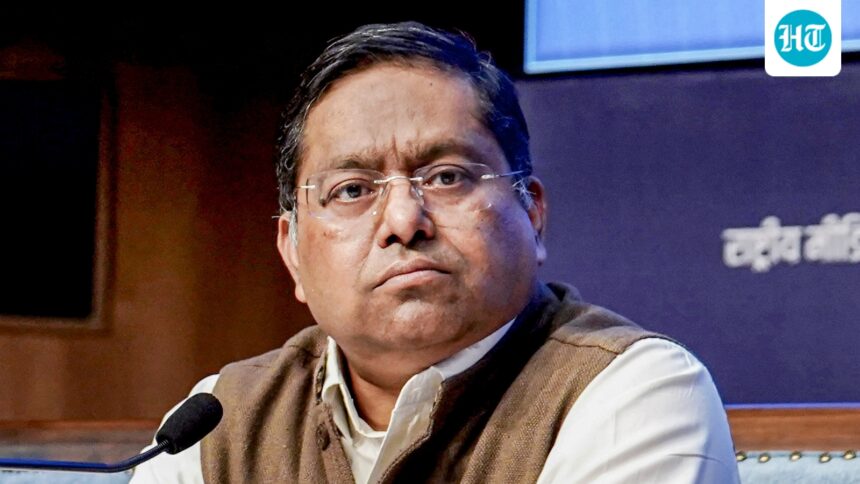
MEA spokesperson Randhir Jaiswal on Thursday responded to questions on Nepal’s stance on Lipulekh during a weekly press conference, saying New Delhi has already issued a statement on the issue. “This is not new; the Kailash Mansarovar Yatra has been happening since 1954 via this route. This is where it stands. It is not a new development and I would refer you to the statement issued by us for more details.”
Asked about the issue again, Jaiswal also mentioned that if Nepal raises the dispute over Lipulekh again, New Delhi is ready to talk to them about it.
While criticizing Nepal’s objection on Sunday as well, Jaiswal stressed that India remains open to “constructive interaction” with Nepal on all issues in bilateral relations, including the resolution of outstanding border issues agreed upon through “dialogue and diplomacy.”
Lipulekh Pass dispute between India and Nepal
Lipulekh Pass has been a long-standing point of dispute between India and Nepal. The dispute began in 2020, when then-Nepalese Prime Minister KP Sharma Oli reportedly sought to use the border issue with India to deflect growing domestic pressure and challenge to his leadership.
Later that year, Kathmandu escalated the dispute by publishing a new political map of the country, which showed three Indian territories, Limpiyadhura, Kalapani and Lipulekh, as part of Nepal.
Nepal claimed that under the Sugauli Treaty of 1816, these three territories are an integral part of Nepal.
At that time, India strongly rejected Nepal’s move and said that the Nepalese government had issued a revised official map that included parts of Indian territory.
“This unilateral action is not based on historical facts and evidence. It is against the bilateral understanding to resolve outstanding border issues through diplomatic dialogue. India will not accept such artificial expansion of territorial claims,” the Indian Foreign Ministry said.
Regarding the Kailash Mansarovar Yatra, the pilgrimage to Mount Kailash and Lake Mansarovar in the Tibet Autonomous Region of China has religious significance for Hindus, Jains and Buddhists. The yatra was resumed last year after a break of about five years as part of efforts to normalize relations between India and China.
In August last year, Nepal objected to the resumption of trade between India and China through the Lipulekh Corridor.
The Nepalese government issued a statement claiming that the official map of the country shows Limpiyadhura, Lipulekh and Kalapani east of the Mahakali River as “integral parts of Nepal”.
The Nepalese Foreign Ministry said in an official statement that it also urged India to refrain from carrying out any activities in Nepalese territory.
India condemned Nepal’s statements, saying Kathmandu’s claims were “unjustified and not based on historical facts and evidence.”
“Any artificial unilateral handling of territorial claims is indefensible,” the Indian Foreign Ministry said.