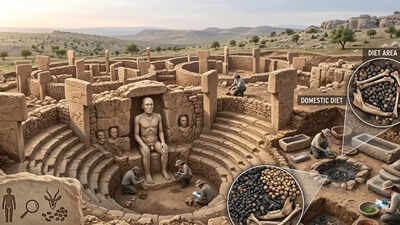
Recent excavations at Karahantepe, a pivotal site within the Tas Tepilar Project in southeastern Türkiye, have revealed startling evidence of the complexity of the Neolithic. This site, dating back about 12,000 years, produced life-sized human figurines and detailed animal carvings that changed our view of prehistoric art.
However, the most surprising discovery concerns plant remains. While they remained hunter-gatherers, their livelihood was semi-managed; The finds show that they also ate a varied diet that included wild legumes. This transition from wandering in search of food to a more sedentary lifestyle suggests that Karahantepe was not just a simple settlement, but an advanced society practicing “pre-domestication” agriculture. Such discoveries challenge what we know about when organized agriculture began and how early societies developed social structures.
Amazing prehistoric statues and diet have been found in Karahantepe
The Taş Tepeler project showed that Karahantepe was more than just a ritual site; It was a center of complex social activities. Professor Najmi Carroll, who led the excavations, found numerous T-shaped columns and highly detailed human figures. One notable find was a statue of a seated male figure holding his penis with both hands, highlighting the focus on human symbolism. At the same time, bioarchaeological research has revealed that people consumed deer, wild sheep, and various legumes such as bitter vetch and lentils, indicating an early stage of plant management before domestication began.
Why did hunter-gatherers stop moving 12,000 years ago?
Published research in academic contexts suggests that Karahantepe and Göbekletepe reveal the lifestyles of sedentary hunter-gatherers, which challenges the traditional view known as the “agriculture first” theory. At Karahantepe, standing buildings and massive stone carvings show that hunter-gatherers formed settled communities long before the domestication of wheat. The discovery of rock pits, cisterns and milling facilities also indicates the regular consumption of wild grains and legumes.
The vital role of land pulses in ancient construction
As reported in the Journal of Archaeological Sciences, in the Şanlıurfa region, archaeological botanical research reveals that people 12,000 years ago had a very diverse diet. Evidence suggests that meat of wild animals such as deer and aurochs was an essential part of their diet. However, they also collected and processed a lot of wild legumes. These legumes provided much-needed protein to the large groups of workers who carved and transported the colossal statues at Karahantepe.
Why did Karahantepe focus on the human form?
Karahantepe’s focus on human figures represents a significant departure from the previous focus on animal motifs. The German Archaeological Institute, which cooperates in research in the region, points out that the statues discovered in Karahantepe reveal a complex system of symbols and social order. Foxes, snakes and leopards are carved with great skill, reflecting distinct roles within a society supported by high-protein surpluses and communal feasting.