The Delhi government on Saturday announced that it has approved a large-scale expansion of the city’s Metro network, with plans underway to add over 97 km of new lines and 65 stations across seven corridors under the Phase 5B plan. Prime Minister Rekha Gupta said the project was estimated to cost $48,204.56 crore is aimed at improving connectivity between the suburbs and emerging parts of the capital with central Delhi.

Officials said that four of the seven corridors have been classified as priority projects and will be dealt with on a fast-track basis. The government has set a target to complete these priority corridors by 2029.
The DMRC will divide the Detailed Project Reports (DPRs) into prioritized and non-prioritized reports for effective and phased implementation, the Prime Minister said. “This project will play a key role in ensuring balanced and inclusive urban development across Delhi,” she said.
A DPR for the entire project has already been prepared and submitted to the Centre, and is awaiting Cabinet approval. The Delhi government earlier this week approved the project after a detailed meeting between the chief minister and the DMRC, officials said. Once approved, the Center and Delhi will also need to give financial approval before work can begin on the ground.
The DMRC did not respond to requests for comment.
Metro Communications
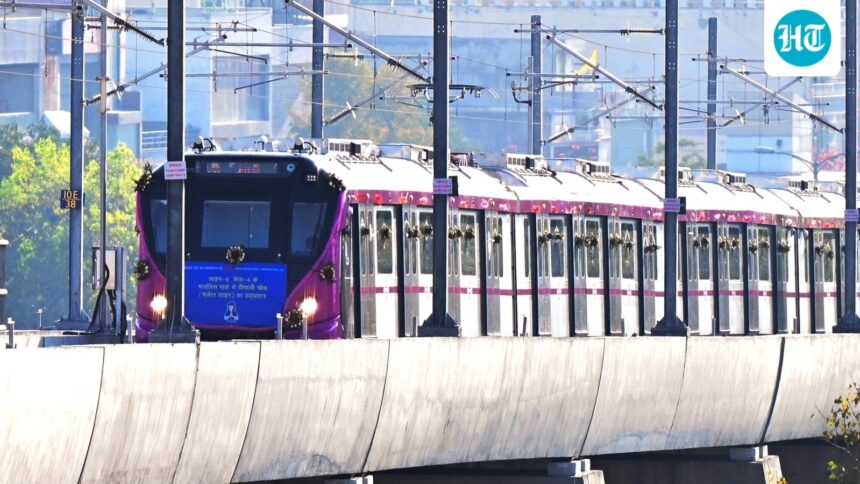
The DMRC Metro expansion is expected to bring Najafgarh, Narela, Mitapur and Khira Kalan districts on the metro map, and connect them to the existing network. The plan includes a mix of elevated and underground corridors, with several interchange points designed to integrate the new lines with existing ones.
“The initiative will significantly enhance access to public transport in underserved areas. This expansion will connect remote and fast-growing areas of Delhi to the metro network, ensuring faster, safer and more convenient travel for residents,” Gupta said.
The Dhansa Bus Stand-Nangloi corridor, spanning 11,859 km, will be a fully elevated route with nine stations. The extension will connect Naresh Park, Ranhola, Bakarwala, Babarola, Deshaun Kalan and Najafgarh extension, with interchange facilities at Nangloi on the green line and Dhansa bus stand on the gray line.
Another major corridor, from the Central Secretariat to Kishangarh, will extend 15,969 km, and most of the network will be underground. The extension will include 10 stations – nine underground and one elevated – and is expected to extend to New Moti Bagh, RK Puram and Jawaharlal Nehru University areas. Interchanges will be available at Central Secretariat, Moti Bagh, RK Puram and Kishangarh.
The Samaypur Badli-Narela corridor will extend the existing line by 12.89 km through a fully elevated alignment. The route will include eight stations at Siraspur, Khera Kalan, Holmby Kalan, Alipur and Narela. It will provide intersections at Siraspur and Narela DDA Sports Complex.
The Kirti Nagar-Palam corridor, covering 9,967 sq km, will have six stations in total, including underground and elevated sections. The alignment will pass through Saraswati Park, Mayapuri Industrial Estate Phase III, IITM Janakpuri and Sagarpur, with intersections at Mayapuri and Palam.
The autonomous corridor from Jor Bagh to Mithapur will extend for 16,991 km and comprise a mix of underground and elevated stretches. The 12 stations along this route will serve Lodhi Colony, Jaitpur and Muladband areas. Interchange stations are planned at Jor Bagh, Lajpat Nagar, NSIC Okhla, Jasola Apollo and Madanpur Khader.
The Shastri Park-Mayur Vihar Phase III corridor will span 13,197 km, with underground and elevated sections. Eight stations are planned along this stretch, connecting Geeta Colony, Gandhi Nagar Market and Patparganj, with interchanges at Shastri Park, Nirman Vihar and Trilokpuri.
The seventh corridor, from Keshavpuram to Rohini Sector 34, will be a fully elevated route extending 16,285 km and including 12 stations. It will connect the localities of Pitampura, Rohini Sector 16 and Delhi Technological University, with interchanges in Keshavpuram, North Pitampura and Rohini Sector 34.
Highlighting the broader objectives of the project, the Prime Minister said the expansion will contribute to improving last-mile connectivity and reducing travel time across the city. Once completed, Phase 5B is expected to significantly expand the scope of the metro network, enhancing its role as an essential mode of transportation for daily commuters in the national capital, she added.