

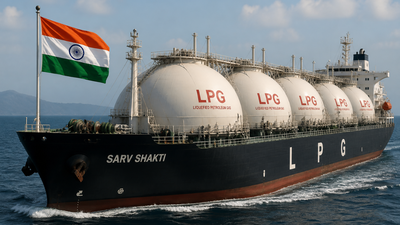
The ongoing Middle East crisis has rocked global oil and gas supplies, with the Strait of Hormuz under intense pressure amid tensions between Iran and the United States. At a time when one of the world’s most important energy corridors is under severe pressure and supply chains remain disrupted, India is making efforts to secure essential cooking fuel.The India-linked supertanker, carrying liquefied petroleum gas, transited the Strait of Hormuz on Saturday, according to maritime traffic data. The road, which has seen almost no traffic since the US blockade on shipping linked to Iran, has seen traffic fall sharply.
He watches
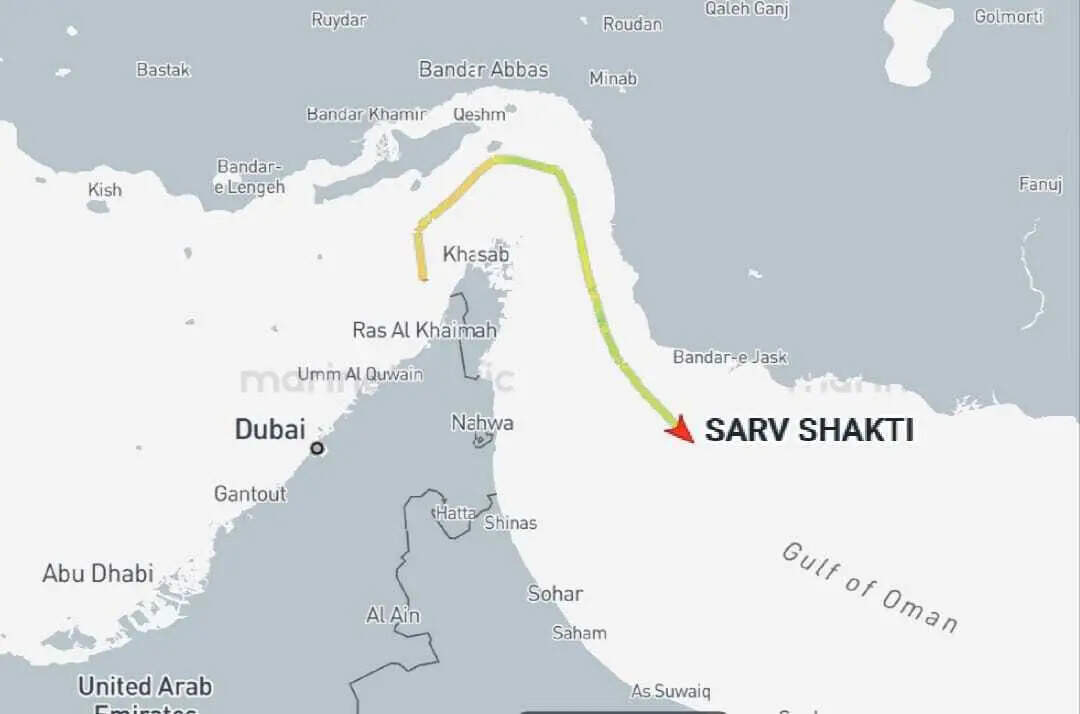
India-bound LPG tanker Sarv Shakti moves through the Strait of Hormuz: Why does it matter?
The ship, “Sarf Shakti”, flying the flag of the Marshall Islands, carrying about 45,000 tons of liquefied petroleum gas, was previously tracked as it was moving through the strategic waterway after the Iranian islands of Larak and Qeshm towards the Gulf of Oman.
The ship, which previously sailed between the Persian Gulf and Indian ports, indicates India as its destination and also declares that it has an Indian crew, a security measure that has been widely adopted since the start of the Iran war, Bloomberg reported.According to the agency, the state-run Indian Oil Corporation is the buyer of the shipment, although the company has not yet confirmed this.But with other carriers already arriving on Indian shores since the Middle East conflict began, what is so special about Sarv Shakti?If the tanker completes the voyage, it will become the first known Indian ship to successfully transit the Strait of Hormuz since the United States intensified its crackdown on Iran-linked ships weeks ago, a move that pushed traffic through the vital passage to near zero.
Its passage will constitute a major achievement at a time when most ships avoided the route completely. Sarv Shakti is also among the largest carriers to have attempted an outbound crossing since the brief and chaotic reopening of the strait last month, when uncertainty and military threats forced many ships to turn back.
.
What it means for India:
For India, the risks are high.As the world’s third-largest oil importer and second-largest consumer of liquefied petroleum gas, concerns have arisen about supply disruptions after Middle Eastern producers came under conflict.Since the US and Israeli strikes on Iran at the end of February, New Delhi has focused heavily on ensuring continued LPG shipments, including instructing Indian ports to prioritize LPG tankers for docking and offloading while simultaneously increasing domestic production.These efforts suffered a setback in April when Iran first indicated that the Strait of Hormuz was operational again, but its military opened fire on ships trying to cross, forcing many ships to retreat.
During that period, an India-linked crude oil tanker, the Desh Garima, was only able to pass after dark by turning off its transponder.Since then, traffic in Hormuz has remained largely frozen, although India was still able to move eight LPG tankers through the corridor during the conflict through direct negotiations with Tehran. Meanwhile, authorities are exploring additional supply routes.India also expanded domestic LPG production by 60% to 54,000 tonnes, while daily demand fell by 10,000 tonnes to 80,000 tonnes, Oil Minister Hardeep Puri said on Friday.Sarv Shakti entered the Persian Gulf in early February and later received its cargo through a ship-to-ship transfer near Dubai, according to Bloomberg.The ship’s complete transit through Hormuz is expected to take between 10 and 14 hours, although ship movements in the area could be obscured by electronic interference, mispositioning, or ships deliberately turning off tracking systems.The Equasis database lists Foresight Group Services Ltd. It is based in Dubai as the ship’s manager, while ownership is owned by Zhe Yin Shan Zhou No. 4 Tianjin, registered at the same address. The Foresight Group did not immediately respond to a request sent through its website.