An unexploded shell, suspected to be from the World War II era, was recovered in Assam’s Tinsukia district near the Assam-Arunachal Pradesh border on Wednesday and was successfully neutralized by the Indian Army, officials said on Friday.

The unexploded ordnance, about 12 inches long and 6 inches in diameter, was recovered from the Ledo-Likapani area of Tinsukia district, the military said in a statement.
According to army officials, the object, suspected to be a World War II-era shell, was initially discovered in Seungri village under the Lido police outpost when a local resident and his workers were digging near a shop.
“During excavation work, workers noticed a large metal object buried underground and informed the authorities after suspecting that it might be dangerous,” an official said.
Local residents informed the police, after which a team accompanied by security personnel arrived at the site, cordoned off the area, and temporarily evacuated nearby residents as a precaution.
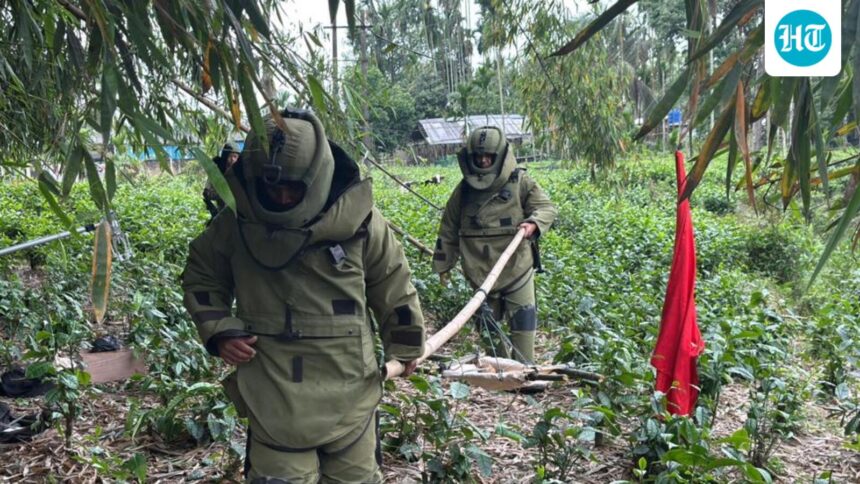
The Indian Army’s Red Shield Division deployed a specialized bomb disposal team to the site on Thursday. They secured the entire area, evacuated civilians from the surrounding area, and established a secure perimeter before safely transporting the shell for disposal.
The army said in its statement: “The unexploded ordnance was carefully handled and transported to a designated safe location away from civilian residences. It was then neutralized in a controlled manner without causing any collateral damage.”
The Ledo-Lekhapani belt in eastern Assam had a strategic role during World War II, when the region served as a major military logistics route linking India with Burma via the historic Stilwell Road. “Given the area’s historical significance as part of the World War II-era Stilwell Road corridor and Allied military operations in Sector East, officials suspected the shell was a war remnant,” the Army said.