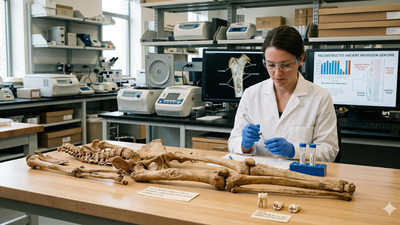
The subject of archaeological disease research is based on the use of the human skeletal record to detect the presence of diseases in the past. Bioarchaeology, paleopathology, and biomolecular analyzes are among the techniques that researchers can apply to detect diseases such as infections, nutritional deficiencies, and degenerative conditions in ancient populations.
DNA sequencing, isotope analysis, and radiography are among the tools researchers can use to detect diseases like tuberculosis and bubonic plague from ancient remains. Such techniques allow researchers to gain insight into the development of diseases, past trends in medicine, and people’s surroundings.
Paleopathology explains how Old diseases They have been found in human remains
The archaeology of disease, also known as paleopathology, involves the examination of diseases found in ancient human and animal remains. Examining bone deformities, tooth wear, and burial conditions helps draw conclusions about diseases affecting the population. In an article titled “The Bioarchaeology of the Health Crisis: Infectious Diseases of the Past,” prominent bioarchaeologist Clark Spencer Larsen notes that “human skeletons are rich records of life experiences, including disease, nutrition, and biological stress.”Through paleopathology, we gain insight into the lives of previous generations by analyzing diseases preserved in bones and tissues.
Scientific techniques used to identify ancient diseases
Modern science has revolutionized the ways in which diseases are discovered in fossils of the past. One such advanced technology is DNA studies, or ancient DNA. Scientists have the ability to extract DNA from bone or tooth samples and study the pathogen. According to Boss et al. (2011), who studied the genomic structure of the bacteria causing the Black Death, stated, “We showed that Yersinia pestis was the causative agent of the Black Death.” Another important method is isotope analysis. By studying the chemical composition of bones, scientists are able to infer the migration history and dietary habits of individuals, which are strongly linked to good health. Another technique is radiography, which includes a CT scan. These help in studying mummified bodies without damaging them. For example, scientists who analyzed Egyptian mummies found evidence of atherosclerosis, a sign of hardening of the arteries.
Diseases discovered in ancient populations
Many diseases can be documented through archeology of the past. For example, tuberculosis infection has been found in the remains of individuals dating back many years. According to the study “Historic and Prehistoric Epidemics: An Overview of Available Resources for the Study of Ancient Pathogens,” some characteristics of tuberculosis include damage to the spine, which is referred to as Pott’s disease.There are also cases of leprosy, which is evident from the distinctive features of the bones in the face and limbs of the body.
Cases of malnutrition are also common, involving conditions such as rickets and scurvy.In addition, scientists were able to determine the presence of plague DNA in large burial places.
Why studying ancient diseases is important today
Besides providing insight into past events, the investigation of ancient diseases is useful for contemporary medical practice. Studying the evolution of pathogens can help predict the occurrence of future epidemics.Furthermore, research into historical trends in human well-being allows medical professionals to evaluate the influence of various environmental, social, and economic factors on disease development. Such an approach is particularly useful in analyzing the etiology of current lifestyle-related diseases.The study of diseases of ancient populations provides insight into the human experience captured in physical form. With the help of advanced technology, researchers can uncover the secrets of past diseases.