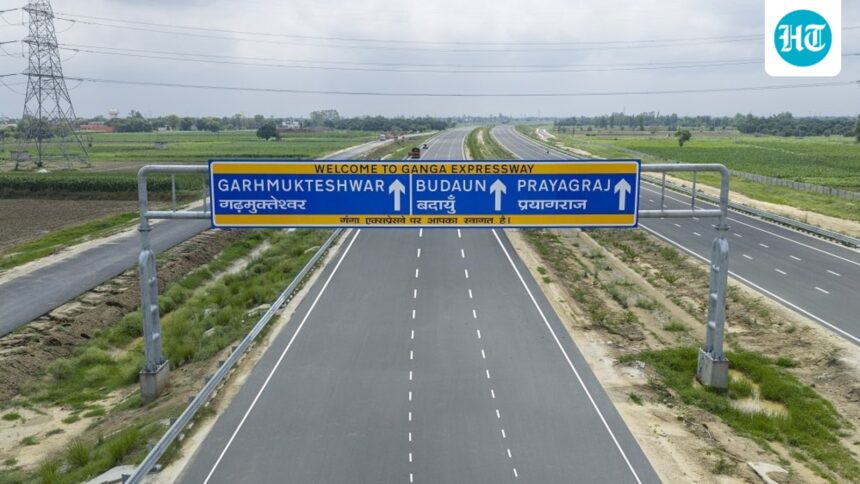
Prime Minister Narendra Modi on Wednesday inaugurated the 594-km Ganga Expressway, one of the longest high-speed corridors in the country, connecting Meerut to Prayagraj and aims to transform connectivity across Uttar Pradesh.

The expressway, developed as a six-lane corridor with the potential to expand to eight lanes, is expected to significantly reduce travel time while enabling faster, safer and more efficient movement of people and goods across the state. Designed to reach speeds of up to 120 kilometers per hour, the project is seen as a major boost to infrastructure-led growth.
Officials said the expressway will enhance connectivity across 12 major districts – Meerut, Hapur, Bulandshahr, Amroha, Sambhal, Badaun, Shahjahanpur, Hardoi, Unnao, Rae Bareli, Pratapgarh and Prayagraj – while strengthening economic ties between western and eastern Uttar Pradesh.
In a post on X, Uttar Pradesh Chief Minister Yogi Adityanath said that the state’s development journey will gain new momentum with the opening of the expressway from Hardoi. He described the project as a “lifeline” linking villages, farmers, entrepreneurs and youth, adding that it would help accelerate development and bridge regional gaps.
Pankaj Chaudhary, Union Minister and BJP president of Uttar Pradesh, also welcomed the inauguration, terming it a historic infrastructure project and a big step towards modernizing the road network in the state.
According to officials, the Prime Minister arrived in Hardoi around 11 am, inaugurated the expressway, visited an exhibition of the Uttar Pradesh Expressway Industrial Development Authority (UPEEDA), planted saplings and addressed a public gathering before leaving later in the day.
The main feature of the highway is a 3.2 km long airstrip near Shahjahanpur designed for emergency landing of Indian Air Force aircraft. The corridor is also equipped with modern safety and traffic systems, including Intelligent Traffic Management System (ITMS), CCTV monitoring, emergency call boxes, ambulances and regular patrol units.
The project, built under a public-private partnership model, will host integrated manufacturing and logistics clusters along the route. These will include warehouses, cold storage facilities and food processing units, with the aim of enhancing agricultural marketing, attracting investment and creating job opportunities.
The Ganga Expressway will be connected to other major corridors such as Purvanchal, Agra-Lucknow, Bundelkhand and Gorakhpur Link Expressways, creating a vast and interconnected road network across the state.
The project is expected to play a crucial role in driving industrial growth, improving logistics efficiency and supporting Uttar Pradesh’s ambition to become a trillion-dollar economy, authorities said.