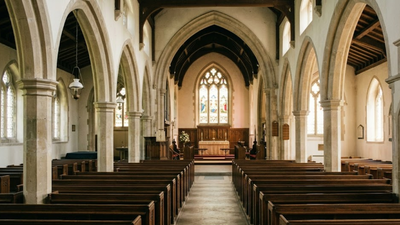
A study revealed that one in three Britons who were raised Christian no longer follow the faith
Nearly a third of people in Britain who grew up as Christians no longer belong to the religion in adulthood, highlighting a steady decline in adherence to traditional religion across the country, a major international study has found. The analysis by the Pew Research Center found that about 30% of the UK population grew up in Protestant or Catholic families but later abandoned their religious identity. The results are based on a telephone survey of 1,017 people across Britain. The data show a sharp gap between childhood belonging and adult beliefs. While 51 percent of respondents said they were raised Protestant, only 31 percent still belong to that denomination.
About 23 percent said they were raised Protestant and later left it, compared to only 3 percent who joined as converts. A similar trend is evident within Catholicism. Although 16% of those surveyed said they were raised Catholic, only 11% remained in the faith. Seven percent reported that they had left Catholicism, while only 1 percent said that they had joined it without having been raised in it. The study also sheds light on what happens after people leave organized religion.
Among former Protestants in Britain, 87% came to be considered non-believers, while 4% became Catholic, and 8% joined another religion. Of those who were raised Catholic and later left, 71 percent became non-believers, with 14 percent converting to Protestantism and another 14 percent to a different religion.
The report indicated that the number of people moving between religions is still relatively small. Researchers describe the broader trend as “religious conversion,” a term used to reflect a range of ways in which people are moving away from or between belief systems. “We use the term instead of ‘conversion’ because changes can be in many directions, including from upbringing in a religion to disaffiliation, and may not involve a formal initiation process,” Pew Research Center said. This pattern is not limited to Britain. In 24 countries analyzed in the study, more people left Catholicism than joined it in 21 countries.
Hungary was the only country where this trend was reversed. “Ex-Protestants represent a large proportion of the population in many countries around the world. In nine of the 24 countries we analysed, this group makes up 10 percent or more of the population,” the report said, citing The Times (UK). While Protestantism gained more ground in parts of the world, especially in Latin America, Britain saw the opposite trend.
“Most of the countries where Protestantism has made net gains are in Latin America,” Pew said. “Most Brazilians who converted to Protestantism are former Catholics. Sweden, the United Kingdom and Germany are among the countries with the largest net losses.”Public figures reflect this shift in belief. Actor James McAvoy, who said he was raised by his grandparents who were “very good church-going Catholics” and regularly attended church, told The Times (UK) that he stopped going to church at the age of 16, adding: “The minute I was allowed to make my own choices, I stopped going to church.” The findings also cast doubt on claims of a widespread religious awakening among young people. The Times (UK) noted that the Bible Society retracted a report suggesting higher church attendance among Generation Z after underlying YouGov data was found to be flawed.