The Uttar Pradesh government will pay $5 lakh compensation to a man detained in a regular prison with other prisoners despite being a juvenile at the time of the crime after the High Court handed down a severe sentence for illegal confinement alongside adult prisoners.

In rebuking the detention lapses, the court emphasized that such detention strikes at the heart of child protection laws and constitutional guarantees. A Standard Operating Procedure (SOP) has been recorded to prevent recurrence of such violations across the state, directing it to be circulated to all other states as well to consider compliance.
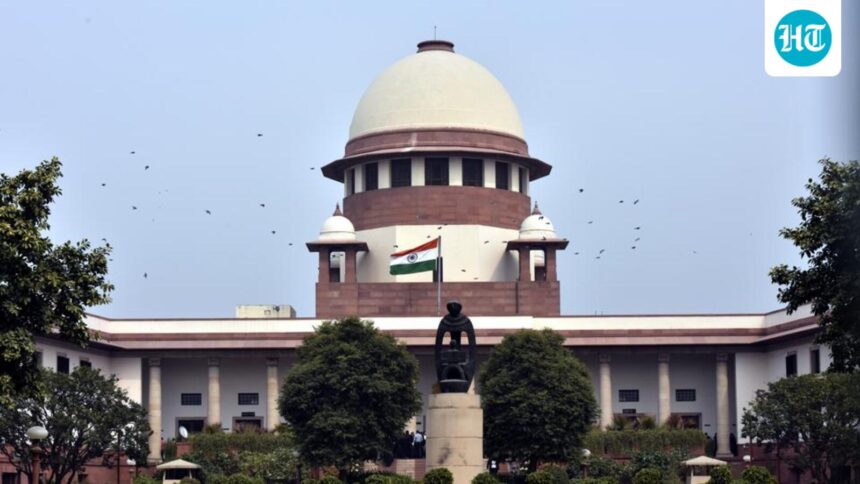
A bench of Justices JK Maheshwari and AS Chandorkar stressed that housing a juvenile with adult prisoners was impermissible under the law and reflected a systemic failure to protect the rights of children in conflict with the law.
“At present, there is a case where a juvenile has been unjustly placed in a regular prison meant for adult prisoners, even after being declared a juvenile, due to lack of communication, insensitivity and inhumane manner on the part of the officials,” the bench said in an order issued on Saturday.
For the “constitutional tort” against the person, the court recorded the State’s undertaking to pay $5 lakh as compensation, with a directive to transfer the amount to the individual, who is now an adult, on furnishing bank details.
The accused, a juvenile on the date of the incident, was detained in Agra Central Jail alongside adult prisoners, in violation of the Juvenile Justice (Care and Protection of Children) Act, 2015. The law stipulates that minors should only be placed in observation homes or special homes, depending on the stage of the proceedings, and never in regular prisons.
The accused is being tried as an adult in connection with the 2022 double murder case, a legal course allowed under the law for some heinous crimes. The court explained that this does not mitigate the legal guarantees applied during the event period. The Board noted that the violation was not merely a procedural violation, but rather one that undermined the envisaged rehabilitation framework for juveniles.
The Supreme Court noted that the Sessions Court and the Allahabad High Court had dealt with the bail applications of the delinquent, but failed to point out that he was lodged in a regular jail despite being a minor.
“Such an approach indicates a lack of sensitivity and a lack of awareness on the part of stakeholders… Cases like the present one reflect a serious and systemic lack of coordination and sensitivity among all stakeholders charged with managing the juvenile justice framework.”
The bench said that any error in ensuring immediate transfer of a declared juvenile from regular prison to observation home not only goes against the objective of the legislation, but also leads to a serious violation of the juvenile’s right to life.
“Therefore, we appeal to all relevant authorities and stakeholders to institutionalize strong mechanisms so that such cases do not recur in the future,” the authority said. It warned the Supreme Court and lower court judges to “exercise extreme caution in the future while dealing with juvenile matters.”
The court took note of the affidavit issued by the Registrar of the Allahabad High Court detailing the standard operating procedures aimed at plugging systemic loopholes. The Standard Operating Procedure (SOP) provides for streamlined notification of juvenile and bail court orders, mandatory verification protocols, and statewide training, both online and in-person, to ensure uniform compliance across counties. It envisages sensitizing police personnel and prison authorities to prevent the unlawful detention of juveniles in adult facilities.
The court directed the Uttar Pradesh government to adopt standard operating procedures and allowed it the freedom to provide additional safeguards if necessary. She noted that procedural clarity and administrative accountability are crucial to enforcing juvenile justice protections. The bench directed that the Standard Operating Procedure (SOP) should be shared with all states and chief justices of all high courts, effectively expanding the scope of the issue beyond Uttar Pradesh and turning it into a model for nationwide compliance.
The order comes on the heels of earlier proceedings, where the Supreme Court expressed grave concern over the custody certificate issued by the Agra Central Jail superintendent to the juvenile, an anomaly that led to judicial scrutiny. In October, the court questioned how such a certificate could be issued by prison authorities rather than a social welfare officer, stressing the need for minors to remain within the child protection system at all times.