

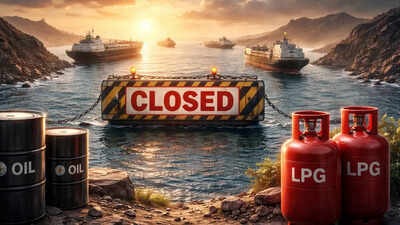
Iran closed the Strait of Hormuz again. (Amnesty International image)
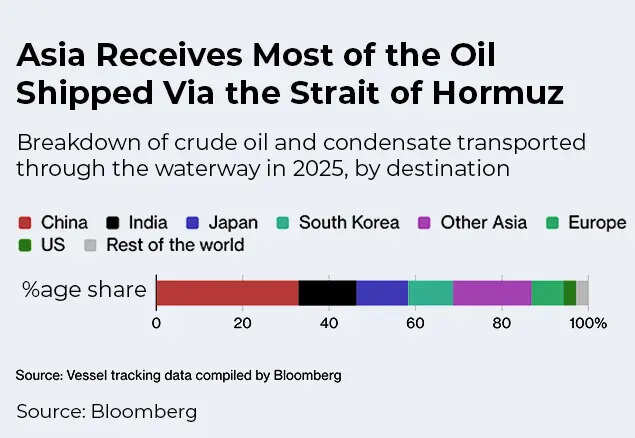
Open, closed, closed but open – the Strait of Hormuz has become the epicenter of the ongoing US-Iranian conflict and its blockade is a major factor in pressure tactics on both sides. The Strait of Hormuz represents an important channel for about a fifth of global oil trade.
The result is that economies that depend on the Middle East for energy supplies face turmoil and uncertainty. India is among the Asian economies that require ships to pass smoothly through the Strait of Hormuz to meet its crude oil, LPG and LNG needs. Since Iran decided to restrict access to the vital energy corridor last month during its conflict with the US and Israel, it has intermittently allowed Indian ships to pass.
He watches
“Ripple effect on India…”: Al-Masry after hitting Indian tankers in Hormuz
However, the situation has become more complicated now. A few days ago, Iran announced that the Strait of Hormuz was open, but the United States continued its blockade of ships heading to or from Iranian ports. This prompted Iran to close the Strait of Hormuz again.Read also | Explained: On its way to fourth place, how India fell to sixth place and what the dream of third place as the largest economy means
Iranian siege of Hormuz and continued shooting Ships flying the Indian flag
The Indian-flagged tanker Desh Garima, carrying crude oil, successfully passed through the Strait of Hormuz on Saturday afternoon. However, two other ships, the Sanmar Herald and the Jag Arnav, came under fire from Iranian Islamic Revolutionary Guard Corps boats while navigating the route affected by the conflict and had to turn back.
No injuries were reported among the crew members.India summoned Iranian Ambassador Mohammad Fateh Ali on Saturday to express its “deep concern” over the shooting incident. During the meeting, Foreign Minister Vikram Masri stressed the importance India attaches to the safety of commercial ships and sailors, while noting that Iran had earlier ensured safe passage of ships bound for India.He urged the envoy to communicate India’s position to the authorities in Tehran and called for the rapid restoration of safe transit for India-bound ships through the strait.
The Foreign Ministry said that the ambassador agreed to convey these concerns.
What does this mean for India
Data from MarineTraffic shows that several Indian and foreign ships bound for Indian ports are still awaiting clearance near the Strait of Hormuz. Official figures indicate that 13 Indian ships are currently in the Arabian Gulf (west of Hormuz), six in the Gulf of Oman (east of Hormuz), one in the Gulf of Aden, and three in the Red Sea.
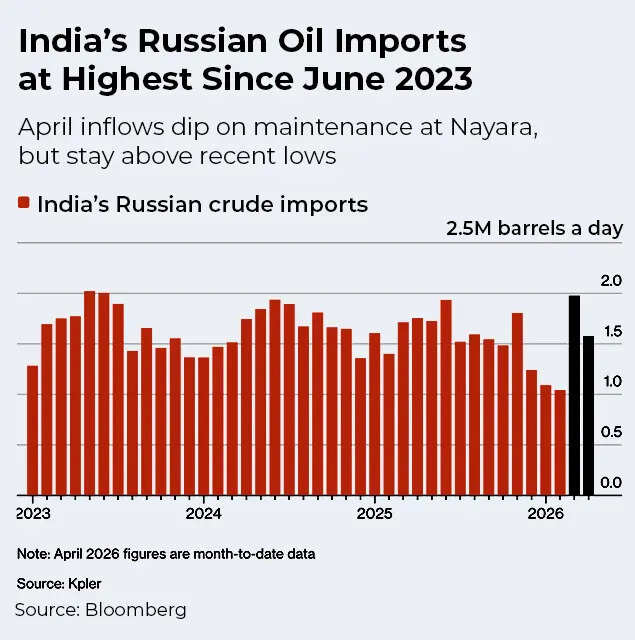
According to the Ministry of Petroleum, 17 ships have been identified for evacuation, including four liquefied petroleum gas tankers, three liquefied natural gas tankers, and 10 crude oil tankers. Of these, three vessels fly the Indian flag, while the remaining 14 are foreign vessels.Separately, the Ministry of Chemicals and Fertilizers has prepared a list of 16 additional vessels for evacuation, including an Indian-flagged vessel (Gaj Arnav) that was targeted by the IRGC on Saturday.Since the beginning of the war between the US and Iran, India, which largely relies on imports to meet its energy needs, has witnessed supply disruptions that have particularly affected the availability of LPG. The government was forced to redirect supplies to domestic consumption and restrict commercial availability.According to the latest update from the government, domestic LPG supply continues to face some disruption due to the prevailing geopolitical situation, although distribution to households has been prioritized.Read also | Download Oil Price Shock: How India’s Strong Economic Fundamentals Can Soften the Blow – Explained in ChartsOn the trade side, allocations were raised to about 70% of pre-crisis levels, including reform-related supplies.On the crude oil front, India has strongly increased its purchases of Russian crude oil since the beginning of the conflict. In fact, India’s imports of Russian oil are now close to their June 2023 highs, and flows are unlikely to ease in the near term. This helped Donald Trump’s administration waive sanctions on Russian oil for a month and later extend them for another month.
Experts say that although India’s crude oil basket is diversified and the availability of Russian crude oil makes the situation less worrying, LPG and LNG may remain constrained areas.Sumit Retulia, Director, Modeling and Refining at Kpler, told TOI, “India’s crude oil supplies currently look stable to cover domestic demand, supported by continued imports from Venezuela, West Africa and other key suppliers, coupled with an extension of the US sanctions waiver, which allows access to Russian crude already at sea to meet near-term requirements.”
Russian barrel imports in April rose to about 1.6 million barrels per day at the moment with the possibility of increasing again.
“He noted that supplies of LPG and LNG are still relatively limited. “According to Kpler data, at least two LPG tankers are currently stranded near the Strait of Hormuz. If the blockade continues, especially if the restrictions extend to Indian-flagged ships, there could be emerging supply challenges in the coming days,” he added.